A single piece of inside information transformed Ian Hart’s life permanently. Hart, a funeral director from Worthing and co-editor of the Brighton fanzine Gull’s Eye, received a call in July 1995 from Crystal Palace director Gordon Lucking.
“Gordon had always hoped to become part of the Brighton board, but they did not want him,” Hart says. “Ron Noades [the Palace chair] was delighted to bring him in. One of Gordon’s employees attended a golf event where, later that evening, someone got drunk and revealed that Brighton had sold the Goldstone Ground and intended to relocate to Portsmouth. Gordon enjoyed hearing it because it seemed like another blow to Brighton’s future.”
At first, Hart found it difficult to accept that Brighton’s home since 1902 might be under threat. He eventually visited chief executive David Bellotti at his office and challenged him directly. “I left the hearse outside, walked in and asked whether the stadium had been sold and if the club was moving to Portsmouth,” Hart recalls in his book, Brighton & Hove Albion: From Every Angle, published last year. “His face immediately lost all its colour.”
The conflict that followed between Brighton’s supporters and its owners marked the beginning of years without a permanent home. That turbulent chapter will be explored again this month in a new play celebrating the club’s 125th anniversary. Written by Brighton supporter Mark Brailsford, Stand or Fall follows several fans from the final days at the Goldstone in 1997, through the club’s 70-mile relocation to Gillingham and its later spell at the Withdean Stadium, before Brighton finally settle at the Amex Stadium.
Hart is producing the play, which will be staged for four nights at the city’s Theatre Royal beginning on 23 September. A related exhibition, also called Stand or Fall, opened at Brighton Museum in August. It documents what Hart describes as a civil war within the club and will remain open until the end of the year.
“People from completely different backgrounds were brought together,” Hart says of the campaign group, whose members included punk poet John Baine, widely known as Attila the Stockbroker. “There was a funeral director, a punk performance poet, a chartered accountant, plasterers and labourers.”
“Only a few days after the sale of the Goldstone Ground became public, supporters gathered at Chapman’s pub in Worthing, now called the Railway. Around 40 or 50 people from many different walks of life attended, and the movement expanded from that meeting.
“A year later, when the situation had become far more serious, about 500 people were unable to fit inside the Concorde nightclub and had to listen through speakers outside.”
In April 1996, approximately 600 supporters entered the Goldstone Ground pitch after a victory over Carlisle and demanded Bellotti’s departure. Several fans damaged seats in the directors’ box while others tried to reach the boardroom. The next major protest came during the match against York, an event that became part of Brighton folklore. Supporters waited until the 16th minute before invading the field, forcing officials to abandon the game.
“It was not a riot; it was a justified protest,” Hart says. “The FA and the Football League behaved like Neville Chamberlain in Munich, holding up a document and insisting everything would work out. They assumed they could tell us whatever they wanted and that we would simply accept it.”
The Goldstone Ground was demolished the following year. Brighton had come within 27 minutes of dropping out of the Football League but survived when Robbie Reinelt scored an equaliser against Hereford. Earlier in the season, the club had been 13 points behind at the bottom of Division Three, now known as League Two. Brighton placed 91st in the Football League again the next season and played home fixtures in Gillingham after Portsmouth withdrew its groundsharing offer.
“An entire generation of supporters drifted away. We have regained them now, but for years you could drive past parks in Worthing on Saturday mornings and see youth teams training without a single Brighton shirt among them. It was awful,” Hart says. “I coached at Worthing United from under-six to under-16 level and refused to allow anyone to wear anything other than a Brighton or Worthing shirt.”
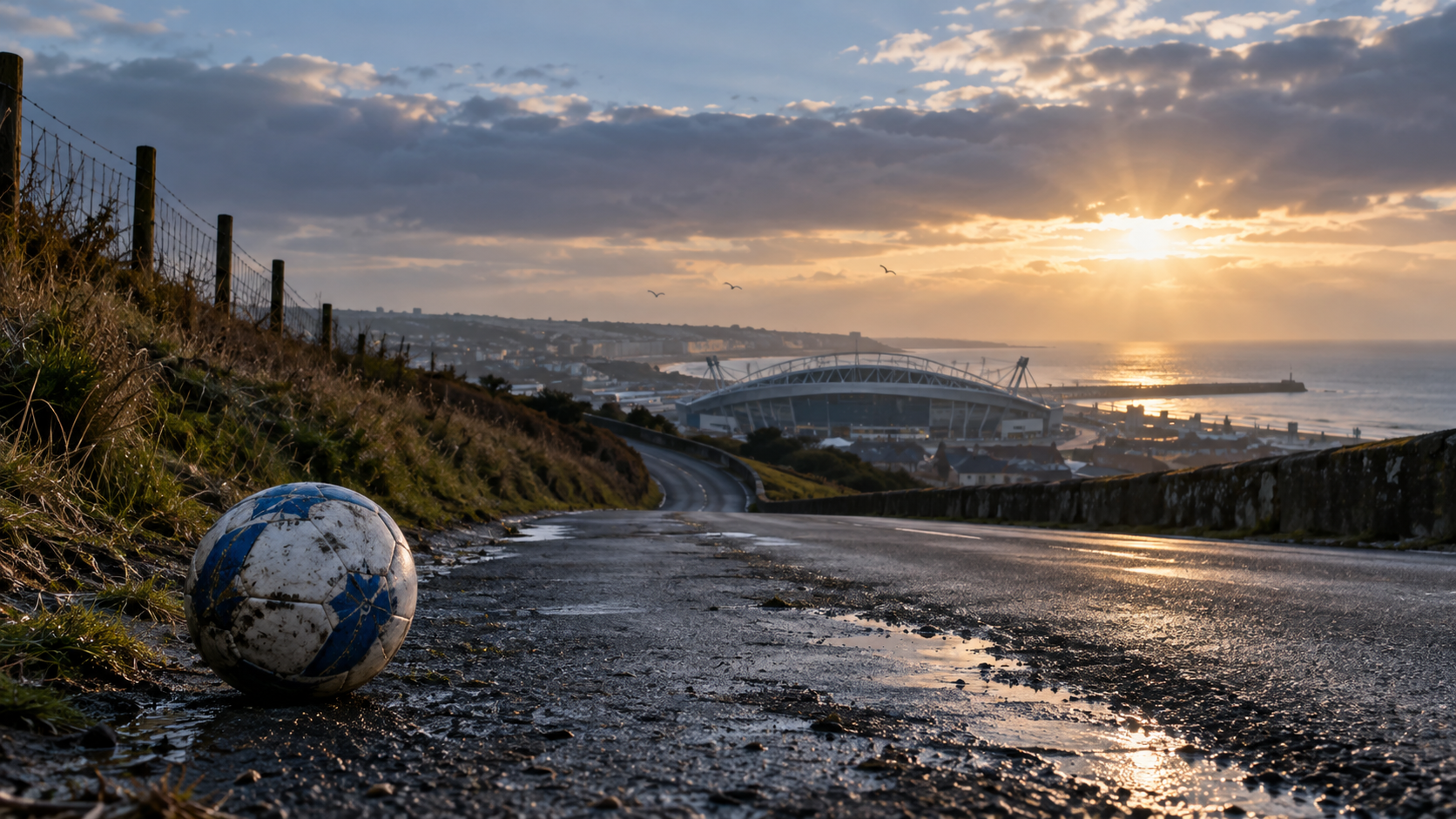
Bill Archer spent £100 to assume control of Brighton through a consortium led by supporters. He helped stabilise the club as it returned to the city, although its home was the Withdean, a venue designed mainly for athletics. Brighton’s fortunes changed significantly after Tony Bloom became chair in 2009. The club moved into the Amex Stadium two years later and earned promotion to the Premier League in 2017.
Brighton advanced to the last 16 of the Europa League during their first European campaign in 2024 and will take part in the Conference League this season. Hart hopes the club can now secure the major trophy its supporters have long awaited.
“Winning one would be fantastic, and Tony promised us a trophy several years ago at a reunion dinner for the 1983 FA Cup final,” he says. “We shared a drink with him in Tromsø before last month’s Conference League playoff in Norway. Even though he made that promise, I do not want expectations to become a burden.
“What makes the play so powerful is its combination of triumphs and setbacks. The successful moments would not feel as meaningful without the difficult ones, and that contrast makes the entire journey even more remarkable.”
What do you feel about this post?

Like

Love

Happy

Haha

Sad