
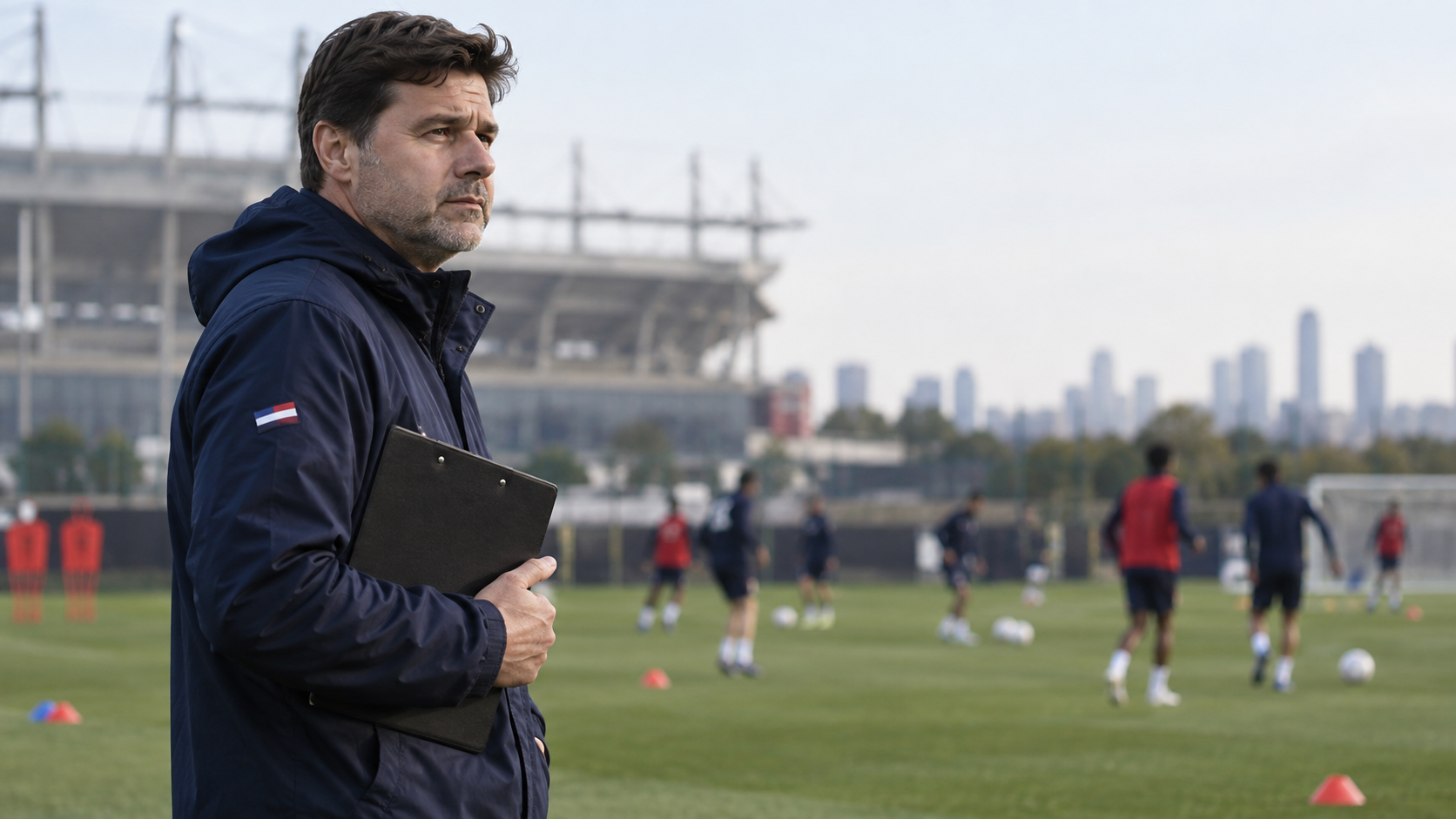
In the aftermath of the USMNT’s 4-1 elimination in the last 16 of this summer’s World Cup, Mauricio Pochettino addressed the media in what many expected to be his final press conference as the United States head coach. I asked whether he viewed his time in charge as successful. Although his response contained plenty of familiar talking points, one detail was especially striking: he suggested that he and his staff had finally developed a clear understanding of the available players.
The remark seemed strange at the time. By nearly every measure, Pochettino had been hired to win the match his team had just lost. With only two and a half years to prepare, his primary responsibility was not to assess every possible player but to produce the best results with the squad at his disposal, something he achieved inconsistently. Yet after one of the most painful defeats in the history of the US men’s team, his tenure was suddenly being described as an information-gathering exercise, amid speculation that he might depart.
That departure never materialized. Pochettino agreed to remain through 2030, at least in principle, and Thursday’s announcement showed that his examination of the talent pool is far from complete. His squad for the upcoming matches against Canada, Mexico, Peru and Chile contains 13 players who have yet to earn a senior cap, including four of the team’s five forwards. Two other members of the group have made only one appearance each, while the new arrivals have an average age of 19 years and six months.
Several prominent names are absent. Christian Pulisic, only recently back in action for Milan after breaking his leg at the World Cup, was not selected. Folarin Balogun, who has not played for Monaco this season, is also missing, while Weston McKennie remains sidelined by injury. None of those decisions is especially surprising, but their absence shifts the responsibility for leadership to others. Ricardo Pepi must now guide a youthful collection of forwards, while Sebastian Berhalter and Malik Tillman could be asked to direct the emerging generation in midfield. At just 29, FC Cincinnati center-back Miles Robinson has unexpectedly become the senior figure in the squad.
Together, these circumstances could make the forthcoming friendlies—or “non-official matches”, as Pochettino prefers to describe them—far more compelling than the usual fixtures played immediately after a World Cup. That is welcome news for US supporters, particularly those eager to see new talent given an opportunity.
The camp should also generate interest away from the pitch. Pochettino’s direct public exchange last week with newly selected 16-year-old Cavan Sullivan reinforced a message he has already delivered to other players, including Pulisic: attitude is crucial. It appears that the coach wants to assess these youngsters not only for their footballing ability but also for their character, while introducing them early to the standards and values he expects. His comments accompanying Thursday’s squad announcement reflected that approach:
He described the matches as a new beginning, combining established internationals with gifted young prospects. He stressed that every player must understand the team’s culture, working methods and tactical principles, while demonstrating the level of dedication required to represent the country and its supporters.
For a 16-year-old, there may be no stronger test of that dedication than facing Mexico in Phoenix, Arizona. Pochettino, along with everyone watching, is about to discover much more about the next generation of USMNT players.
What do you feel about this post?

Like

Love

Happy

Haha

Sad