Only a few years ago, claims that the wider US soccer community was overlooking youth development were often dismissed or ignored.
During a May 2022 conference call introducing a collective bargaining agreement that largely resolved the dispute over equal compensation, players were asked how they planned to reconnect with grassroots organizers. Some of those organizers, angered by what they viewed as repeated disrespect, had nearly returned Carlos Cordeiro to the US Soccer presidency shortly after pressure forced him to step down. Even a general statement supporting youth and amateur soccer would have answered the question, but no response came.
On social media, proposals for US Soccer to reduce payments to its senior national teams and direct more funding toward player development, as many successful soccer nations do, were frequently met with hostility. A common reaction was the sarcastic Simpsons line, “Won’t somebody please think of the children?!”
Now youth soccer has become a major concern. Yet the debate remains disorganized and contradictory, much like Helen Lovejoy’s repeated demand to “think of the children” on The Simpsons.
After the US men’s disappointing World Cup exit this summer, critics blamed the pay-to-play model and the financial obstacles that prevent many talented players from entering elite youth programs. The US Under-20 women’s underwhelming World Cup showing in September was partly attributed to clubs withholding players, as well as scheduling decisions that placed the event outside suitable release windows. However, that performance was consistent with several other recent youth-level results.
The youth system is clearly struggling. Instead of a consistent, long-term improvement strategy, the response has usually consisted of occasional warnings followed by overly simple proposals.
In 2026, US women’s coach Emma Hayes has become the leading figure calling attention to the problem. Her successful record with Chelsea and the US women’s gold-medal team at the 2024 Olympics gives her concerns considerable weight.
In 2018, the strongest calls for reform came from the nine candidates competing to lead US Soccer after the men’s team failed to reach the World Cup.
Between those moments, the conversation repeatedly shifted from one sweeping answer to another. Claudio Reyna, then US Soccer’s youth technical director, introduced a development curriculum at the 2011 NSCAA convention, now known as the United Soccer Coaches convention, drawing heavily from Barcelona’s tiki-taka philosophy. At the same event three years later, a session examined how clubs could reconcile the curricula of three separate organizations.
Most nations do not face this degree of fragmentation. If Germany’s DFB decides to carry out a broad transformation such as the widely praised “Das Reboot” initiative of the early 2010s, it has the authority to proceed. US Soccer lacks comparable control and financial capacity. The country’s enormous geographic scale also makes it impractical to reproduce Germany’s regional training-center network.
Organizational confusion is only one barrier to rebuilding youth soccer in the US. The greatest obstacle, acknowledged by most of the soccer community despite disagreement from figures such as Alexi Lalas, is the high cost of participation. Recognizing the issue is easy; finding a workable solution is far more difficult.
Affordable soccer does exist in the US. Recreational programs generally cost about as much as youth clubs in England, Spain, Germany and other established soccer nations. Professional academies, particularly on the men’s side, are usually free, while most high school teams do not charge players who earn a place. Despite concerns about access, participation has rebounded strongly since the pandemic.
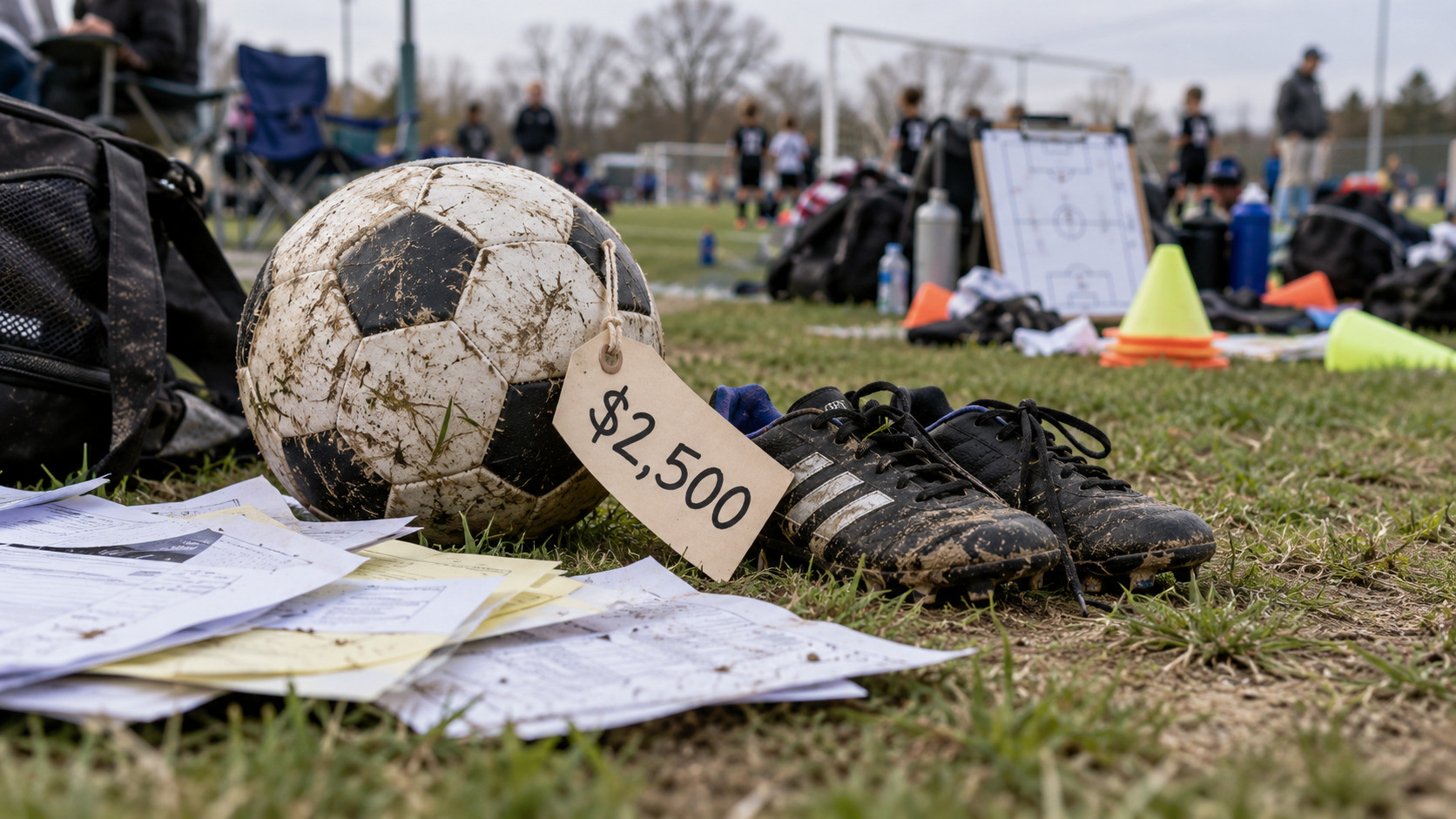
The main difficulty lies in a middle level found largely in the US: travel soccer, where annual costs can range from a few thousand dollars to more than $10,000. This is also the level that attracts attention from professional and college scouts. For many players, travel competition is the primary route toward a career in the sport or admission to a selective college seeking athletic talent. Although college and professional coaches often discuss expanding access, they and their scouts rarely attend recreational or high school matches where overlooked players unable to afford travel teams might be found.
Travel soccer also attracts families who understand that their children are unlikely to compete in college. Young players enjoy the polished uniforms, while tryouts tend to create more competitive matches by filtering participants according to ability. Paid coaches are presented as another advantage, although it is debatable whether they are always more effective than experienced parent volunteers who understand how to work with children. The system also creates a social community in which families sometimes treat lengthy journeys and substantial expenses as symbols of commitment.
Despite its obvious frustrations and inefficiencies, travel soccer produces significant revenue that might not otherwise enter the sport. Some of that funding supports appropriate playing facilities and scholarships for children whose families cannot cover the costs.
For that reason, dismantling the commercial youth-soccer structure would be extremely difficult. Reform is a more realistic option, including reducing how far teams must travel. Time spent in cars and airplanes does nothing to improve a player’s ability.
The ambitious reform efforts proposed in 2018 may not have delivered the expected results, but US Soccer is making gradual progress. The federation is beginning to simplify the crowded network of youth organizations by forming a closer partnership with US Youth Soccer. That organization had already worked with US Club Soccer to combine overlapping competitions under the new National 1 League. The restructuring should allow nearby clubs to face one another rather than traveling long distances simply because they belong to different leagues. It could also reduce recurring disputes over which local competition deserves to be labeled the most elite.
Determining exactly how much US Soccer spends on youth development compared with senior national teams is complicated. Its national-team budget reaches well into nine figures, but the category covers the senior men’s and women’s sides, youth teams, futsal, beach soccer, deaf soccer, seven-a-side competition for athletes with cerebral palsy or related conditions, and power soccer for players using electric wheelchairs. What is clear is that US Soccer distributes 80% of its World Cup prize money to players, whereas many other federations retain most of those earnings and invest them in development programs intended to strengthen future teams.
The federation operates a grant program, but its available funding remains limited. According to its 2025 tax filing, it distributed almost $4m through grants during the fiscal year, less than the amount paid to five members of the women’s national team. Soccer Forward, an affiliated foundation, aims to direct the financial legacy of the World Cups and Olympics hosted in the US between the 2026 men’s tournament and the 2031 women’s event toward future generations. Its most substantial project so far is “Soccer at Schools”, an initiative seeking to make the sport available in every school across the country.
That initiative represents a significant shift for US youth soccer, which has moved progressively further away from schools over recent decades. It is also practical: nearly every child attends school, while only a small proportion of families can afford travel soccer, which is usually played after classes and on weekends.
The greatest test for both the national federation and the wider US soccer community will be maintaining a lasting commitment to improvement. Giving youth development the attention it requires would help the country overcome at least some of the difficulties created by its size and soccer’s secondary position among popular sports. If meaningful action occurs only after World Cup defeats and concern for the youth game is otherwise dismissed, progress will stop and the system may deteriorate further.
What do you feel about this post?

Like

Love

Happy

Haha

Sad