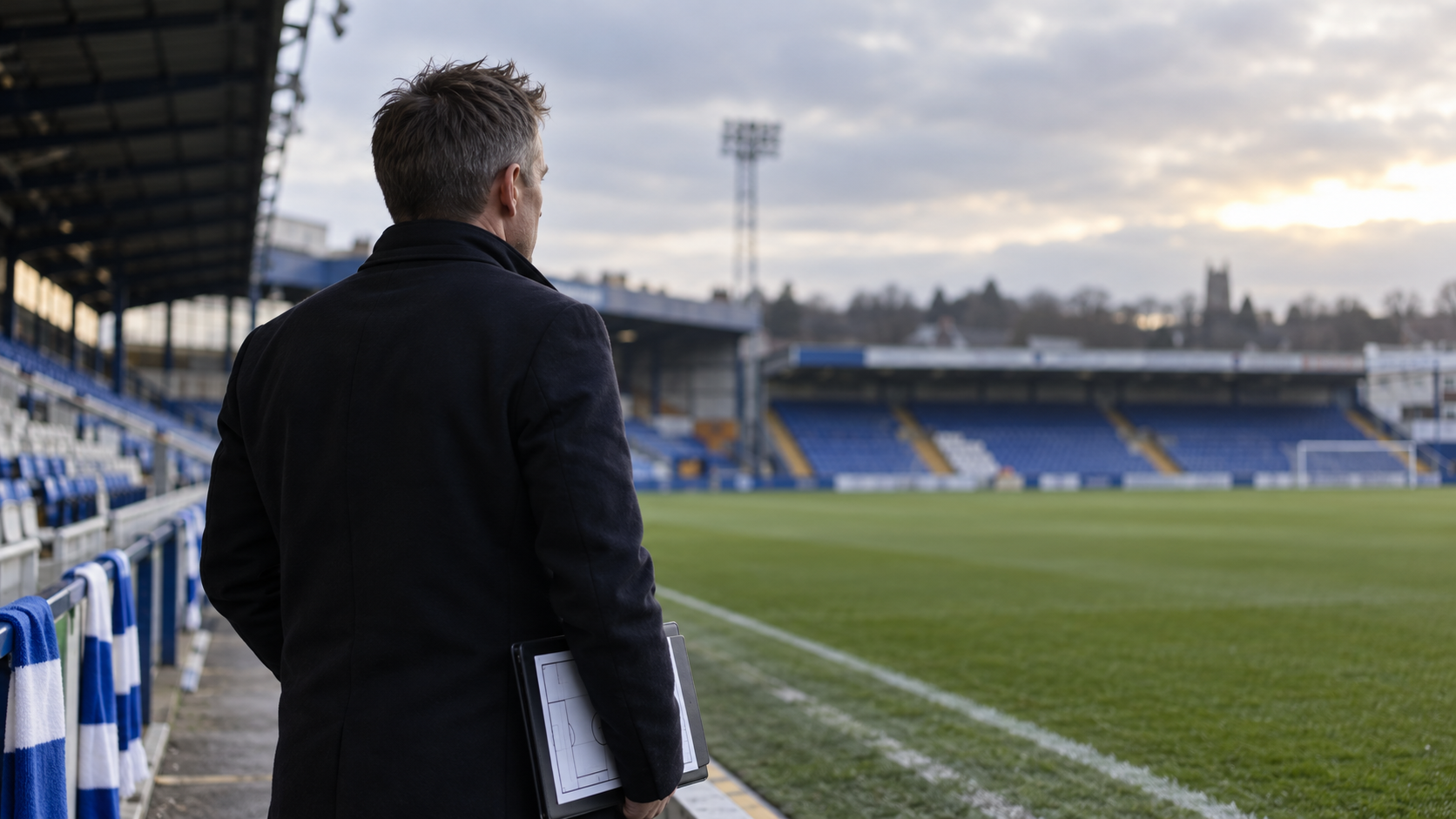
It was while standing on the Portman Road turf in the brilliant light of early May, surrounded by the happiness and relief of a third promotion in five seasons, that Kieran McKenna knew the time had come. He had briefly considered leaving Ipswich earlier in the campaign, but the relentless demands of the Championship pushed the idea aside. “When I stood there, I felt it was probably the right moment,” he says, recalling the aftermath of the victory over QPR that confirmed a return to the Premier League. “We had secured another important win, the stadium was full, and my family and the supporters were there. It felt like an incredible way to leave on a high.”
Five months on, McKenna remains comfortable with his choice to step away while everything was going so well. A golf bag outside his garage reflects both his enjoyment of the break and a more meaningful change in his priorities. His son has recently taken up the sport, and the opportunity to spend time with those closest to him—whether playing golf or travelling along the East Anglian coast in a camper van during the summer—was a major reason for pausing his rapidly advancing career. Now 40, he had devoted two decades to coaching and wanted time to value family life while developing professionally at a pace of his own choosing.
As had happened before, McKenna was connected with possible moves elsewhere, but many people struggled to understand why he would willingly take a career break when his decision became official in June. “It may be harder to understand from the outside,” he says. “The people who know my journey, understand my principles and are closest to me could see why I wanted to step away and how a period like this could benefit me.”
Some within football viewed the situation differently. McKenna received calls offering possible routes back into management, but he felt they came “too soon, particularly considering how I departed Ipswich”. He takes pride in having left on positive terms, something managers are rarely able to do, and feels no urgency to return. “I’m definitely not rushing,” he says. “I’m appreciating the time I have, and I hope the right opportunity eventually appears. I have a sense of what that opportunity would look like, although football rarely develops exactly as planned.”
Since the beginning of September, he has gradually started reconnecting with the game. He has resumed watching and analysing matches while also visiting Bayern Munich, rugby league side Wigan Warriors and Colorado Rapids, where his friend Matt Wells is in charge. McKenna has also studied foreign languages and continued improving his already solid Spanish. This week he is spending time with clubs in Spain, and next Wednesday he will serve as a Uefa technical observer when Shakhtar Donetsk face AEK Athens at Stamford Bridge. “Before accepting another challenge, I wanted to give myself the strongest possible opportunity to learn,” he says.
McKenna repeatedly returns to a point he made after promotion in May: the 2025-26 campaign was the most demanding of his four and a half seasons at Ipswich. During that period, he guided the club through a remarkable climb from League One to the Premier League and became one of the game’s most highly regarded managers. Expectations were even greater in his final season. Ipswich had been relegated and were widely expected to return immediately, despite the gradual departure of several members of the exceptionally united group that had driven their rise through the divisions. In practical terms, he led two substantially different teams to promotion.
“It is easy to see how events might have moved in two completely different directions,” he says, drawing a parallel with Luton’s decline after their short return to the highest level. “Inside the club, we believed that unless we worked extremely hard to bring everyone together, the situation could quickly have turned negative.”
McKenna successfully guided Ipswich to their objective and then brought his own chapter at the club to a close. He had previously come near to leaving on several occasions, but an earlier departure would not have felt right. “There were many opportunities for me to go, and I could have left under several different circumstances,” he says. “But I always knew I wanted to depart in the best possible way: with the club in a strong position, back in the Premier League and equipped with an excellent platform for what everyone hopes will be a successful era.”
He says the most difficult moment of his final day came when he faced a camera and delivered a five-minute message to the supporters without trying to hide his feelings. He recalls emotional but happy farewells with coaches and numerous other colleagues. Many of those relationships, especially the ones formed with members of the “really, really special team” he led to consecutive promotions, are likely to last for life. On the evening before this interview, he spent much of his trip home from London talking with one of them.
McKenna laughs at the suggestion that he might have wanted control of the £200m spent on transfers during the summer, along with the new training facility whose design he helped shape, resources that appear to have given his successor, Gary O’Neil, a stronger chance of avoiding relegation. Instead, he believes those developments demonstrate that Ipswich have begun a fresh chapter. He also insists that concern about the possible damage another relegation might cause to his reputation played no part in his departure. “It was not driven by fears about the worst possible outcome or everything that might go badly,” he says.
His decision was instead about putting everyday life first, something evident at the family home located around a 30-minute walk from Portman Road. McKenna and his wife decided to remain in Ipswich, where their two children attend school, after becoming deeply connected to the town rather than simply passing through it. Sir Alf Ramsey and Sir Bobby Robson also retained homes nearby after progressing in their careers. McKenna has achieved a similarly celebrated status in this modest but football-obsessed community. Although he avoids attention and carefully selects where he spends his free time, the affection felt across the town and county regularly becomes apparent.
“People are always considerate. They approach us to explain what the past few years have meant to them, their relatives and their friends, and they wish me well,” he says. “We moved here together, fully committed ourselves and became part of the local community. That has been another extremely rewarding part of the experience. Remaining in the place where you previously managed is slightly unusual, but right now it is the correct choice for our family.”
Has habit ever caused him to begin an early drive towards the training ground? “You might expect that, but my routine is completely different now. I no longer set an alarm for 5.30am and travel there before sunrise. I wake up with the children, eat breakfast with them and am home when they go to sleep. The surroundings may be unchanged, but the way I live is entirely different.”
He does not believe the intense previous five years, during which skills developed at Tottenham and Manchester United flourished spectacularly, have altered the down-to-earth character shaped by his upbringing in rural County Fermanagh. “I probably feel two decades older,” he says. “But when I saw my friends back home during the summer, they told me I was still the same person I had been at 10. My coaching background could hardly have prepared me better when I arrived at Ipswich. Even so, if somebody had shown me everything I would face over the following five years, I would never have believed them. Living through so many situations inevitably leaves you more knowledgeable.”
Even so, voluntarily stepping back when so many possibilities are available remains exceptionally unusual among football managers. Perhaps more of them should consider it. “What suits me after 20 years in coaching may not suit someone who finished playing only three years ago,” he says. “It has involved an enormous amount of effort. You leave United, collect your belongings, get into the car and arrive in Ipswich five and a half hours later. At 35, you temporarily leave your family, move into a hotel 10 days before Christmas and dedicate yourself completely to the role for the next four and a half years, while your family makes the same commitment. I want us to appreciate this time together, use it to think about what has happened and ensure I am as prepared as possible for my next job.”
What, then, would the ideal next stage of McKenna’s career involve? He has been mentioned in connection with possible openings at Celtic and former club Spurs. His name is likely to feature in further discussions once managerial departures begin during the season, although Ipswich would be entitled to a substantial payment if he accepts another position this year.
“I will always look for a club where I can develop players, produce attacking football and achieve victories,” he says. “Beyond that, I am a manager who values forming a bond with a club and its community while working to create something people will remember. Ipswich offered a truly exceptional opportunity, and I would love to build something similar again during my career. At the same time, you must be prepared to arrive at a club and deliver results quickly.”
Another opportunity is almost certain to emerge before long. If circumstances fall into place, it is easy to picture McKenna coaching in the Champions League within the next few years. Until then, he intends to keep learning, while news from Portman Road will remain close at hand because his brother and children regularly attend matches. For now, however, he prefers to concentrate on the future rather than return to his former ground. “I think that will happen much later,” he says. “They are focused on their season now. Nothing can reduce the affection and pride I feel about everything we experienced together. Hopefully, one day I will return to the stadium as a former manager, and some people will still recall the moments we shared.”
Those memories are unlikely to disappear, and McKenna hopes that by the time he returns, supporters at another club will also have experienced something equally remarkable under his leadership.
What do you feel about this post?

Like

Love

Happy

Haha

Sad