Even so, the achievements of Motherwell and Falkirk have evidently made an impact.
Dundee United manager Jim Goodwin openly acknowledged that Askou, who now coaches Ligue 1 club Toulouse, encouraged him to rethink his approach after spending more than 15 years playing and managing in Scotland.
United are among several Premiership clubs to have adopted a different style this season. That change can be seen in the competition’s overall statistics, although the figures are based on only seven games per team.
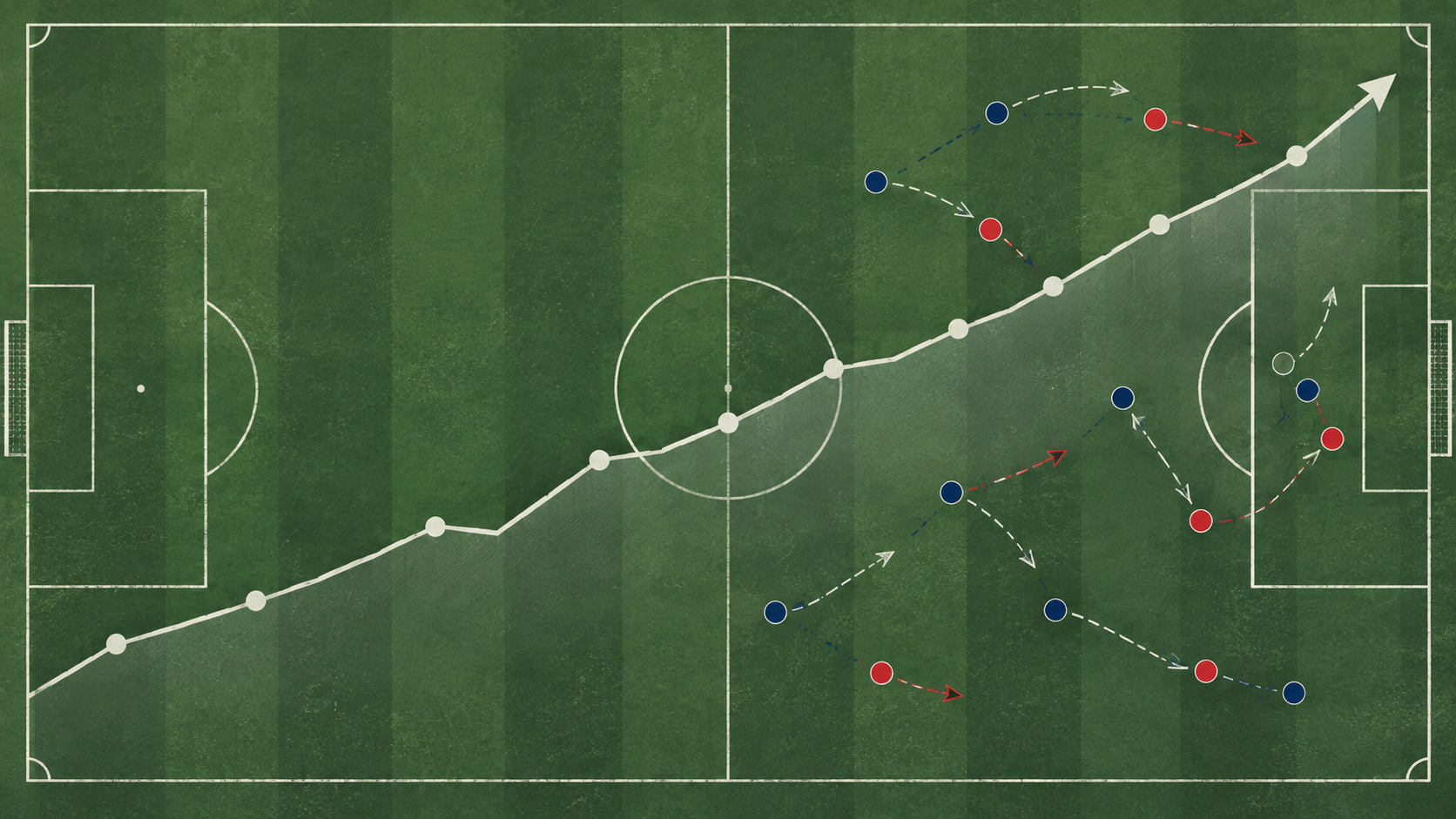
The league is now averaging 886 passes per match, the highest figure across the past five Scottish top-flight campaigns. That is 58 more than last season, while the average five years ago stood at 795.
Pass completion has also climbed to 81%, representing a substantial rise from the 73% registered during the 2023-24 season.
The increase has been driven by a greater emphasis on shorter passes. Long balls now account for just 13% of passes across the division, the lowest proportion in five years. Somewhat unexpectedly, Hearts and Rangers use long passes more frequently than the other clubs.
Goodwin’s Dundee United have raised their average possession from 42% last season to 50% this term, while their number of successful passes per game has jumped from 219 to 320.
Comparable changes are visible at Craig McLeish’s St Mirren and Neil McCann’s Kilmarnock. Meanwhile, table-topping Celtic and Alfred Johansson’s Motherwell jointly lead the possession rankings with 61%.
St Johnstone’s promotion at Livingston’s expense has also introduced another team committed to a more adventurous and expansive playing style.
Hibernian’s recent decision to appoint Dutch coach Marink Reedijk should strengthen that trend further.
What do you feel about this post?

Like

Love

Happy

Haha

Sad