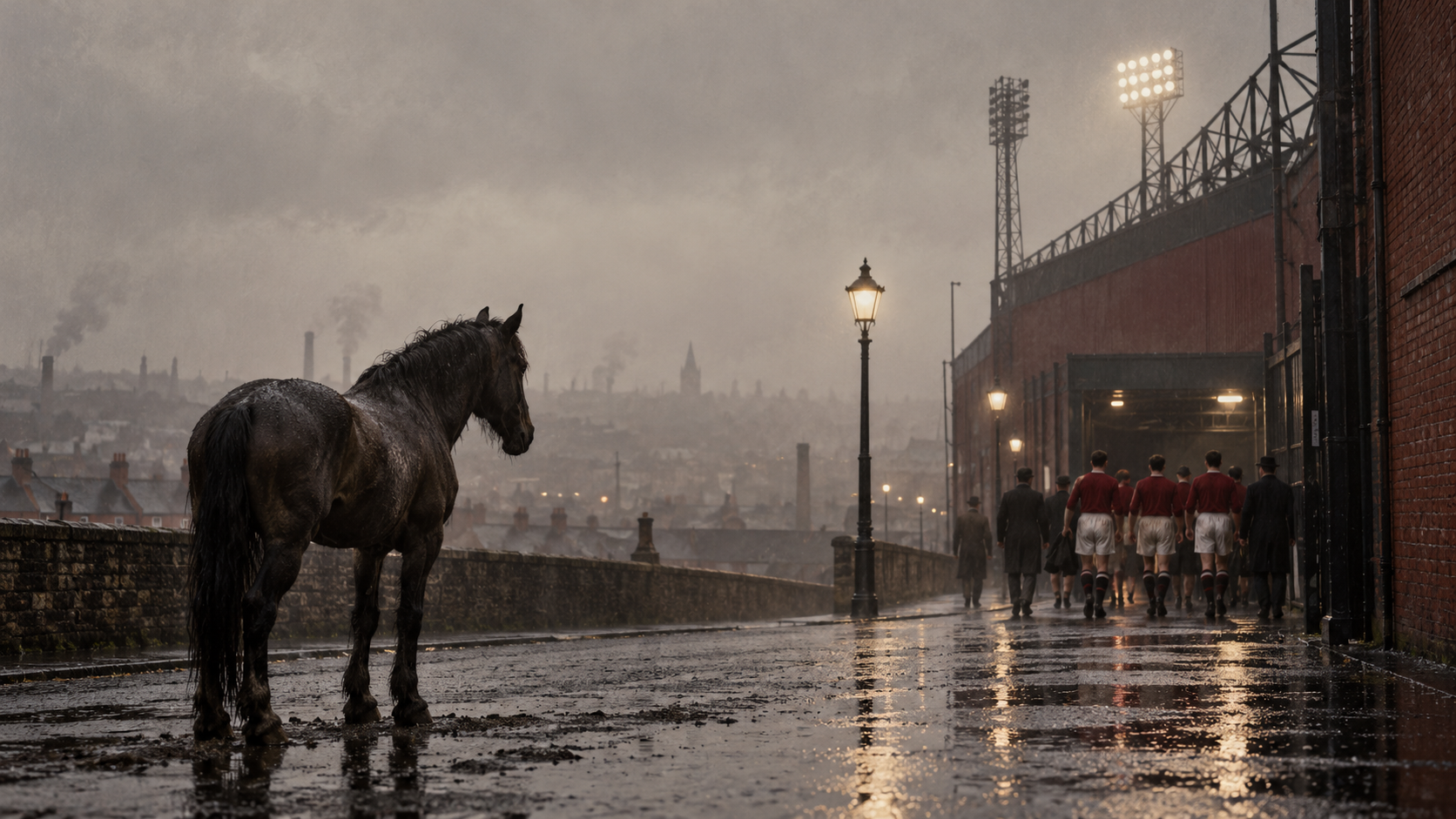
Once more, the evenings are growing darker and Manchester United appear to be approaching another managerial dismissal. An autumn crisis at Old Trafford has become an all-too-familiar pattern. Sunday’s 3-0 home loss to Bournemouth followed a 4-1 defeat by Como the previous week, strengthening concerns that Michael Carrick was not ready to take permanent charge.
Yet it is difficult to believe that changing the manager again will solve everything. After cycling through numerous coaches over 13 years, the club should examine those responsible for its broader direction. That includes director of football Jason Wilcox, chief executive Omar Berrada and Sir Jim Ratcliffe, the minority shareholder overseeing sporting matters. Responsibility also reaches the Glazer family, whose leveraged takeover in 2005 burdened United with debt. A succession of damaging choices has transformed England’s most decorated league club into an underperforming side, with even the leaking stadium roof serving as a symbol of decline.
To understand how United reached this position, it is necessary to return to the beginning. The club’s downfall resembles a classical tragedy: an apparently minor event, intensified by pride and conflict, eventually causes an entire institution to unravel.
In 1999, Mull of Kintyre, a racehorse belonging to Irish businessman John Magnier, won the Gimcrack Stakes at York. Tradition required the victorious owner to address the Gimcrack Dinner, but Magnier disliked speaking in public and asked his friend, United manager Alex Ferguson, to deliver the speech instead. Racing officials refused, insisting that only the registered owner could do so. Magnier responded by listing Ferguson as the owner of another horse, Juniper. After Juniper narrowly missed out in the same race the next year, Magnier tried again by making Ferguson the owner of Rock of Gibraltar, an unbeaten horse after three starts. Rock of Gibraltar comfortably won the Gimcrack, allowing Ferguson to give the speech and Magnier to make his point to the racing authorities.
Magnier’s gesture was partly playful, but it also helped a friend enjoy a deeper involvement in racing while linking the horse to a famous sporting figure. Ferguson, meanwhile, had a difficult relationship with United chairman Martin Edwards and believed football clubs were becoming attractive investments. Magnier and his associate JP McManus subsequently purchased shares in United. (Journalist David Walsh examines the complete account in this discussion).
Rock of Gibraltar then proved far more successful than expected, recording seven consecutive Group One victories. Its future breeding rights were potentially worth tens of millions of pounds. Ferguson understood their verbal agreement to mean that he could receive either half of the horse’s prize earnings, worth about £800,000, or half of the breeding income. He selected the far more valuable second option. Magnier remembered the arrangement differently, believing Ferguson was entitled only to 5% of the prize money or one breeding nomination each year.
Ferguson began legal proceedings and, because his name appeared on the ownership records, may have prevailed in court. Soon afterward, however, questions emerged about some of his financial arrangements at United. Paid participants raised uncomfortable issues during the club’s annual general meeting, while Magnier and McManus submitted 99 questions to the board that later appeared in the Daily Mail. The episode caused considerable embarrassment, and supporters protested against the two shareholders at racing events. Eventually, Ferguson accepted £2.5m to end the case, but the dispute had already produced lasting consequences.
Magnier and McManus chose to dispose of their United holdings, with Malcolm Glazer positioned to buy them. Ferguson supported Glazer, who proceeded with a debt-funded takeover. In 2005, Magnier and McManus sold their shares for £260m, earning just under £100m in profit. If they had retained the stake until Ratcliffe made a comparable investment in 2024, they might have collected approximately £1bn more. Ferguson had removed an immediate challenge, but the long-term cost to the club proved severe.
Glazer and his family subsequently became deeply unpopular owners. Over the next two decades, United carried substantial debt while repeatedly making poor sporting decisions. Ferguson’s exceptional management, powerful influence and strong squad initially concealed those weaknesses, delivering five league championships and one Champions League title after the takeover. Once he retired, however, the fragile structure behind that success was exposed.
The current squad is the product of seven unsuccessful managerial appointments and several incompatible footballing philosophies, so rebuilding it will not be straightforward. Carrick is merely the newest casualty of a crisis that has developed over 21 years. A disagreement involving a racehorse ultimately helped set in motion the decline of an entire football club.
What do you feel about this post?

Like

Love

Happy

Haha

Sad