
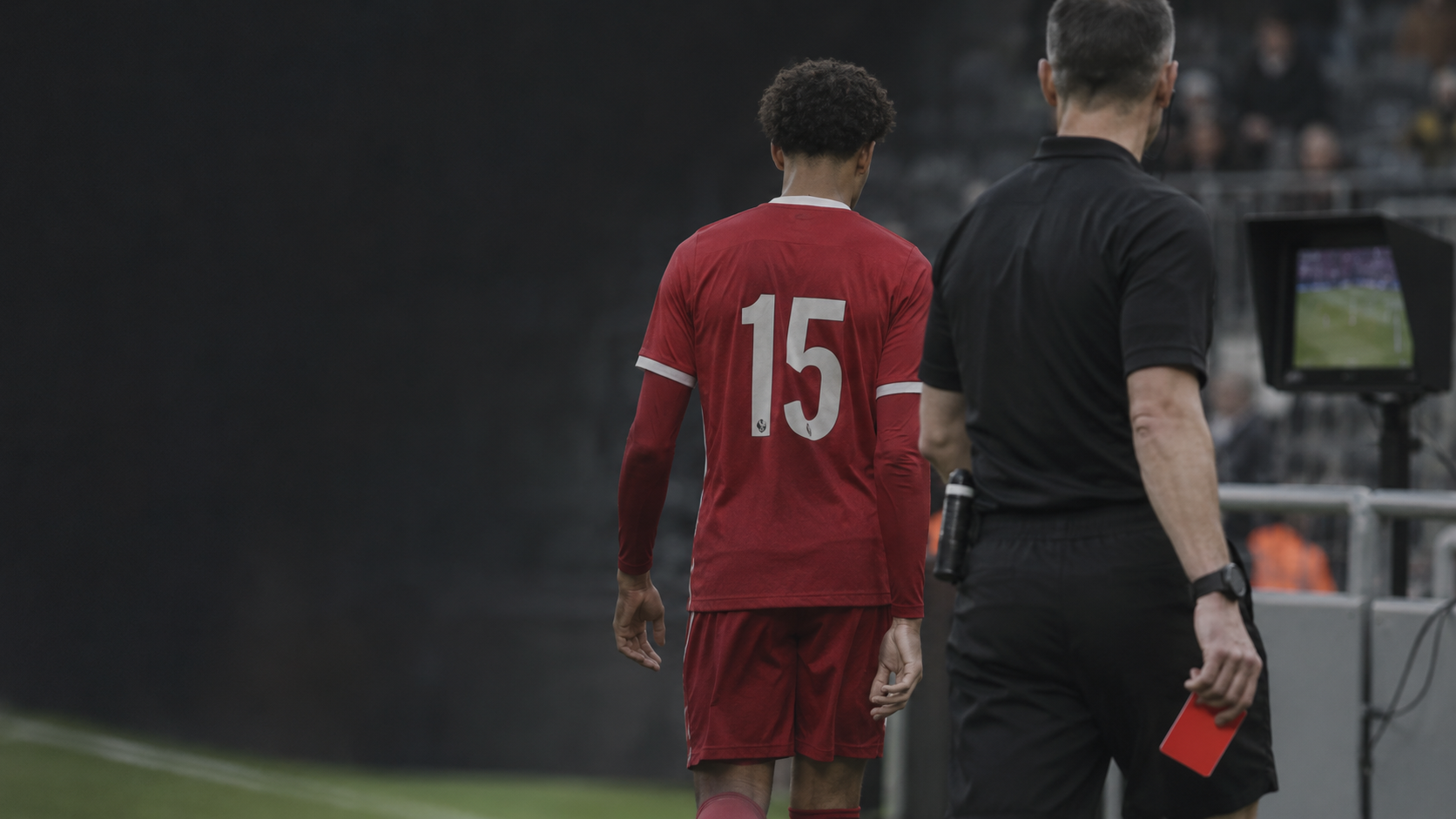
United ultimately succeeded with their appeal, despite the refereeing body taking a different view. Could both parties simply accept their disagreement?
Speaking about Yoro’s dismissal, Pochettino said: “When you ask me about it, I have to stand up for our position, our club and our players.”
His response echoed the stance he had taken during the post-match media conference.
It was understandable that Pochettino preferred to focus on the sending-off rather than his team’s display, particularly after suffering the first defeat of his tenure. Perhaps the Argentine was also trying to foster an us-against-the-world mentality.
United’s irritation was equally understandable, as refereeing calls had significantly influenced two of their most important matches of the season.
The first involved a VAR mistake that allowed Erling Haaland’s decisive goal in the Manchester derby, even though Enzo Fernandez had clearly been in an offside position.
Regarding Yoro’s challenge, Pochettino directed most of his criticism at the video review. United believed the official gave insufficient consideration to where the ball was heading.
How, then, should Webb’s response be interpreted?
It is important to remember that the officials’ analysis programme featuring Webb’s comments was recorded on Monday evening, before the appeal outcome was announced.
Even with that result known, he would almost certainly have maintained the same position.
Webb accepted the case against issuing a red card, namely that Isak was unlikely to reach the ball. However, he remained convinced that the decision was not a sufficiently obvious mistake to justify VAR stepping in.
That brings the debate back to the circumstances in which video officials should intervene.
The standard for intervention is criticised as too strict in one case and too lenient in another, creating a debate that continually repeats itself.
Premier League clubs, rather than the refereeing organisation or the Football Association, determine how high that standard should be.
The latest survey of key participants, which helps guide officiating policy, illustrates that point.
According to the findings, 65% supported keeping the existing intervention threshold, 20% wanted it raised and only 15% preferred a lower bar.
Even so, opinions will continue to differ over where the Yoro incident falls within those guidelines.
What do you feel about this post?

Like

Love

Happy

Haha

Sad