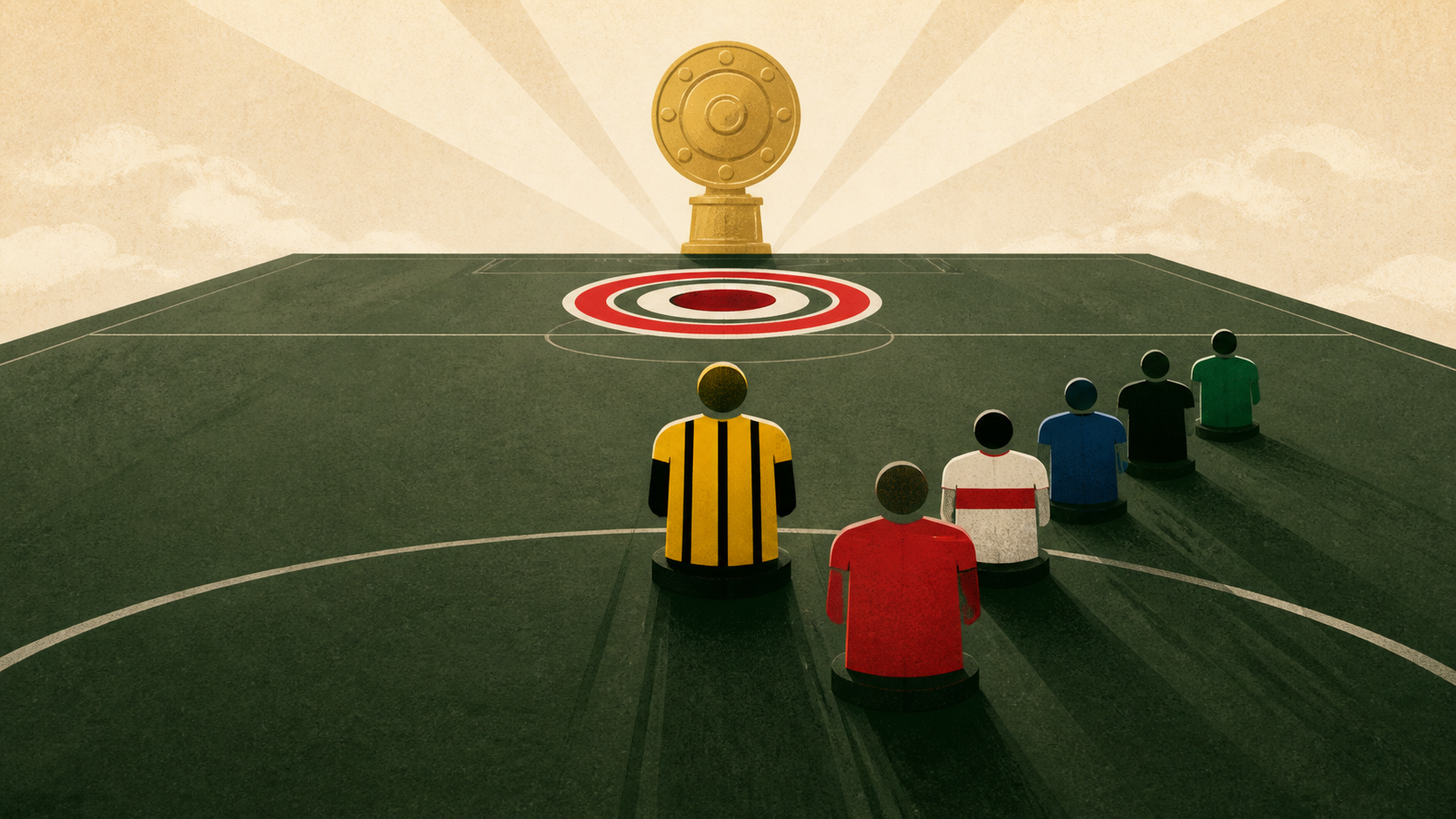
The Franz Beckenbauer Supercup carries slightly greater competitive weight than many similar fixtures elsewhere in Europe. Several factors contribute to that atmosphere. The Bundesliga’s customary opening contest between the league champions and cup holders takes place at one club’s home ground rather than at a neutral venue, making it feel like a meaningful domestic match.
Supporters in Germany would also strongly oppose moving the game abroad, a position Borussia Dortmund managing director Carsten Cramer firmly repeated during the weekend. As a result, the occasion feels more like a genuine contest than a ceremonial exhibition.
This year’s meeting had another source of excitement: Bayern Munich and Borussia Dortmund are widely expected to be the strongest teams of the coming campaign. Last season’s runners-up hosted the champions, and Dortmund showed enough to suggest they could create problems for their rivals. Bayern dominated the opening half, but BVB responded with a much stronger performance after the interval before the visitors secured the season’s first trophy.
Whether that performance indicated a serious title threat is less certain. History suggests another German club needs both an outstanding side, like Jürgen Klopp’s Dortmund or Xabi Alonso’s Bayer Leverkusen, and an underperforming Bayern to claim the championship. At present, Bayern show few signs of satisfying the second condition.
Over the past 15 years, domestic setbacks have usually prompted a powerful reaction from Bayern. Dortmund’s success inspired the response that produced the 2013 treble, and Vincent Kompany has now overseen a similar recovery from a difficult period. Klopp’s triumphs in 2011 and 2012 were followed by later moments of vulnerability, including Dortmund’s final-day collapse in 2023 and Leverkusen ending Bayern’s reign in 2024. Once again, two uncertain seasons appear to have driven the club toward an emphatic revival.
The leadership behind that resurgence has been essential. Few people predicted in early 2012 that Jupp Heynckes would turn Bayern into an almost unbeatable team. Likewise, Kompany was not widely identified as the coach capable of taking the club back toward standards last seen during Pep Guardiola’s finest period, yet that is what he has begun to achieve.
Kompany has reshaped both the intensity and mentality of the squad. Bayern have added only two established players, but Nathaniel Brown, who opened the scoring in the Supercup, and Ismaël Saibari both appear ideally suited to the team. Their impact also demonstrates how difficult it is to strengthen an already formidable group.
Harry Kane represents the tireless character of this Bayern side as the club begins the campaign by strongly supporting his Ballon d’Or credentials. Speaking before Saturday’s match, he explained that the team wanted to make a statement, maintain its momentum, challenge one another and discover how much further it could progress.
Bayern’s domestic opponents generally accept, both openly and in private, that matching their pace may be unrealistic. Dortmund have finally recognised that buying prominent names simply to keep up is not an effective plan. The club has completed an important summer overhaul by moving on from the substantial salaries of Niklas Süle, Julian Brandt and Karim Adeyemi. Young Greek midfielders Konstantinos Karetsas and Giannis Konstantelias have arrived to provide fresh energy and should fit the demands of coach Niko Kovac.
Prioritising youth is a sensible change that should have happened sooner. Dortmund’s Supercup display suggested that, although the path to the title remains steep, the squad is now better equipped for the challenge.
The prospects of Leverkusen and RB Leipzig are more difficult to assess. Leverkusen, champions in 2024, considered last season’s failure to qualify for the Champions League a major disappointment. However, it also gave the club an opportunity to part with Kasper Hjulmand and close a turbulent chapter that began with Erik ten Hag lasting only three matches.
Sporting director Simon Rolfes described the latest pre-season as calmer, and stability has returned to BayArena despite Alejandro Grimaldo’s departure for Atlético Madrid. The club remains ambitious under new coach Carles Martínez, with several arrivals—including Moussa Diaby’s return from Saudi Arabia—reinforcing those intentions. Leipzig will compete in the Champions League, although their precise objectives remain uncertain. They wanted to retain Yan Diomandé, but Real Madrid’s offer proved impossible to reject, giving RB more than six times the €20m paid to Leganès a year earlier. Re-signing Christopher Nkunku is an adventurous move, though recruiting a player who turns 29 in November differs from the club’s usual approach. The failed return of former favourite Timo Werner also provides a warning. Ole Werner’s dismissal, approved by Klopp before he accepted the Germany position, and the appointment of Martín Demichelis represent another gamble after Demichelis oversaw Mallorca’s relegation in May. Clubs must also consider the Bundeskartellamt’s recent conclusion that the Bundesliga’s application of the 50+1 rule is legitimate under competition law. The ruling indicates that the regulation will remain and may lead to stronger demands for meaningful supporter representation on the boards of commercially established clubs.
Stuttgart and Sebastian Hoeness aim to show they can compete effectively in both the Bundesliga and Champions League, perhaps the final major test for one of the division’s most highly regarded coaches. With the transfer window nearing its conclusion, sporting director Fabian Wohlgemuth has preserved most of an excellent squad while adding youthful attacking options in Dzenan Pejcinovic and Leo Sauer.
After reaching their first Europa League final under Julian Schuster, Freiburg have wisely reinvested part of the income from Johan Manzambi’s transfer to Aston Villa. Their reinforced squad may reasonably view the Conference League as a competition they can win. Hoffenheim have used the entire Bazoumana Touré fee while preparing for their Champions League return, whereas Eintracht Frankfurt are primarily relieved to have moved on from Albert Riera.
Several historically prominent clubs could once more find themselves near the bottom of the standings. Schalke return after three years away, having developed a clear identity under Miron Muslic last season. They are captained by 40-year-old Edin Dzeko following his contract extension, but survival remains the priority. Northern rivals Hamburg and Werder Bremen possess more celebrated forwards than expected, although they must help Terem Moffi and Nicklas Füllkrug, respectively, rediscover their best form.
Köln have gained a sporting advantage from the collapse of Saïd El Mala’s proposed move to Dortmund. He will become the first Effzeh player since Lukas Podolski to wear the No 10 shirt.
Many observers believe the top and bottom positions already look predictable, with Bayern expected to finish first and debutants Elversberg, representing a town of only 13,000 residents, tipped for last place. Dortmund have nevertheless demonstrated that energy and emerging talent can disrupt the anticipated hierarchy, even if the effect proves temporary.
What do you feel about this post?

Like

Love

Happy

Haha

Sad