
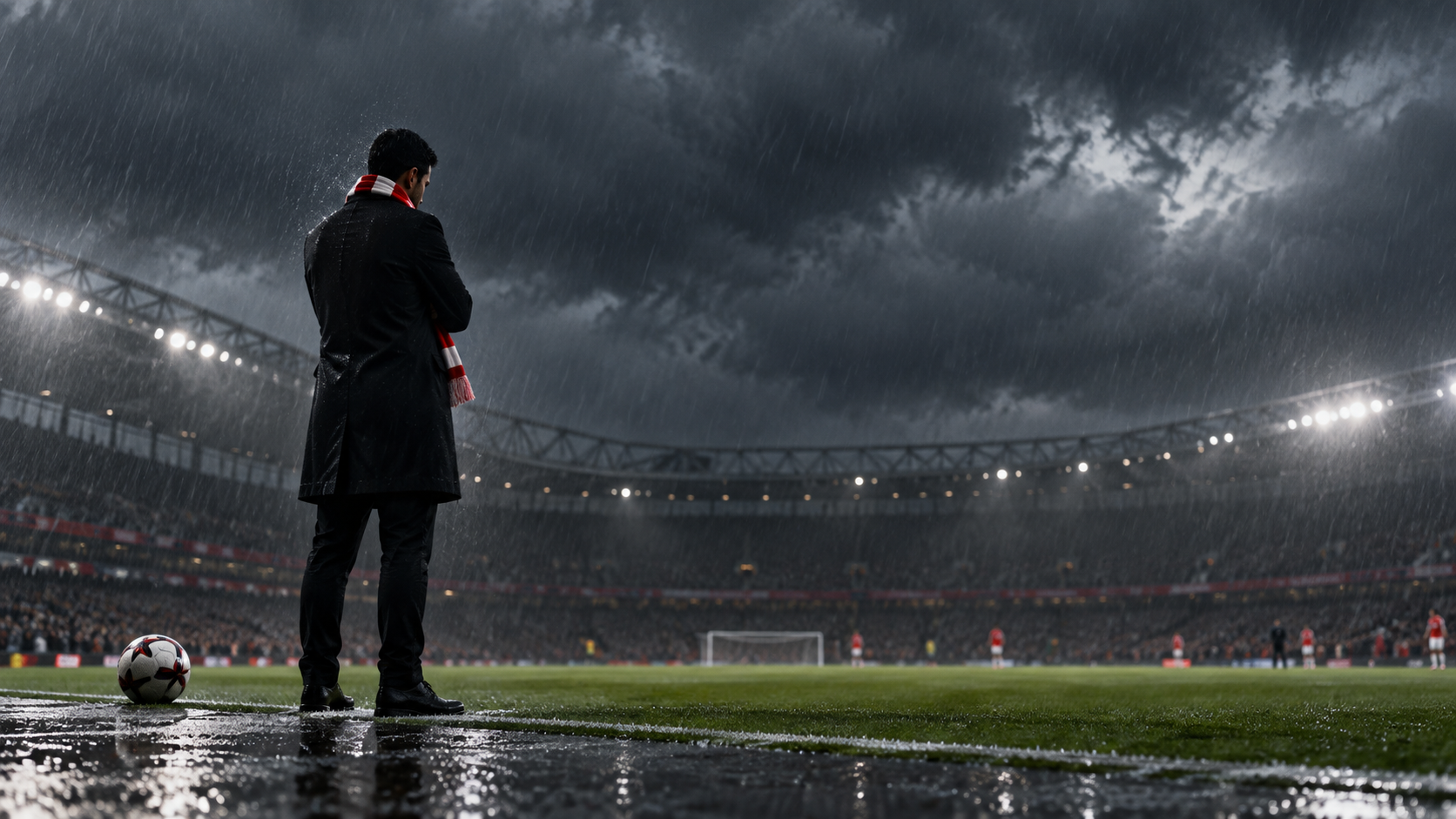
A gentleman is impolite only when he intends to be. The origin of that observation is uncertain, but it could belong in a handbook for top-flight managers facing the media. In press conferences, almost nothing is left to chance.
Every statement delivered against a sponsor-covered backdrop is carefully judged. A coach rarely shows anger, concern or charm without a purpose. The contest extends far beyond what happens on the pitch.
That was difficult to ignore while hearing Mikel Arteta discuss the penalty given to Sunderland at the Stadium of Light after Ezri Konsa was judged to have wrestled Dan Ballard. His delivery carried all the conviction of someone who knew the moment would be replayed and closely examined.
Arteta performed the role impressively, looking deeply affected by the issue and projecting the disappointment of an authority figure appealing for fairness.
Even so, it is unlikely that Arteta is genuinely consumed by worry or sadness. Nor was he speaking only as an ordinary supporter determined to safeguard the sport for everyone.
This is a coach renowned for pursuing the smallest possible advantage and preparing every minor detail. That approach is common throughout elite sport, where even apparently trivial routines can be assessed for their potential effect on performance.
His public comments should be viewed in the same way. The possible responses were almost certainly considered beforehand for clear tactical reasons. The important question, then, is what he hoped to achieve.
Three conclusions stand out. The first is that Arteta had a valid complaint: the decision was poor. Ballard appeared to drag Konsa down while simultaneously reacting as though he had been unfairly challenged.
The mistake was made worse by an apparent determination to enforce a more interventionist refereeing approach. Entering an incident with a predetermined objective, especially one based on loosely defined instructions, can easily distort judgment.
The second conclusion is that officials are not prejudiced against a particular club; they are struggling to perform the job consistently. The amount of information they must process instantly during modern matches has become overwhelming.
Most officials do not come from professions built around interpreting huge quantities of data under extreme pressure. They are not fighter pilots or financial traders, and relatively few hold university degrees. The demands now placed on them may simply exceed their preparation. That is not an insult, but an assessment supported by what repeatedly happens on the field.
The problem is compounded by confusion over their purpose. Officials are not directors responsible for shaping the entertainment or deciding how football should appear. The refereeing body has no authority to determine the sport’s preferred aesthetics. A referee should remain at the edge of the action, applying the laws rather than trying to redesign the spectacle.
Arteta, however, was prepared for such an incident. Arsenal’s coaching staff would have expected controversy to emerge eventually, and his media response may already have been planned. He might even have rehearsed the disappointed expression and central talking points.
Preparing in that way would be entirely reasonable. It breaks no regulation, just as Arsenal should not automatically be described as dishonest or excessively aggressive. They are adapting to a competition increasingly governed by intense analysis of minor physical contact.
Arteta’s team have excelled at gaining an edge within that environment. Modern defenders are often chosen for their technical skill rather than their ability to withstand forceful challenges. Exploiting that reality is rational, as is publicly arguing for interpretations of the rules that protect such an advantage. This strategic awareness is one reason Arteta has been successful.
The result has also contributed to an unusual atmosphere around the club. Football supporters cannot be reduced to one personality type, but Arsenal’s loudest online followers, along with sections of the stadium crowd, often display a powerful belief that their team is being unfairly treated. A shared sense of opposition and injustice has become a source of unity.
Few grounds respond so intensely to virtually every refereeing call, including incidents that could reasonably be judged either way. Some supporters seem to spend much of the match standing in theatrical outrage, engaging with the action primarily through a feeling of grievance.
That reaction is understandable because it reflects the version of football that has been created: a sport increasingly dominated by arguments over technical details and the precise wording of regulations.
The overall statistics do not necessarily support the belief that Arsenal are routinely disadvantaged. They have received more free-kicks than any other side this season. In each of the previous two campaigns, only six teams conceded more fouls, while Arsenal collected the fewest yellow cards last season. They have not had a player dismissed since receiving six red cards in the 2024-25 campaign.
Nevertheless, several major incidents remain difficult for supporters to forget. These include Bruno Guimarães being denied a penalty at Aston Villa and the incorrect use of video-review lines against Brentford in 2023. If the latter had truly been an organised attempt to manipulate the result, it would have been an extraordinarily obvious and incompetent one.
There is also frustration that certain minor offences, such as delaying restarts or interfering with the ball, appear to be punished more harshly when Arsenal commit them. Yet a team that deliberately operates near the limits of the laws is naturally more likely to encounter controversy in those areas.
Arteta has become highly skilled at expressing controlled anger from a distance. After once saying relatively little about officials, he now offers emotional but precisely directed criticism. The Sunderland penalty gave him an early opportunity to answer objections to Arsenal’s methods, present a prepared defence and highlight an undeniable concern: referees are losing command because the modern game has become too complicated for them.
The circumstances were ideal for Arteta. The decision did not alter the score because the penalty was saved, and the call itself appeared clearly mistaken. He could therefore apply public pressure while occupying a position that was easy to defend.
Similar episodes are likely as the season continues and Arsenal attempt to retain the advantages created through close-contact situations, attacking routines and defensive planning. Combined with Arteta’s accomplished performance in front of the media, Saturday represented an important victory on several levels.
What do you feel about this post?

Like

Love

Happy

Haha

Sad