
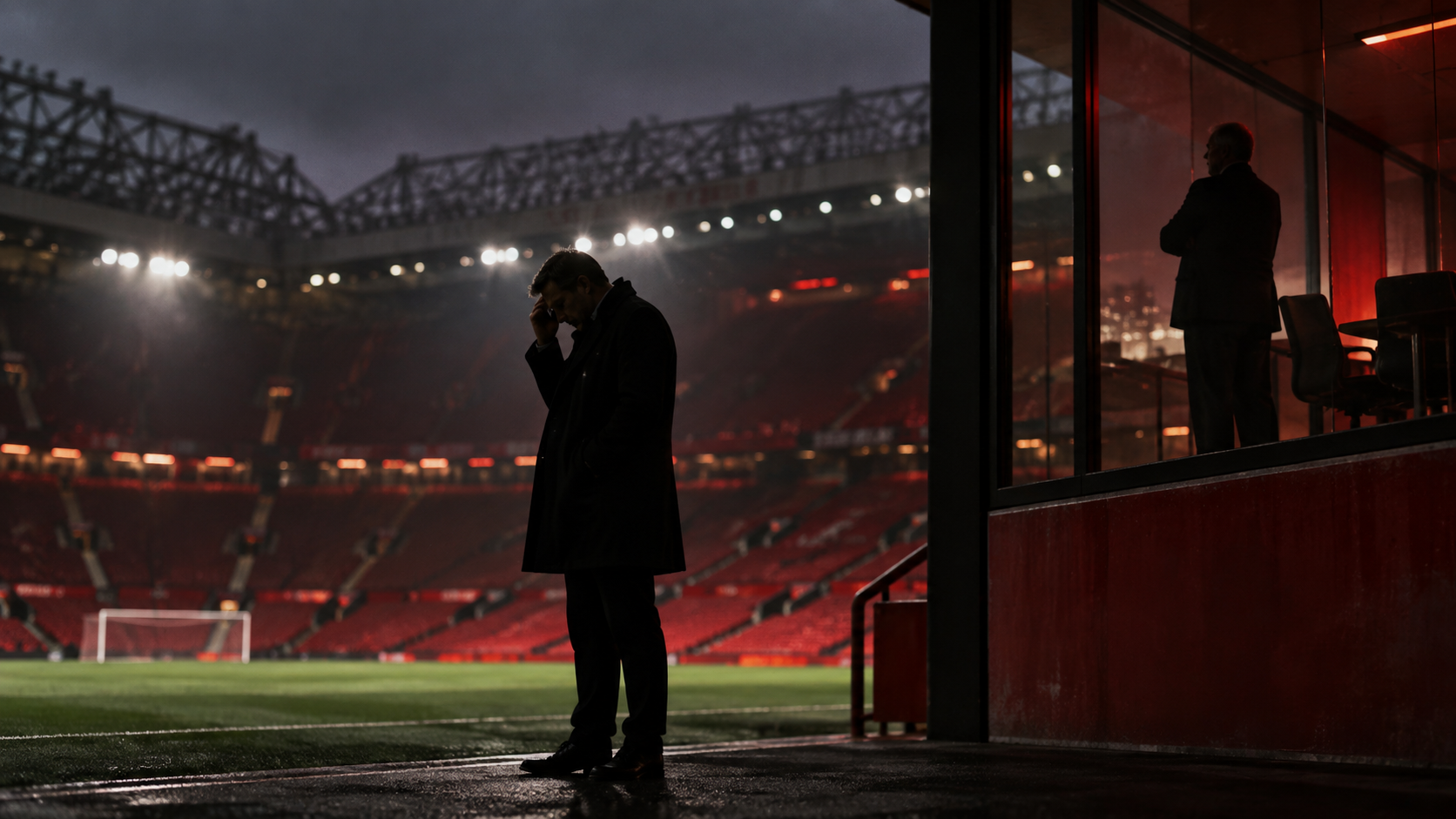
The final whistle on Wednesday was greeted by both boos and indifference as Manchester United exited the Carabao Cup, adding another bleak chapter to their recent domestic cup record. Michael Carrick and his players faced the supporters’ anger, while director of football Jason Wilcox appeared visibly displeased as he left the directors’ box. However, he and the club’s leadership must also acknowledge their part in the situation.
Such reactions are part of football, where fans quickly judge what they see and make their feelings known to the people they believe their money helps employ. Carrick and his squad are the public representatives of the club, responsible for addressing the media and supporting commercial commitments.
Although the head coach is frequently held responsible for everything from team selection to recruitment, the reality involves many more decision-makers.
Carrick came back to United in January, but the broader strategy had already been shaped by others, with the head coach operating inside that structure. Pressure is unavoidable in his position, and defeat at Fulham on Sunday would intensify it considerably.
United supporters understand who controls the club, as demonstrated by repeated protests against the Glazer family and Sir Jim Ratcliffe. They know that everything unfolding during a match cannot be blamed solely on the coach and players. The boos reflect frustration with the immediate display, while the sense of resignation relates to deeper problems. Fans find it difficult to watch a Champions League club spend less during the summer than newly promoted teams, but years of poor financial management have created this reality. As a result, the available budget must be used with exceptional care.
United took a two-goal lead against Brighton inside 10 minutes, yet deservedly lost after playing only a limited role in the remaining 80. That collapse clearly suggests significant problems within the side, something Carrick already recognises. Brighton made numerous changes but still fielded an impressive collection of players recruited from around the world through intelligent scouting. They brought in talent from clubs across seven countries during the summer, whereas United completed four deals with Premier League teams. Successful recruitment requires energy and carefully judged risks, qualities seldom evident at Old Trafford. That is particularly striking because Senne Lammens, signed from Royal Antwerp, proved to be the previous summer’s best addition in terms of value and reliability.
A complete assessment of Carrick and Wilcox may have to wait until Carlos Baleba, the costliest of the three summer arrivals, becomes available, since his qualities should improve the team’s mobility. Recruiting central midfielders made sense following Casemiro’s departure and Manuel Ugarte’s disappointing performances, but other positions also needed reinforcements. The club privately recognised the squad’s wider weaknesses, yet strengthening it with so little variety appeared misguided and is increasingly looking like a serious error.
Signing footballers from other Premier League teams is rarely economical, although their familiarity with the competition can reduce adjustment time. Considering the shortage of options at left-back and Joshua Zirkzee’s limitations, choosing a less expensive midfielder than the £50m Andrey Santos might have allowed the club to improve the squad more evenly. Someone within the leadership should explain why spending £155m on three players for the same role was considered the best approach. Without that explanation, observers can only speculate while Carrick searches for an alternative plan during Luke Shaw’s widely anticipated injury absence.
Wilcox has previously spoken through the club’s own media channels. On 30 October 2025, following three straight victories, he outlined a long-term project that was disrupted when Ruben Amorim was dismissed a little more than two months later. Wilcox was willing to discuss the strategy with United’s editorial team while results were positive, but aside from official dismissal announcements, he has shown little desire to speak when circumstances deteriorate.
Sporting directors regularly address journalists elsewhere in Europe, but that practice remains uncommon in the Premier League. At United, the lack of communication becomes more noticeable while the team sits 13th.
Wilcox joined from Southampton in 2024, initially taking the position of technical director, and played a part in keeping Erik ten Hag after the club finished eighth. Ten Hag was eventually removed following a poor beginning to the next campaign. Amorim then arrived from Sporting even though his preferred tactical system did not suit the existing squad and limited finances made the necessary rebuild difficult. United subsequently finished 15th and produced a weak performance in their Europa League final defeat against Tottenham. After Amorim was dismissed 14 months into the job because of his own failures, Wilcox received another opportunity to correct the club’s direction.
Carrick is not beyond criticism, because United are performing below expectations. Heavy victories over promoted Ipswich and Azerbaijan’s Sabah cannot conceal an underwhelming start.
The defence has been unreliable, allowing seven goals across four Premier League matches, while Leny Yoro and Ayden Heaven delivered an alarmingly poor partnership against Brighton. The attacking unit has also lacked cohesion.
Wilcox earned considerable respect during his time as Manchester City’s academy director, with former colleagues regarding him as highly capable and ideally suited to that kind of position. Since advancing into a more senior role at United, however, his decisions have attracted much greater examination and criticism. Many observers would be disappointed if JJ Gabriel left, although responsibility would not rest with Wilcox, who has made substantial efforts to persuade the teenager to remain, including discussions with people close to him.
Senior authority at United should bring significant accountability, yet Carrick appears to be the only person required to accept it publicly. Ten Hag and Amorim lost their jobs after failing to deliver, while other influential figures remained in place. Carrick and Wilcox both have a major stake in the team’s success, but if performances do not improve, it appears that only one of them will face the consequences.
What do you feel about this post?

Like

Love

Happy

Haha

Sad