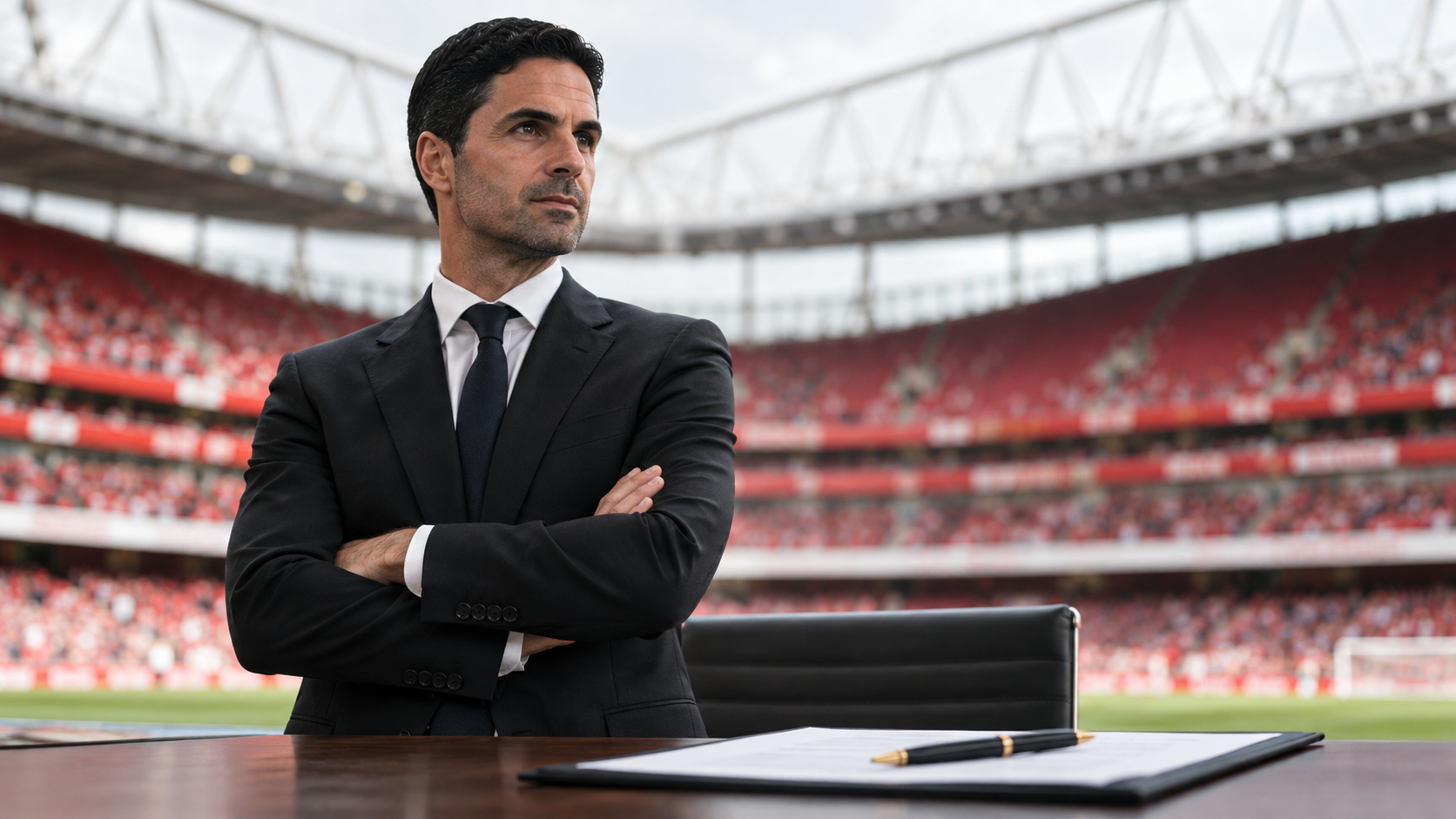
For anyone questioning Mikel Arteta’s position as Arsenal’s leading figure after he extended his commitment to the club until 2030, Win the dog offers a clear answer. The chocolate labrador, who featured prominently in the celebrations following Arsenal’s Premier League triumph in May, has become a familiar presence at the club’s Hertfordshire training base since Arteta introduced her in May 2023.
Kai Havertz, David Raya and Mikel Merino are among Win’s closest companions. Merino gives her instructions in Spanish and has described spending time with her while recovering from a foot injury that kept him sidelined for three months. However, those familiar with Win, a trained therapy dog who rarely makes a sound, say Arteta remains her favourite person.
Arteta reportedly took Win home during last year’s Christmas period and played a central role in bringing her to the club shortly after Arsenal had finished behind Manchester City for the first time. Soft-toy versions are sold in the club shop, while Win herself spends most of her time at the training centre under the care of a permanent staff member.
Arteta explained in 2023 that he had selected Win with great care because he believed she perfectly reflected the club’s identity at that moment. He added that her presence encouraged responsibility among the squad, as everyone had to consider her wellbeing, emotions and daily needs.
The decision illustrates the close attention Arteta pays to every aspect of the club, an approach that has helped turn Arsenal from distant contenders into champions. After signing a new four-year agreement on Wednesday, reportedly worth more than £20m annually, the Spanish manager warned their rivals that the team’s success was only getting started. Arsenal now hope his leadership can establish a long and trophy-filled era.
The duration of the contract is notable because it could take Arteta beyond 10 years in charge. He will complete his seventh year in the role in December, although he remains far behind Arsène Wenger’s tenure of almost 22 years. Wenger began work at Arsenal 30 years ago last week and rapidly became the club’s dominant authority. Arteta, whom Wenger appointed captain in 2014, has gradually expanded his own influence since returning to the club after working as Pep Guardiola’s assistant at Manchester City.
Arteta initially joined as head coach before being promoted to manager in September 2020, having lifted the FA Cup only six months after succeeding Unai Emery. As his authority has grown, several senior executives have left the organisation. At 44, he became the second-youngest manager after José Mourinho to win the Premier League. He also communicates directly with co-chair Josh Kroenke and holds considerable influence over major decisions both on the field and behind the scenes.
Arsenal’s decision this week not to proceed with a major enlargement of the Emirates Stadium reportedly followed concerns raised by Arteta about the disruption of temporarily relocating to Wembley or another venue. Kroenke Sports & Entertainment is also believed to have been discouraged by the expense of increasing the stadium’s capacity to 70,000, despite agreeing a record $4bn (£3bn) purchase of Major League Baseball’s Los Angeles Angels last month.
Those financial concerns did not prevent KSE from making Arteta the Premier League’s highest-paid manager. His new terms represent a substantial increase on the £10m salary and £5m Champions League qualification bonus agreed in 2024. Atlético Madrid manager Diego Simeone is believed to be the only coach earning more worldwide.
Arteta is also believed to have made the final decision not to pursue Malick Fofana after the Belgian forward became available during the closing days of the transfer window. He wanted to protect opportunities for 16-year-old prospect Max Dowman. The choice could become a source of regret after Christos Tzolis suffered a hamstring injury while representing Greece, an issue expected to keep him unavailable for at least three weeks. Even after Andrea Berta arrived as sporting director in March 2025, Arteta has clearly remained the principal decision-maker.
The intensity Arteta brings to his work raises questions about whether he could remain in charge for as long as Wenger did. So far, however, there is little visible evidence that the demands and pressure of the position have taken a physical toll on him.
Aside from a few grey hairs, Arteta looks much the same as he did when he accepted his first managerial position. Driven by the ambition to deliver consecutive league championships for Arsenal for the first time since the 1930s, as well as secure the club’s first European crown after last season’s penalty-shootout defeat to Paris Saint-Germain in the final, he appears ready to lead the team for many more years.
What do you feel about this post?

Like

Love

Happy

Haha

Sad