In 1990, United States men’s national team coach Bob Gansler made a pivotal and disputed decision. He omitted three decorated veterans and took a youthful, largely unproven squad to the World Cup in Italy, the country’s first appearance at the tournament in four decades.
Gansler later explained: “I wasn’t focused solely on 1990; I was also planning for the decade ahead.”
Steve Sampson adopted a similarly forward-looking outlook in 1998. He had unexpectedly landed the USMNT coaching position and narrowly retained it before that year’s World Cup, yet he still delivered an assured prediction. He said the United States would claim the trophy within 10 to 15 years, insisting that Americans usually accomplish a goal once they fully commit to it.
Around that time, an unspoken belief began to spread that the USMNT represented the future of international soccer.
That label never completely disappeared. Optimism about an undefined but supposedly inevitable breakthrough often centered on one or two individuals. At the 2002 World Cup, 20-year-olds Landon Donovan and DaMarcus Beasley supplied the energy and fearless ability behind the team’s modern-era breakthrough. When both struggled at the 2006 tournament, Clint Dempsey emerged as another exciting young figure. That same year, Freddy Adu made his senior international debut at only 16.
A familiar cycle consequently developed: the American soccer community kept waiting for a new hero to raise the national team to another level. The latest young prospect would deliver success—or perhaps the one who followed him would.
Dempsey remained influential longer than Donovan and began to decline just as Christian Pulisic arrived. Even with a promising generation forming around him, Pulisic became the player expected to produce a defining moment at the 2026 World Cup, the endpoint of an eight-year national-team rebuilding effort. Supporters anticipated another heroic performance like his decisive contribution in Qatar in 2022, when he accepted a painful pelvic injury while forcing the crucial goal across the line against Iran.
That defining contribution did not materialize in 2026. Apart from an excellent first half in the opening match, Pulisic endured a disappointing home World Cup, and the USMNT exited the competition without making a strong impression.
At first, Mauricio Pochettino’s decision to begin a youth-focused overhaul immediately after the tournament appeared unusual. Most of the established squad remained relatively young, with every core player other than defender Tim Ream still comfortably under 30. Nevertheless, Pochettino selected 13 uncapped players and eight teenagers.
If performances in the period immediately following a World Cup carry any significance, the results justified the Argentinian coach’s attempt to renew the squad. Supported by an experienced group of veterans, the younger players recorded 4-1 and 4-2 victories against Peru and Chile before overwhelming Mexico 3-0. They completed the extended international window on Tuesday with a composed 1-0 win over Canada in a rough and untidy contest, overcoming an opponent whose aggression and physical strength had recently caused the United States considerable difficulty.
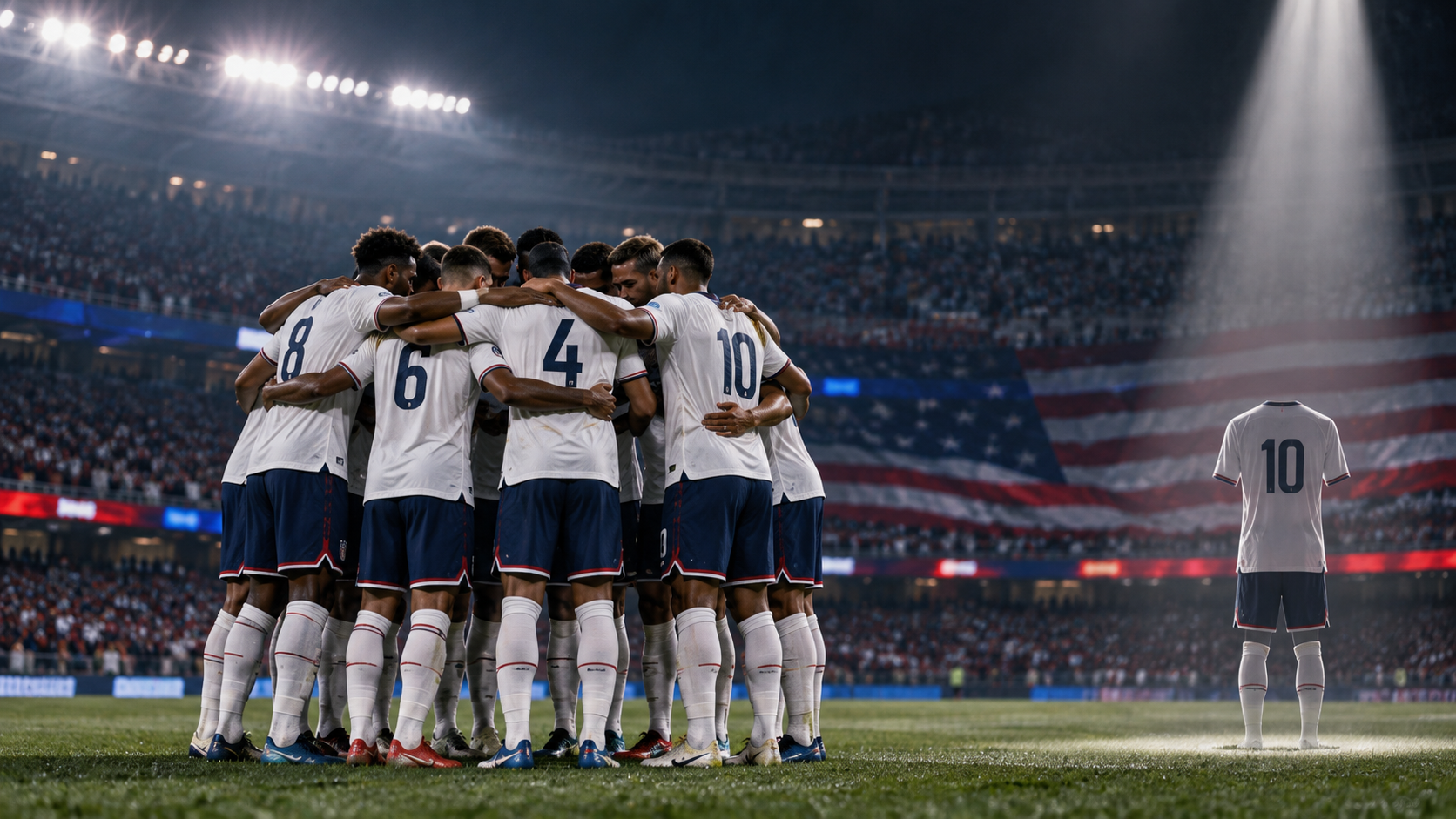
The most striking development was not merely the amount of emerging talent throughout the squad, but how little Pulisic’s absence affected the team. During four controlled and convincing consecutive victories, it was easy to overlook the fact that he was not involved. The same applied to Weston McKennie, who had been one of the national side’s most important figures over the previous five years. Both remained with their clubs in Italy: Pulisic sought to regain his manager’s confidence at Milan, while McKennie continued recovering from an injury at Juventus.
Without them, responsibility was distributed across the squad. Numerous players made contributions of varying size and took turns producing decisive moments, ensuring that no single individual carried the entire burden. Cavan Sullivan could become the next major USMNT star, although Julian Hall, Adri Mehmeti, Zavier Gozo, Justin Ellis or Mathis Albert might also fill that role. Even so, nothing suggested Sullivan alone was expected to drive the team forward. The side had not suddenly become his personal project, unlike the message then-coach Bruce Arena gave Pulisic after the United States missed the 2018 World Cup in Russia.
The central lesson from this unusually long international window—which included more matches than some previous USMNT tournament campaigns—is that the team may finally have moved beyond relying on one player or a small group of leading figures.
If the program is entering a period without a designated rescuer—leaving behind dependence on Pulisic or anyone else—that would offer stronger evidence of genuine progress than the arrival of another exceptional prospect, or even several of them.
The national team, and American soccer more broadly, now appear to possess the kind of squad depth that supporters once admired in countries with more established traditions. If US television advertisements for the 2030 World Cup showcase several players rather than repeatedly focusing on a single star, as they largely did with Pulisic during the previous summer, it will signal another meaningful advance.
What do you feel about this post?

Like

Love

Happy

Haha

Sad