Alessandro Costacurta’s first visit to San Siro lasted only 15 minutes. He was not on the pitch that day, but had accompanied his older brother to watch the club he supported.
“I was raised in the province of Varese, north of Milan,” he explains. “When I was young, I followed Varese, while my brother supported Milan. I first visited San Siro when I was 12 and he was 14. I believe Milan were playing Bologna. The stadium had no roof in those days, and a huge rainstorm suddenly began. We were there with our father, and after 15 minutes he decided we had to leave. That was my first experience of San Siro.”
Fortunately, it was only the beginning of his long association with the ground. Costacurta entered Milan’s academy the following year and eventually made 663 first-team appearances. He helped the club claim seven Serie A championships and five European Cups, spanning the competition’s transition into the Champions League. Among Rossoneri players, only fellow defenders Paolo Maldini, with 902 appearances, and Franco Baresi, with 719, played more often. Costacurta shared the pitch with both of them many times.
Costacurta initially describes that Milan side as the “best in the world for 25 years”, before revising his claim to “one of the best”. He may prefer modesty, but the defensive unit he formed with Maldini, Baresi and Mauro Tassotti has a strong case for being the finest ever, both in quality and longevity.
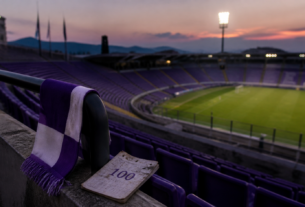
They also performed in one of football’s most celebrated venues. The conversation takes place shortly before San Siro reaches its 100th anniversary, a milestone made more poignant by the knowledge that matches will not continue there for much longer. At the end of 2025, Milan and Inter jointly purchased the stadium and nearby land from the city council. Work on a replacement ground is expected to start early the following year.
Costacurta believes the move is necessary. “San Siro does not meet the standards of a modern stadium,” he says. “It is iconic and remarkably beautiful, but it is not practical.” He lists several problems, including too few elevators and outdated hospitality areas. When the notoriously unpleasant toilets are mentioned, he smiles awkwardly. “That was the first issue I wanted to raise!”
A new multipurpose venue, created by architectural practices Foster + Partners and Manica, will take its place. The wider district is also due to be redeveloped with additional shops and hospitality spaces. Building a modern stadium has been a key element of Milan owner RedBird’s strategy since taking control in 2022.
Inter, Milan’s fellow tenant at San Siro, is an equal partner in the development. Their cooperation reflects a local rivalry that is generally less hostile than many other contests between neighbouring clubs.
“Milan has a special atmosphere,” Costacurta says. “You rarely encounter such friendliness at major derbies elsewhere in the world. Naturally, supporters sing against each other, but the two fanbases also mix considerably. The same was true among players during my career.”
Even so, defeating Inter brought particular satisfaction, especially when Milan were officially designated as the visiting side. “When you represent a major club, few things feel better than taking over another great team’s home ground. I remember beating Inter 6-0 while listed as the away team in May 2001. By the time it became 4-0, we could see their supporters leaving.”
The new stadium is scheduled for completion in 2031 and is intended to stage matches during Euro 2032. It should provide Milan and Inter with additional income and improve their ability to compete across Europe, while Serie A and other leagues continue trying to match the financial strength of England’s top division.
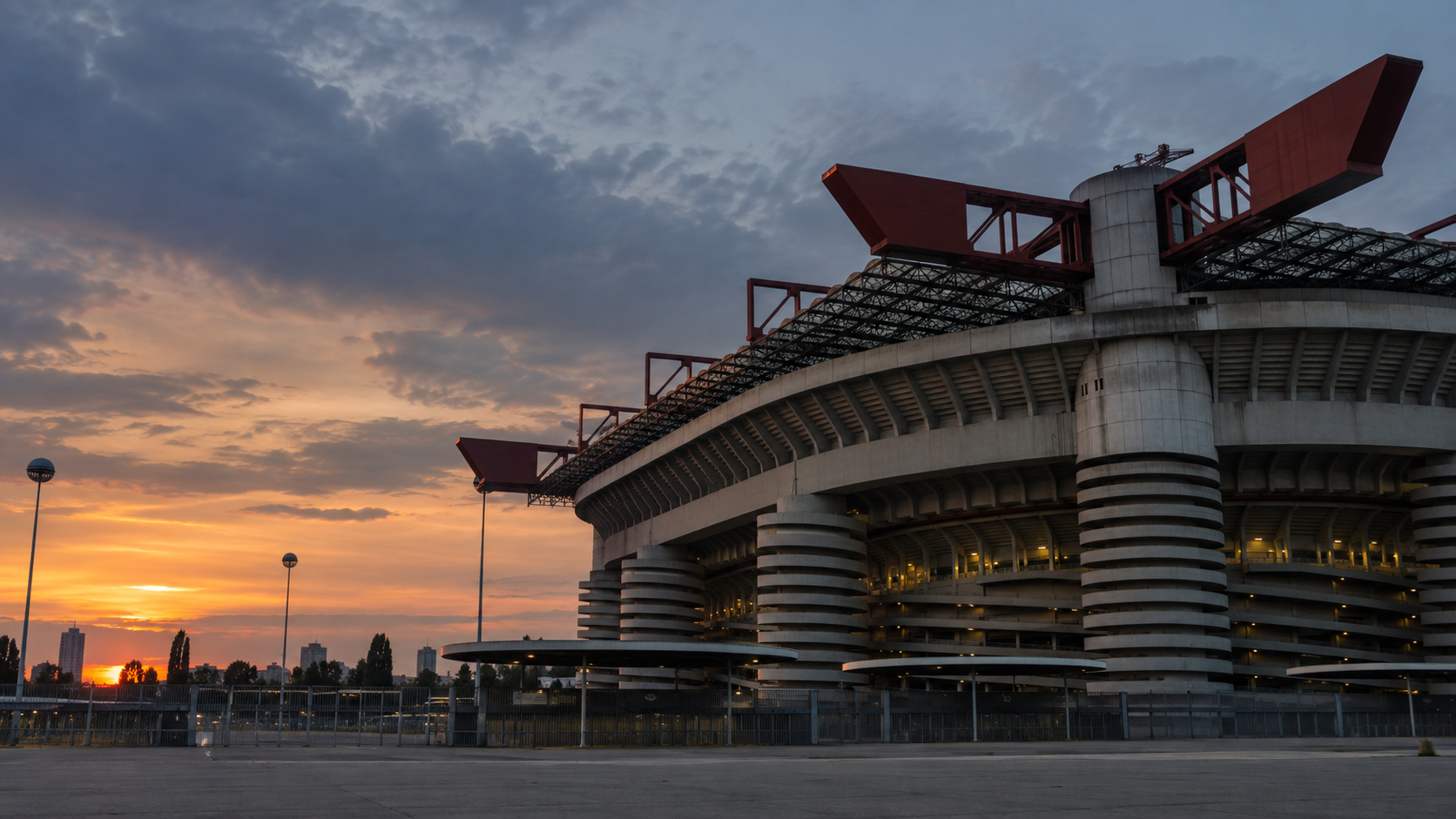
Despite those benefits, leaving San Siro behind will still be painful. Costacurta has experienced many of Europe’s best-known stadiums as both a player and a spectator, but he believes the unusually sharp incline of San Siro’s stands distinguishes it from the rest.
“Many grounds rise at a gentle angle like this,” he says, positioning his hands on a shallow slope. “San Siro rises like this.” He then points his fingers steeply downward. “The first time I stood near the field as a ballboy, as youth-team players all had to do, I was almost frightened. It seemed as if the entire crowd might tumble down on top of me.”
“Perhaps Real Madrid’s Santiago Bernabéu feels slightly similar, but is it truly like San Siro? I do not believe so. Rome creates closeness in another way, and the song Roma supporters perform before kick-off is wonderful. San Siro is different. From the highest seats, you feel as though you are looking down from a tower and leaning through a window above the field.”
San Siro opened on 19 September 1926. It fulfilled Milan president Piero Pirelli’s ambition to create a dedicated football stadium unlike any other in Italy at the time. Instead of a running track, it featured four stands capable of accommodating 35,000 spectators.
Pirelli reportedly drew ideas from English grounds, although San Siro’s design was also shaped by its surroundings. Stables, hay stores and other facilities were built beneath the stands to support the neighbouring horse-racing venue.
Milan’s city council acquired the stadium in 1935 and enlarged it by adding sections that linked the original stands. Inter began sharing the venue with Milan in 1947, and a second level opened in 1955. The ground was officially renamed in 1980 to honour Giuseppe Meazza, the midfielder who won two World Cups with Italy and spent 14 seasons at Inter and two at Milan. Most supporters, however, continued calling it San Siro.
The third and final tier was finished before the 1990 World Cup, finally giving spectators a roof to protect them from bad weather. Costacurta appeared in the first match after it opened, when Milan lost 1-0 to Juventus in the second leg of the Coppa Italia final.
“The stadium was louder, but what stands out most in my memory is the playing surface,” Costacurta says. “They had not worked out how to control airflow after installing the additional tier, and the grass looked terrible. For about 18 months, our field was the poorest in Europe.”
Milan evidently learned how to cope with those conditions. Between May 1991 and March 1993, the club completed a record 58 consecutive Serie A matches without defeat. It is possible that the difficult surface eventually worked in their favour.
“I believe it created an extra problem for opponents visiting San Siro,” Costacurta says. “The stadium already places teams under enormous pressure because the sound inside it is extraordinary.”
To underline the point, he uses one English word: “Roar!” The description is fitting. During major fixtures, San Siro becomes so loud that hearing someone speaking beside you can be difficult.
“Players do not really hold conversations during a match,” Costacurta says, arguing that meaningful discussions happen at the training ground. Coaches who scream instructions from the technical area are usually wasting their effort. “They hope the message will travel through the team, but believe me, it almost never reaches its destination.”
Supporters, however, have always found ways to make themselves heard. Standing areas still existed when Costacurta made his senior debut in 1987. “People gripped the railings beside the field, leaned their heads forward and shouted continuously.
“I was fortunate because I had developed in the academy, so the criticism directed at me was less severe. They insulted me in the Milanese dialect, but often in a humorous way. They called me ‘pè de ghisa’, meaning iron foot, because my technical ability had not yet reached the standard required by a club like Milan. Teammates who had not come through the academy received much harsher abuse.”
Eventually, he earned the crowd’s affection. Costacurta laughs when recalling the “awful” song supporters invented for him. “It consisted only of ‘Billy! Billy! Vai! Vai! Vai!’—Billy! Billy! Go! Go! Go! It was the worst chant given to any Milan player.” Yet when he played his final match at San Siro, thousands of people gathered outside to express their gratitude.
Those moments will survive even after San Siro itself is retired. Milan and Inter have stated that a portion of the historic ground will remain within the new development. Costacurta, who later became an Arsenal admirer after following Arsène Wenger’s teams from a distance, is encouraged by that club’s departure from Highbury, which has since been transformed into apartments.
“I played at Highbury in the European Super Cup,” he says. “The match ended 0-0, and Milan won the return fixture 2-0 at San Siro. It was magnificent, beautiful and iconic. I think the move was difficult for everyone initially, but their newer stadium is excellent today. So why could the same not happen here?”
What do you feel about this post?

Like

Love

Happy

Haha

Sad