
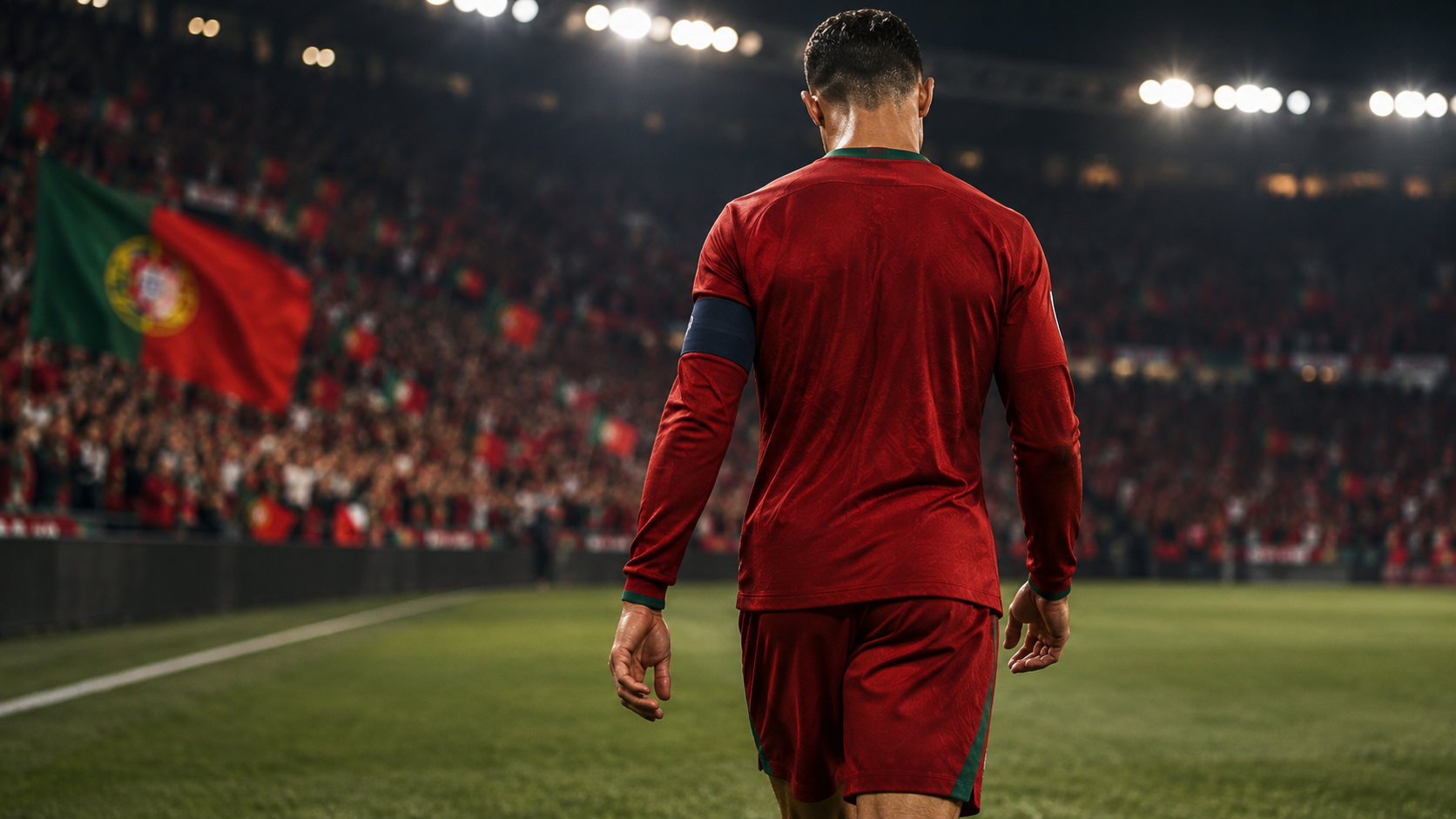
When Ronaldo first joined the national squad as a youngster, he reported for camp wearing a backward baseball cap, oversized sunglasses and headphones playing music loudly enough to be heard from far away.
He even kept his cap on while dining with established stars such as Luis Figo and Rui Costa. Luiz Felipe Scolari recognised his remarkable talent but also viewed him as immature and overly eager to attract attention. After criticising him in front of the group, Scolari privately explained that a change in behaviour could eventually lead him to become Portugal’s captain.
His first major heartbreak arrived early in his career and on home soil. At just 19, Ronaldo appeared in the Euro 2004 final at Lisbon’s Estadio da Luz, with an entire nation believing the trophy was within reach.
Angelos Charisteas scored the only goal with a header, allowing underdogs Greece to claim an unexpected victory. Ronaldo was unable to contain his emotions after the final whistle, and pictures of the teenager weeping on his home pitch were seen around the world.
The defeat taught him at a young age how painful a final could be, creating a determination that remained with him throughout his career.
Because Figo wore the number 7 shirt, Ronaldo initially received number 17. Although Figo helped the newcomer adjust, he never gave him an easy ride. Following Figo’s international retirement in 2006, both the famous shirt and leadership of the team gradually passed to Ronaldo.
Before a World Cup qualifier in Russia in September 2005, Scolari and Figo visited Ronaldo’s room to inform him that his father had passed away. Scolari gave him the option of returning home, but Ronaldo decided to play, requested that his teammates treat him normally and occupied himself with ball skills in the dressing room.
It was his method of handling the anticipated yet deeply painful death of his father, who had struggled with alcoholism. Ronaldo later described Scolari as a “father”, while the national team became a source of stability during a difficult period in his life.
His relationship with Carlos Queiroz later deteriorated. After Portugal were eliminated by Spain at the 2010 World Cup, Ronaldo responded to questions about the disappointing display by directing reporters to the coach. By then, his authority within the squad had become powerful enough to affect established routines, leaving Queiroz feeling that his position had been weakened.
Sociologist Joao Nuno Coelho provides valuable insight into Ronaldo’s place in Portuguese society. According to his interpretation, the national side came to symbolise both the country’s identity and its desire for international recognition.
During periods of financial difficulty and declining national confidence, having a football team respected overseas carried significance far beyond the sport itself.
Ronaldo became central to those ambitions while also inspiring mixed reactions. Some people in Portugal were uncomfortable with his ego and individualistic approach, and many found it difficult to identify with his character.
Coelho notes that openly questioning Ronaldo grew harder as his career progressed. Portugal wanted to celebrate his achievements, even though parts of his public image occasionally caused discomfort.
Former Portugal defender Jorge Andrade said that certain fans felt a stronger connection to figures such as Figo, Eusebio, Paulo Futre and Rui Costa. Nevertheless, Ronaldo remained a source of national pride, and each new trophy helped reduce the lingering reservations.
What do you feel about this post?

Like

Love

Happy

Haha

Sad