
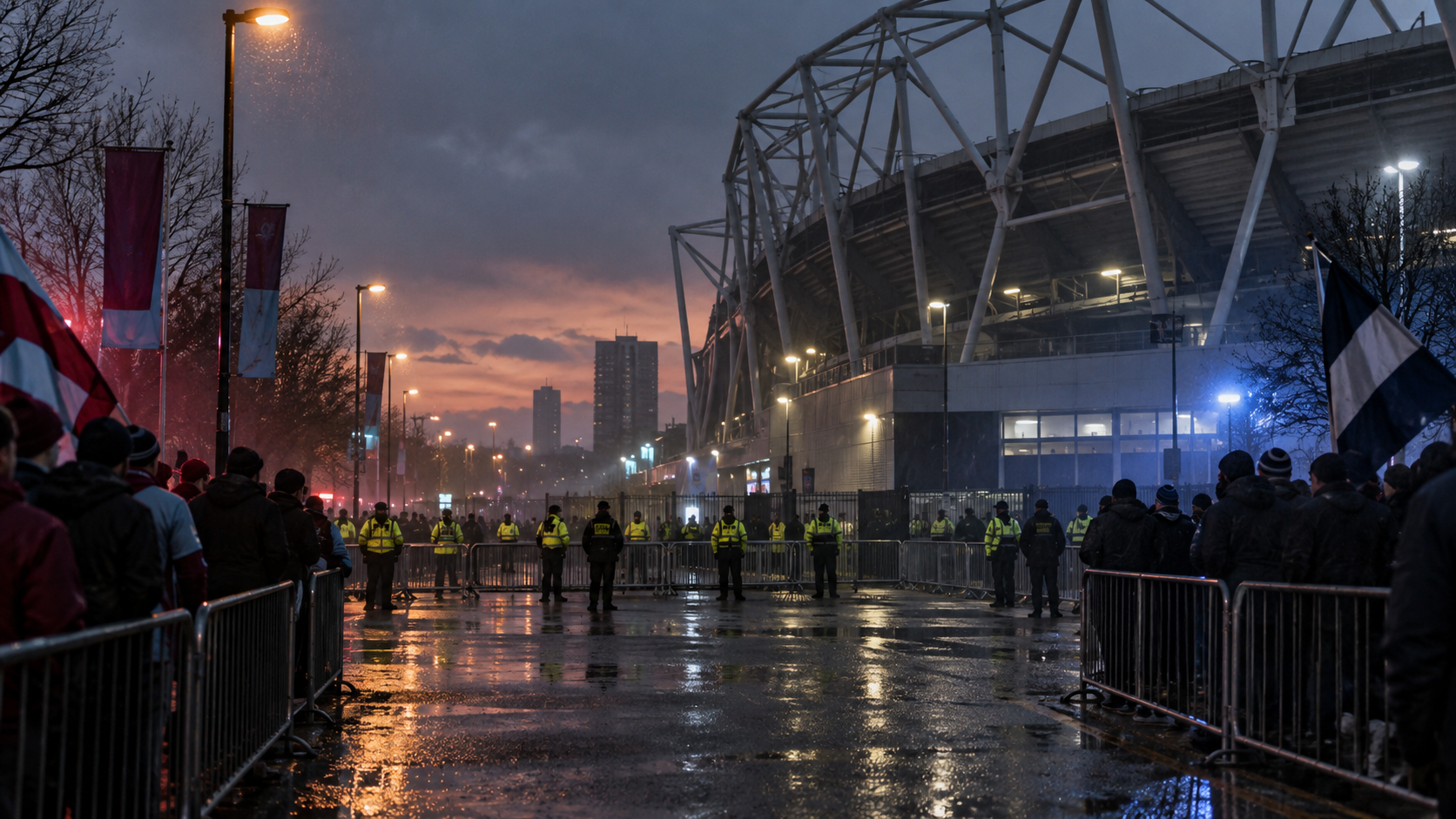
Time apart has done nothing to soften this rivalry. Millwall and West Ham will face one another on Saturday for the first time in 14 years, and their reunion at the Den is unlikely to be friendly. The atmosphere is expected to be intense, with the main concern being that attention remains on the match rather than trouble beyond the field.
Despite meeting infrequently, the clubs share a turbulent history. The clearest example came in August 2009, when Millwall were beaten at West Ham’s former Upton Park ground in the League Cup second round. Serious disorder broke out inside and outside the stadium, a 44-year-old man was stabbed in the chest, and riot police struggled to restore control. Play was also briefly halted after home fans entered the pitch following a West Ham goal.
None of that history should be celebrated. This will be the clubs’ 100th competitive encounter if discontinued, lesser competitions are counted, although the origins of such a fierce rivalry may not be immediately obvious. The teams are not close neighbours, and Millwall’s location south of the Thames makes Crystal Palace and Charlton more natural local opponents. However, the hostility extends beyond football. It can be traced to the clubs’ beginnings under competing shipbuilding companies at the Isle of Dogs docks in east London, while much of its modern reputation has been shaped by hooligan groups rather than events on the field.
There have been numerous occasions when the hostility became dangerous. Hooliganism was widespread in English football during the 1970s and 1980s, and both clubs had notorious groups of followers. Violence broke out when they met at the Den in 1972 for a testimonial honouring Millwall defender Harry Cripps. Tensions continued to rise, and Millwall supporter Ian Pratt died after an encounter with West Ham fans at New Cross station in 1976. That history deserves consideration whenever this fixture is promoted, while nostalgic claims about which group once dominated the terraces add little of value.
The 2009 encounter was alarming, but it was not an isolated incident. In March 2004, police horses were brought on to the pitch after West Ham supporters rioted and tore out seats during a 4-1 loss at the Den. When the club returned eight months later, visiting supporters were barred from the lower tier. West Ham have received only 1,774 tickets for Saturday, and the Metropolitan police will introduce measures designed to separate the two groups of fans. The designated walkway between South Bermondsey station and the away section should also help reduce contact.
Even so, the occasion will remain tense. The fixture has an unusual place in West Ham’s rivalries because some of their supporters are more concerned with defeating Chelsea or Tottenham. Trips to Stamford Bridge or N17, however, are routine. Travelling south of the river to face Millwall is perceived differently, with the brief train journey from London Bridge often treated as an expedition into deeply hostile territory.
The rarity of the fixture may contribute to its distinctive aura. The clubs have met only 18 times in league competition since the second world war, and the 1988-89 campaign remains the sole season in which they shared the top division. Millwall survived that year while West Ham went down, and relegation has generally been necessary to bring them together. If West Ham find Millwall on their league schedule, it usually means their previous season has gone badly.
Millwall typically enter these matches as outsiders, a position that suits them. They repeatedly responded to the occasion after West Ham were relegated in 2003. Millwall had a strong side that reached the 2004 FA Cup final, and they recorded two victories and two draws against West Ham before Alan Pardew guided the Hammers back to the Premier League in 2005.
West Ham have sometimes struggled to equal Millwall’s intensity. They won at Upton Park in the clubs’ most recent meeting, recovering from Kevin Nolan’s early red card to secure victory in February 2012, but their record at the Den is less convincing. The stadium is compact, enclosed and imposing, while Millwall are unbeaten in their past five home matches against West Ham since a defeat in 1988. They will try to overcome the difference in quality once again. West Ham arrive after four consecutive league wins and sit at the top of the Championship following last weekend’s 6-0 victory over Wrexham. Alex Neil’s Millwall narrowly missed automatic promotion last season, but injuries and an uneven opening to this campaign have left them in 10th place.
On paper, West Ham are the likely winners. Once this particular match starts, however, conventional expectations may carry little weight.
What do you feel about this post?

Like

Love

Happy

Haha

Sad