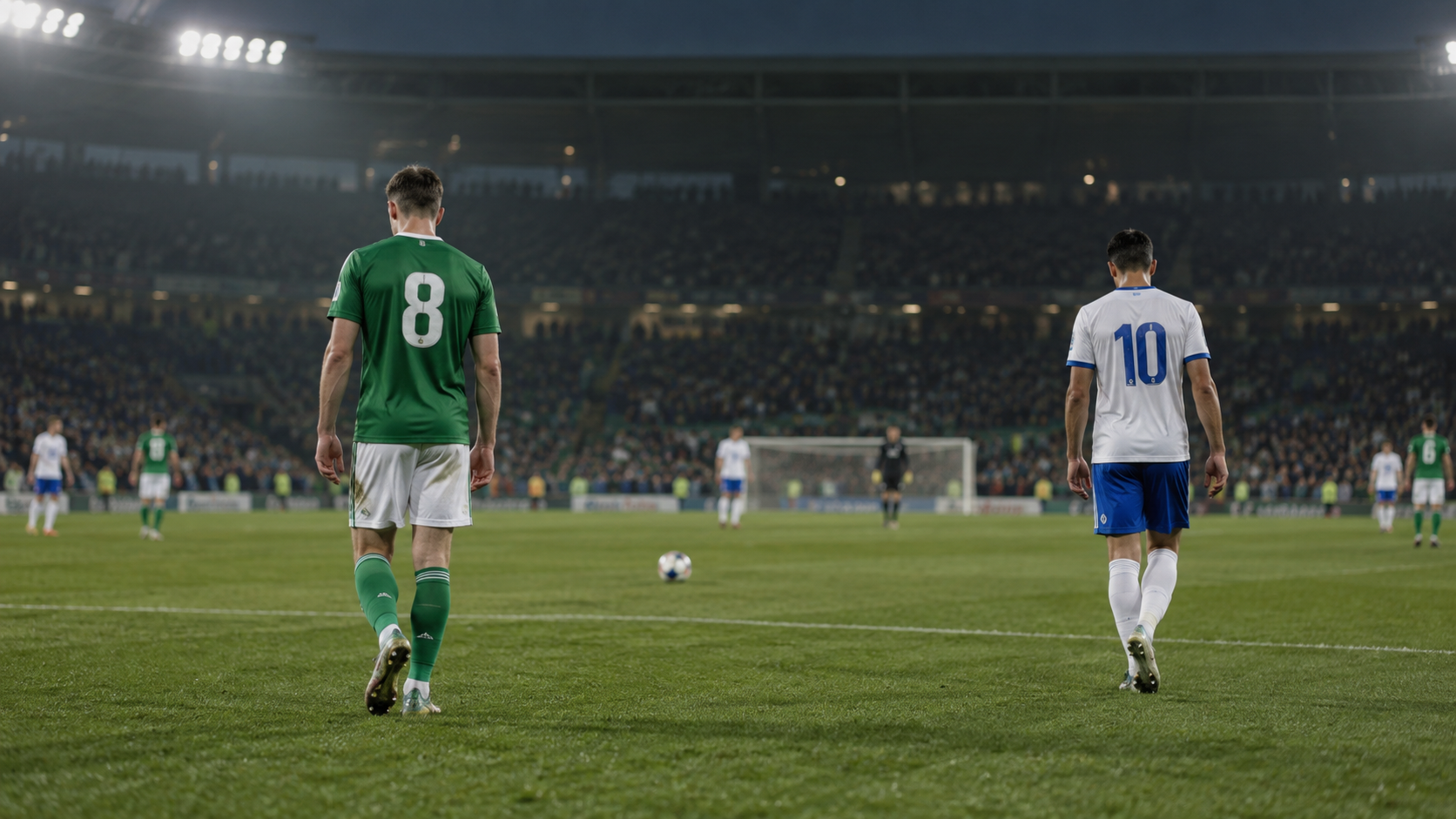
Football and politics are deeply connected in today’s world, regardless of how much some may prefer otherwise. Whether the sport can help address society’s wider problems is far less certain. After Irish solidarity with the people of Gaza transformed the buildup into a moral debate, the result of this disappointing contest eventually seemed almost secondary.
The match ultimately produced a comfortable victory, although not through a boycott. On Saturday evening, there were doubts over whether Heimir Hallgrimsson’s team would appear in Hungary and, if they did, whether they would be mentally prepared. A difficult week of private discussions instead appeared to strengthen the Irish squad, particularly those chosen to start. They played with confidence from the opening whistle, and each forward scored during the first half to put the game beyond reach. Their actions also clearly communicated their feelings to supporters at home.
The atmosphere in Debrecen resembled a fixture staged under pandemic restrictions. Almost every voice inside the stadium could be heard, while the largely deserted stands created an unsettling feeling. Israel, officially designated as the home team, had a group of roughly 150 supporters who tried to generate some energy. Two sections away, around a dozen Irish fans stood in a stairway with their hands in their pockets, having entered despite the FAI declining to arrange an official away allocation.
The strange and sombre mood became even more noticeable during the ceremonies before kickoff. Members of the Irish staff turned their backs to the field while Israel’s anthem played, and the Ireland players, wearing black armbands, looked down at the turf. The teams did not exchange pennants or shake hands, instead quickly leaving the centre circle to gather in separate huddles.
The fixture had nearly been called off on Saturday after goalkeeper Gavin Bazunu withdrew from consideration, leading to emotional conversations between the players and coaching staff. Following four hours of discussion, the squad voted to proceed with the match. FAI chief executive David Courell said a clear majority supported that decision.
Hallgrimsson consequently selected a squad containing only one substitute goalkeeper. He also placed influential attacker Finn Azaz on the bench as part of five changes from the team that had delivered a poor defeat against Kosovo. Azaz’s mother holds Israeli citizenship, and reports suggested that the Southampton player spoke passionately during Saturday’s talks. Hallgrimsson described it as one of the hardest weeks he had experienced as a coach.
Despite the uncertainty leading up to the game, Ireland effectively settled the contest within an 11-minute spell in the first half. Troy Parrott scored the opener after 14 minutes, directing a low effort through Daniel Peretz following excellent work on the right from wing-back James Abankwah. Two minutes later, Adam Idah raced beyond the final defender, received Jack Moylan’s precise pass and calmly placed his finish inside Peretz’s left post.
Moylan added the third goal in the 25th minute, scoring for the fourth time in as many international appearances and extending his outstanding start at that level. When Israel failed to deal with a kick from Caoimhín Kelleher, the Cardiff City midfielder collected the loose ball, carried it 25 yards into the penalty area and fired a low shot into the net. He then ran towards the corner, removed his black armband, held it up toward the Israeli supporters and kissed it.
Israel offered almost no attacking threat before halftime but returned with greater urgency for the second period. Coach Ran Ben Simon introduced Dor Peretz in midfield at the interval, and the substitute quickly tested Kelleher with a powerful strike from the edge of the area. The Brentford goalkeeper reacted superbly, diving to his right to push the attempt behind. Soon afterward, he made a similar but more comfortable save from Eliel Peretz’s long-range shot. Israel’s pressure lasted for approximately 10 minutes, after which Idah came close to scoring a fourth, only to send his header onto the top of the net.
The closing stages became fragmented, with occasional confrontations and increasing noise from the Israeli section of the stadium. The match itself is unlikely to be remembered for long, although the controversy surrounding it left an uncomfortable impression.
What do you feel about this post?

Like

Love

Happy

Haha

Sad