Act quickly and repair what is broken. Thomas Tuchel has enjoyed an encouraging week as he tackles the recurring challenge of shaping not only a successful England side, but one with a clear identity, while dealing with the constant and often contradictory pressures surrounding the national-team manager.
None of this is unfamiliar. The position demands more than selecting the right squad and making crucial decisions during matches. Those basic responsibilities must be handled while criticism arrives from every direction and every choice is placed under intense scrutiny.
Few countries place such a complicated double burden on their coach. Winning matches is essential, but the manager is also expected to define the nation’s footballing character and explain how the team should perform. That pressure can gradually exhaust even the most experienced figures, leaving them drained by the role.
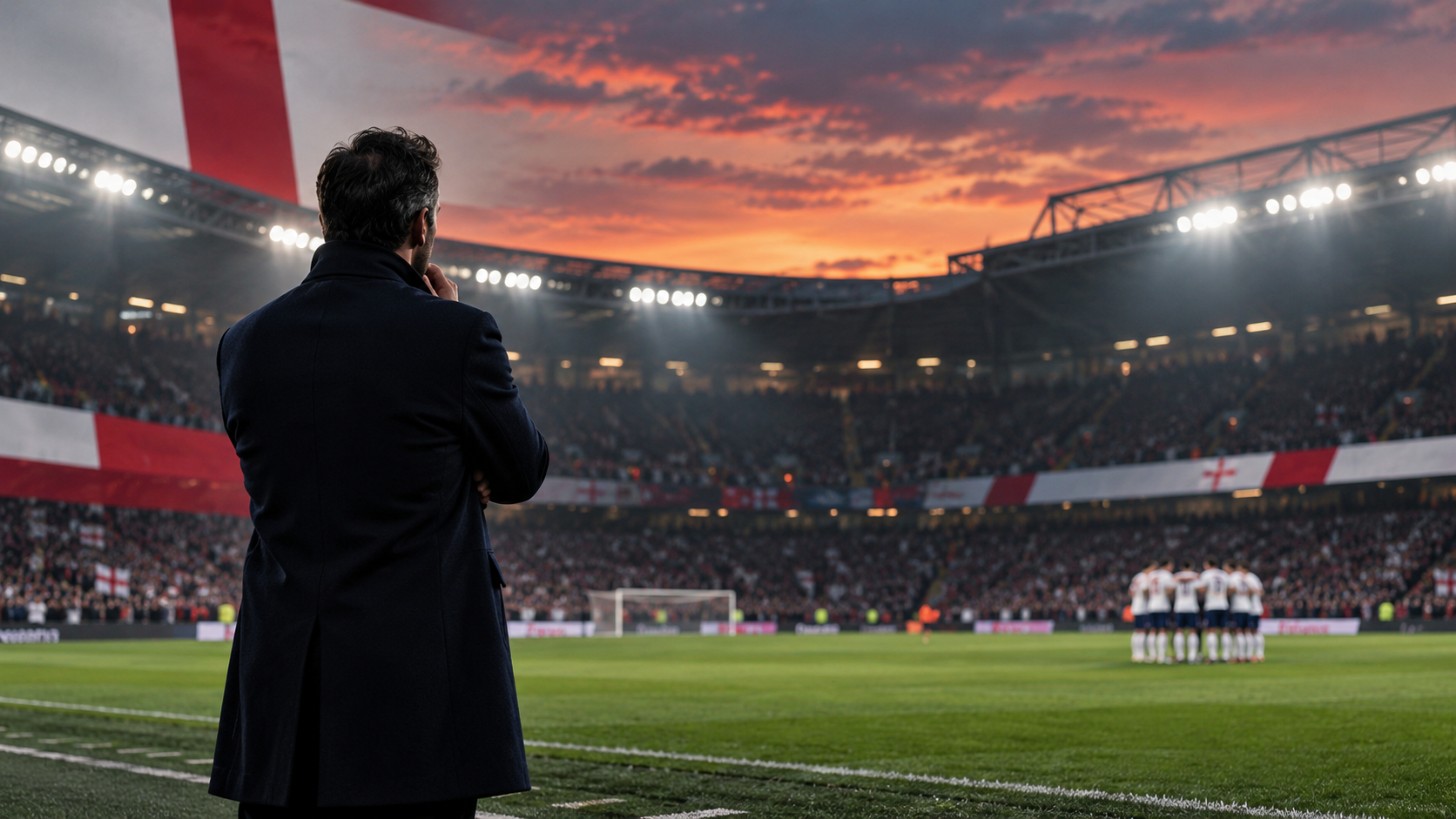
That is why Tuchel’s energy in Rijeka was reassuring. He remained animated on the touchline, dressed entirely in black and constantly studying the game, looking like a man trying to solve several tactical problems at once.
It may sound strange to say that Tuchel’s position now appears secure, mainly because the suggestion that he was genuinely at risk always seemed exaggerated. Even so, this is a job in which a brief sequence of defeats can rapidly transform public opinion and place a coach under severe pressure.
A sense of perspective is still necessary after two Nations League victories against weakened opposition. The 7-0 defeat of Croatia was an unusual contest from the beginning, with the occasion carrying the relaxed mood of a community sports event rather than an elite international fixture.
That atmosphere appeared to affect the Croatian players during their light-hearted warm-up. Young supporters cheered loudly while music thundered through the stadium’s powerful sound system.
Croatia began the match with the sluggishness of a team still waking from a deep sleep. Luka Modric received an enormous reaction whenever he touched the ball, but one of his generation’s finest players was overwhelmed by England’s younger, faster and more determined midfield.
These opponents still have to be faced, and Croatia had performed respectably at the World Cup. More importantly, the result arrived at a crucial stage of Tuchel’s project. The next 20 months will provide the working period in which he can determine how far this team might develop before a tournament England have an outstanding opportunity to win.
Only two questions truly matter at this stage: is a recognisable team and playing philosophy emerging, and is the side moving forward? At present, the answer to both appears to be yes.
England impressed in Croatia for reasons that went beyond the scoreline. Previous teams have often combined obvious strength with serious weaknesses. In Rijeka, however, they resembled experienced World Cup semi-finalists who had learned from the past, displaying physical power, technical quality and a much healthier overall balance.
At moments, this side recalled Gareth Southgate’s team between 2019 and 2020, when several important newcomers entered a positive environment and England began sweeping aside solid opposition. The pandemic interrupted that momentum. It is impossible to prove, but an earlier European Championship might have given England enough rhythm and confidence to overcome Italy in the final.
There are two important features of Tuchel’s current England project. The first is a reassessment of recent selection decisions. Questions were asked about the absence of Cole Palmer, yet his current omission may help explain the earlier call. Similar debates surrounded Phil Foden and the decision not to choose a reserve striker who has since moved to Saudi Arabia. Disagreement remains entirely reasonable, but the thinking behind those choices now seems easier to understand.
Old arguments can continue indefinitely, but the second and more significant feature is visible improvement. Progress was always likely to require patience. A coach needs time to understand his players, and Tuchel had no previous experience of managing at an international tournament. Despite assumptions about his knockout expertise, his record suggests that he is a coach who builds through method and repetition. England are now firmly inside that development phase.
What, then, is different? The clearest change is the decision to make Jude Bellingham the central figure in the side, an excellent move that reflects more than his exceptional ability. Building the group around him gives Tuchel a powerful unifying presence and a clear symbol of what this England team wants to become.
How can players be encouraged to value representing England? One solution is to give the team authority, appeal and genuine star quality. Put its most influential player at the heart of the project. If Bellingham is enthusiastic and fully committed, others will want to join him and share that energy during international duty.
England’s style is another important factor. People often refer to a single “Premier League style”, although no such uniform approach truly exists. These players are nevertheless particularly comfortable with intense pressing, constant running and aggressive physical contests. That was evident as they overpowered the ageing Mateo Kovacic, whose intelligence remains clear even though he could not match England’s speed and athleticism.
England produced a similar level of intensity for half an hour against the world champions and narrowly lost after conceding in the opening minute and failing to convert a late penalty. It looked like a more advanced version of the high-tempo football that overwhelmed Croatia for 20 minutes at the World Cup before fading. With the next European Championship taking place in England, favourable conditions could help them sustain that approach for longer.
The team also possesses better structural balance. Lewis Hall provides a natural left-footed option at left-back. Jarell Quansah now appears a logical choice because his recovery speed offers some of the athletic security previously associated with Kyle Walker. Alex Scott also impressed in Rijeka, playing with awareness, composure and the confidence to drive forward from midfield.
Tuchel is correct that England cannot enter a major tournament relying on only two established midfielders. Scott brought a different quality to the area in which England have often lost decisive, high-pressure matches. The coach also seems to have identified an alternative centre-forward: once again, Bellingham may provide the solution.
Here is another theory that cannot be proven: the England side seen in Rijeka might have defeated Argentina in Atlanta. That possibility should not create regret. Instead, it demonstrates progress through new combinations and greater tactical flexibility. Moving Bellingham into attack after the interval and adding Scott to a three-player midfield would have improved England’s chances of controlling and finishing that kind of match.
The work remains incomplete. England require stronger competition on the right wing. Bukayo Saka is an outstanding player, but the team could still add another attacker capable of frightening opponents in a different way. A player with qualities similar to Michael Olise would significantly increase the side’s threat. Max Dowman remains a promising possibility rather than a finished option, but there is still time for him to develop, and perfection is not required immediately.
The final and most important point concerns the full use of Bellingham’s abilities. His function in the team now appears wonderfully clear. Positioning him further forward does not remove his defensive contribution because he continues to press, chase and disrupt opponents. When turning into space, carrying the ball during transitions or attempting ambitious creative passes, he is an extraordinary footballer. He also embodies the energetic and fearless identity this side is trying to establish.
Major tournaments are not won simply by recording a 7-0 victory on the Adriatic coast in front of thousands of excited schoolchildren. Even so, England are clearly advancing, and the remaining preparation time will disappear remarkably quickly.
What do you feel about this post?

Like

Love

Happy

Haha

Sad