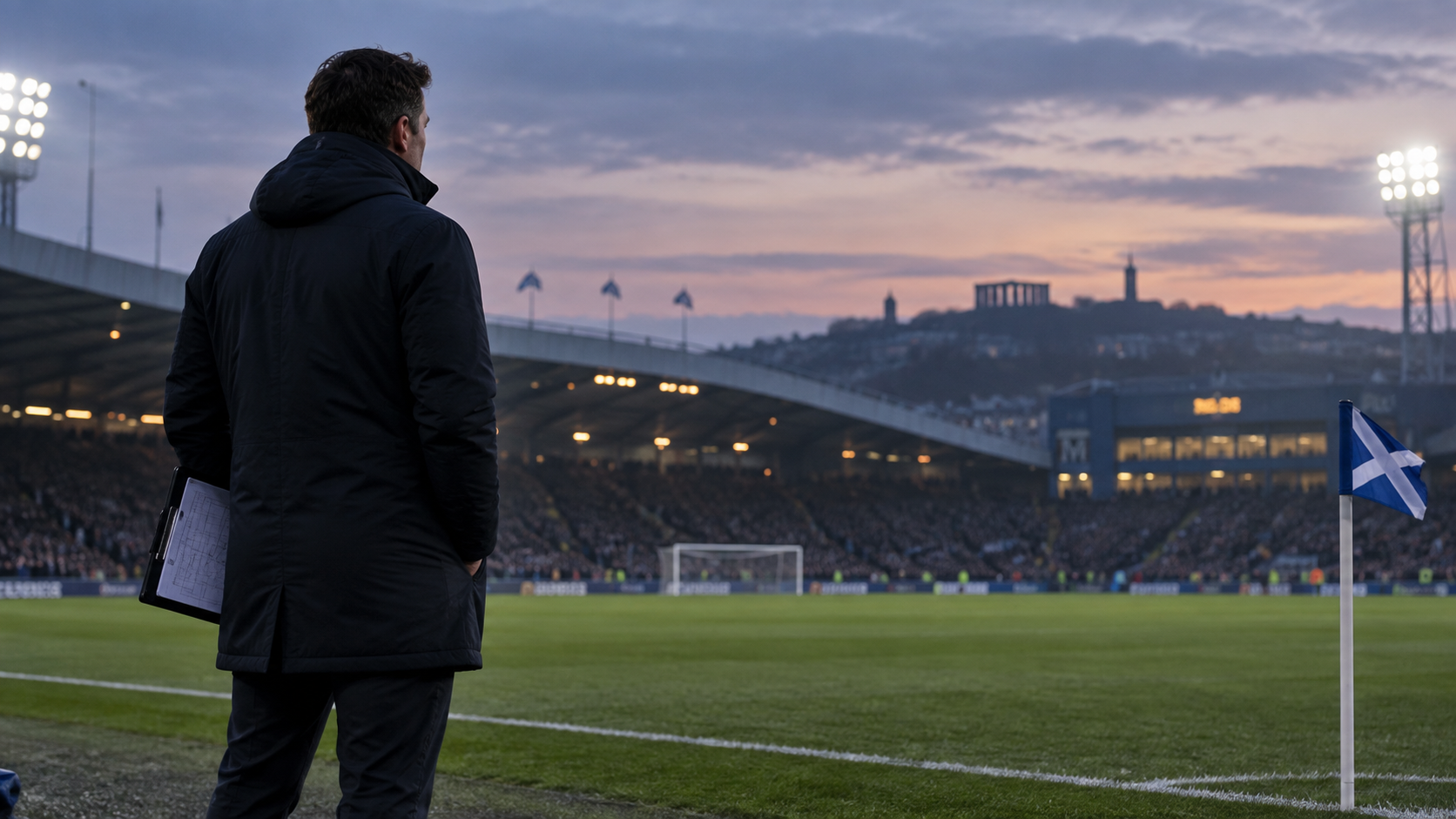
If a manager values anything above all else, it is time, which makes Sébastien Pocognoli’s choice to take charge of Scotland understandable. As one of the Euro 2028 hosts, Scotland will face very few obstacles to securing a place at the competition.
The Nations League campaign begins in Slovenia on Saturday and gives Pocognoli room to test new ideas without the threat of major repercussions. The 39-year-old inherits a national side whose supporters had become tired of Steve Clarke, albeit not always fairly, and were demanding a fresh direction. Fans are therefore likely to show Pocognoli patience, even if his first steps in international management are difficult. The Belgian has wisely selected several young and uncapped players for his opening matches. Some may not be suited to this level, while many of Clarke’s established figures remain essential, but Pocognoli should earn credit for offering new opportunities. Scotland must also improve its talent identification, particularly by finding more eligible players with Scottish family connections. His basic salary, believed to be a seven-figure sum, demonstrates the Scottish Football Association’s confidence that it has found a transformative coach among the available candidates.
Following a playing career based largely in Belgium, Pocognoli played an important role in a remarkable European football story. Union Saint-Gilloise won the league in 2025, ending a 90-year wait for the title. The club’s revival followed Tony Bloom’s involvement and the use of his preferred analytics platform, Jamestown. Pocognoli’s contribution should not be underestimated, but Bloom’s data-led model also raises the possibility that the wider structure mattered more than the head coach alone. At USG, significant choices, including the team’s tactical identity, were directed by the sporting director.
Craig Mulholland has become the Scottish FA’s chief football officer, a position whose broad responsibilities are matched by an imprecise title. After holding behind-the-scenes jobs at Rangers and Nottingham Forest, his suitability for such an influential role remains open to debate. An outsider might have assessed the state of Scottish football from a different perspective. Mulholland speaks confidently, but his impact still has to be demonstrated.
Since taking up his post in August, Mulholland has worked closely with Pocognoli while encouraging Scottish clubs to give more minutes to locally developed youngsters, an ambition likely to produce mixed outcomes. He has also appointed several age-group coaches whose arrival has generated limited excitement. Mulholland said data was fundamental to the search for a manager and brought in a sports intelligence company both to support the recruitment process and to address clubs at a recent summit. As Pocognoli knows, an analytics-based strategy succeeds only when it is adopted fully.
Mulholland also attracted attention by claiming that first-time international coaches tend to achieve more than those taking such a role for a second time. The statement needed greater context. Luis de la Fuente, Gareth Southgate and Didier Deschamps may have lacked previous senior international experience, but each inherited a squad filled with exceptional talent. More importantly, Scotland now qualify for major tournaments regularly. Their next coach must find a way beyond the barrier Clarke encountered at two European Championships and a World Cup.
For Pocognoli, the Scotland position provides an opportunity to rebuild his reputation. His spell at Monaco after leaving USG ended with his dismissal after only 38 matches. The tenure was not a complete failure, however, as he led the club into the Champions League knockout rounds. He also received praise at both teams for improving young players, and Scotland will hope he can reproduce that ability during the limited time available in international camps.
Pocognoli’s greatest asset has been his work on the training ground, a quality that could prove effective in international football. He is regarded as personable and principled, and he appears capable of winning the support of experienced players. During this week’s camp in La Manga, the squad responded positively to the demanding sessions and straightforward instructions. Pocognoli explained that his core idea is for the team to attack collectively and compress the playing area. When defending is required, he wants the players to protect one another, and after possession is lost, he expects them to recover it as quickly as possible. Those principles form the foundation of his approach.
Scott McTominay will miss this Nations League window while recovering from a heart procedure. Scotland also continue to have concerns at goalkeeper and centre-back. There are significant hopes that Oli McBurnie can make the most of another opportunity at international level. Pocognoli usually sets up his teams in a 3-4-3 formation.
At a recent dinner in Edinburgh, Clarke caused embarrassment for the Scottish FA when remarks about pressuring the organisation into awarding him a four-year deal before the World Cup became public. The incident reflected poorly on Clarke as well, although self-interest among people working in football is nothing unusual.
When presenting Pocognoli, Scottish FA chief executive Ian Maxwell spoke enthusiastically about gradual progress. He argued that Scottish football must modernise and adopt different methods across numerous areas. That message was difficult to accept given how dismissively Maxwell had responded to doubts over the decision to extend Clarke’s contract. Only months later, the emphasis had shifted towards reform. Maxwell, now promoting innovation, has held his position since 2018.
Pocognoli’s introduction was overshadowed when the Scottish FA finally announced that it no longer supported Gianni Infantino remaining as Fifa president. The delayed and awkward handling of the issue echoed many of the organisation’s missteps before and during a deeply disappointing World Cup. Mike Mulraney, president of the Scottish FA and chair of Fifa’s finance committee, has remained notably quiet. Pocognoli has therefore been appointed by officials who have done little to inspire confidence.
Scotland’s previous visit to Ljubljana in 2017 ended with confirmation that they would miss the following year’s World Cup. Gordon Strachan then offered supposed genetic disadvantages as an unconvincing explanation for his own failures. During most of the years since, including seven seasons under Clarke, Scotland have re-established themselves as a meaningful presence in international football. It will be fascinating to discover whether Pocognoli can advance that progress or leave fans wondering whether their demand for change was misguided.
What do you feel about this post?

Like

Love

Happy

Haha

Sad