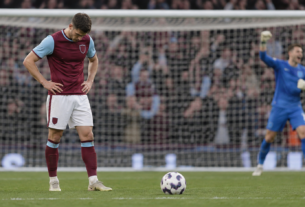
Only England could secure a third-place finish at the World Cup by outlasting France in a remarkable 10-goal encounter, yet somehow leave the pitch with even greater frustration aimed at the head coach. Sentiment remains raw following the dramatic collapse against Argentina, and simply winning a match with little at stake will not be enough to silence the discontent surrounding Thomas Tuchel.
The decision to bring in Tuchel was built on the belief that he would deliver when it mattered most. When that plan fell apart, only bitterness remained. It laid bare the fundamental hollowness of the appointment—a wealthy football federation attempting to mask the shortcomings in its own coach development by trying to outsmart the process, simply spending heavily on a high-profile foreign name.
What is the guiding philosophy of the Football Association? The initial concept was for Tuchel to provide a brief, intense jolt, using his tactical expertise to push England to glory. That shifted after a smooth qualifying run against limited opponents. The FA then altered the terms by extending his contract, and suddenly, triumph at the World Cup no longer seemed the immediate necessity.
The notion of Tuchel as an architect for the long term seemed improbable during the heated fallout following the loss to Argentina. Marked by criticism for his cautious changes when England were ahead, the German coach spoke dismissively of an inherent English trait, criticizing a careless approach when holding the ball. A valid point, one might concede, as this has historically been a shortcoming—except, had Tuchel not contributed to the issue by excluding many of the technically assured players from his selection pool? Could the outcome have shifted if Adam Wharton, Trent Alexander-Arnold and Cole Palmer had been available in Atlanta? It is uncertain, but considerable resources have been dedicated to nurturing a different kind of player in recent times.
Perhaps Tuchel was reflecting on a bygone English characteristic. But this might highlight the problem with employing a foreign coach whose priority is simply finding a way to win. This marks England’s third journey down this particular path. There is a perception of the overseas manager as a refined tactician. Yet Sven-Göran Eriksson did not possess the same tactical sharpness as Glenn Hoddle. Eriksson favoured a rigid 4-4-2, whereas Hoddle was adaptable with his team’s shape.
Tuchel, similarly, has had difficulty forging a clear style. He appears preoccupied with an old-fashioned English approach. He wanted to mirror the tempo and power of a Premier League team, but that template has rarely brought success for the national side. England are often bettered in the passing exchanges during crucial knockout fixtures, which is precisely why youth development has been so focused on producing players more comfortable with the dominant Spanish method of keeping the ball.
England players look dejected after the semi-final defeat by Argentina. Photograph: Paul Childs/Reuters
Spain have just secured another World Cup, their system proving superior against Argentina in a tense final, and for those observing from a distance, a significant lesson will be that the last two teams left standing were guided by coaches from their own country.
Luis de la Fuente and Lionel Scaloni progressed through the internal pathways and are embedded within a broader system. They possess an intuitive understanding of their nations and a clear sense of identity. Tuchel was brought in under the assumption that he could conceal the FA’s inability to create its own elite coaches. No men’s national team has claimed the World Cup under a foreign manager, and it ought to concern the FA that hiring an outsider with a results-first mindset has led to the senior side playing in a manner starkly at odds with the younger age groups.
Within youth development circles, there is a sense that Tuchel has set the England team back at this tournament. The under-21 side secured consecutive European Championships by being courageous in possession. They have overcome Spain in back-to-back competitions, with Lee Carsley insisting his players take risks with the ball. Tuchel concluded the semi-final by directing long, high deliveries towards Dan Burn. He adopted a pragmatic style, and his England team was ultimately incapable of adopting a more adventurous approach. This World Cup reinforces the idea that turning to decorated names from club football is not a guaranteed path to success.
Brazil appointed Carlo Ancelotti but exited in the last 16. Roberto Martínez failed to deliver for Portugal after remaining loyal to an aging Cristiano Ronaldo. Mauricio Pochettino oversaw a United States side being outclassed by Belgium.
Scaloni emerged from the national system before guiding Argentina to the World Cup title in 2022. Likewise, De la Fuente secured the European Under-19 Championship with Spain in 2015 and the European Under-21 Championship in 2019. He has brought young talent through the levels, and after a deserved promotion, claimed the senior European title in 2024.
Luis de la Fuente was a successful age-group manager before taking over Spain’s senior side and leading them to glory. Photograph: Franck Fife/AFP/Getty Images
Spain exemplify a seamless pathway. Players who triumphed over Argentina in the final played youth football under De la Fuente. This is not to suggest that England’s next logical step is promoting Carsley, who did not appear entirely suited to the demands of the top job during his interim spell after Gareth Southgate’s exit and before Tuchel arrived. Still, Carsley’s philosophy aligns more closely with the Spanish approach, and he has demonstrated that it is possible for England sides to be bold in their approach.
This provides substantial reflection for the FA as it assesses England’s World Cup performance. For now, Tuchel will be given another tournament. There are relationships to repair, but a third-place finish is not grounds for dismissal. In any event, there appears to be no alternative strategy within the FA. Tuchel was not cultivated internally; he was acquired. One can hope he adjusts ahead of the Nations League. A move away from this overly physical style is needed. Yet it would be no surprise if the hired tactician’s views on English traits ultimately make him appear out of step. Such a disconnect would not happen with Spain. De la Fuente understands their identity. He embodies it.
What do you feel about this post?

Like

Love

Happy

Haha

Sad