Welcome to the pressure chamber, Mauricio. Or perhaps welcome back, since this possibility has lingered for years. Reports that Manchester United could appoint Mauricio Pochettino hardly feel unexpected. The club has spent 13 years replacing managers who ultimately encounter the same deep-rooted problems, while repeatedly coming close to hiring Pochettino without ever completing the move.
Perhaps the moment has finally arrived. Maybe both sides have endured enough disappointment to become compatible. There could even be an unlikely logic to the partnership.
Pochettino has already experienced the unforgiving machinery of elite football. At 54, he would reach Old Trafford carrying the scars of difficult spells at Paris Saint-Germain, Chelsea and Tottenham under Daniel Levy. After working inside several unstable major clubs, joining an even more complicated institution in Manchester might seem like a natural next step.
Of course, Old Trafford’s difficulties extend far beyond whoever occupies the dugout. The cycle of appointing and dismissing coaches reflects the dysfunction rather than causing it. It also diverts attention from poor decisions and self-interest at executive level.
Even so, any potential appointment deserves scrutiny, and there are clear reasons to doubt whether this one would succeed. The most obvious concern is that both the club and the coach appear to offer diminishing returns.
How does a team respond after winning only two major trophies during a decade of decline? Apparently, by choosing a manager whose own record contains two major honours across 13 years. It would be an attempt to recover a fading recent past by hiring someone who also represents that era.
This hardly resembles a transformative solution. Appointing Pochettino now would feel like inviting a performer whose greatest hit came more than a decade ago and hoping the old magic remains intact.
Yet Manchester United always generates a fresh burst of optimism, however chaotic the circumstances. Every managerial profile has been tried: the decorated veteran, the young tactical obsessive and the former player expected to rediscover the club’s identity, only to end up looking overwhelmed on the touchline.
Pochettino would have two important factors in his favour. The first is the memory of his finest Tottenham years: his charisma, infectious personality and commanding presence. More significantly, that early Spurs side played with ferocious energy, relentless running and emotional intensity. Even brief flashes of that football could give supporters something they have badly missed.
The second attraction is the possibility of mutual redemption. A damaged club and a manager seeking renewal might somehow help one another recover. It is a familiar dramatic idea: two parties at a low point finding purpose together. It may not amount to genuine confidence, but it could create a fragile and compelling form of optimism.
Pochettino’s career still feels unfinished. He has never fully delivered on the promise that emerged when Southampton recruited him and Tottenham later secured his services. At Spurs, he brought energy, personality and a convincing sense of momentum. He was engaging, forceful and able to make struggle, commitment and sacrifice sound central to a shared mission.
A decade later, Pochettino still appears to be searching for the right home and the defining version of himself. It is worth asking which experience did the most damage. Perhaps it was his spell in Paris from January 2021 to July 2022, even though that period produced his only major trophies.
He seemed exhausted almost from the beginning in Paris, where he was immediately expected to organise a collection of enormous personalities. It was a period of excess, individual power and celebrity, with Kylian Mbappé and Neymar symbolising a squad that often appeared more glamorous than coherent.
People familiar with Pochettino described his frustration with superstar egos, the confidence of young players who had achieved little and training sessions in which maintaining intensity became increasingly difficult. Those details should concern United. The proposed environment does not look like a natural cultural match.
Chelsea may have been even more damaging. His single season there ended by mutual agreement after repeated frustration with an unbalanced squad and an unclear chain of command. That experience raises another question: is he really the ideal person to organise a team assembled across six managerial eras and influenced by Jim Ratcliffe’s interventions?
There is also an argument that Tottenham began the process. Although those five seasons represented the strongest period of his club career, the momentum faded when he could not persuade Daniel Levy to rebuild while the team remained competitive. The squad was eventually consumed by its own demands. Pochettino followed Marcelo Bielsa’s belief in football driven by running, with success emerging from extreme physical and emotional effort.
Ultimately, the quality that made Pochettino’s Tottenham effective also contributed to its decline. A dynamic side became drained and mechanical, its players physically depleted and its manager increasingly weary and discouraged.
That brings the discussion back to Manchester. Many of those warning signs already exist there, which may suggest either danger or compatibility. United resemble a drifting vessel with no clear destination, while Pochettino may be beyond his own peak. Hansi Flick won his first trophy with Bayern Munich in 2019 at the age Pochettino is now, but managers who have spent decades in the profession rarely begin their finest period at 54.
Still, football depends on emotion as well as tactical detail. Manchester United currently need positive energy, momentum and a reason to believe. Pochettino’s arrival would at least provide a powerful narrative: a meeting between a club and a coach who may both be approaching their final opportunities at the highest level.
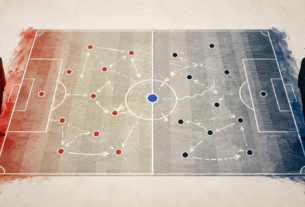
For that story to work, it would need an immediate and dramatic opening. United sit third from bottom in the Premier League, and the squad is an untidy collection of players suited to conflicting ideas. On the positive side, Pochettino’s intense 4-2-3-1 system can be cleansing and direct, and several members of the squad might suit it.
Kobbie Mainoo possesses the composure under pressure and rapid passing required for that approach. Carlos Baleba and Andrey Santos should be more effective as energetic midfielders than their performances have suggested. Matheus Cunha and Bryan Mbeumo are capable of applying pressure and working aggressively. Benjamin Sesko has yet to find momentum, but Pochettino has often made effective use of a physically imposing striker.
The defence would require pace and the confidence to hold a high line. That would make Harry Maguire’s lack of speed even more conspicuous. Bruno Fernandes would also need to operate with greater discipline, reduce unnecessary risks and follow a more rigid tactical structure.
There is no escaping the familiarity of this situation. Pochettino would not provide an instant cure or a complete strategic solution. His appointment would not, by itself, reform the hierarchy, remove ineffective leadership or eliminate the culture of carefully managed mediocrity found throughout the club.
Pochettino represents both memories of better football and evidence of declining influence. Careers can still produce unexpected final chapters, however, and this partnership might create a compelling shared drama. Even if the possibility is remote, it could offer both the manager and the club an opportunity to repair some of what has been broken.
What do you feel about this post?

Like

Love

Happy

Haha

Sad