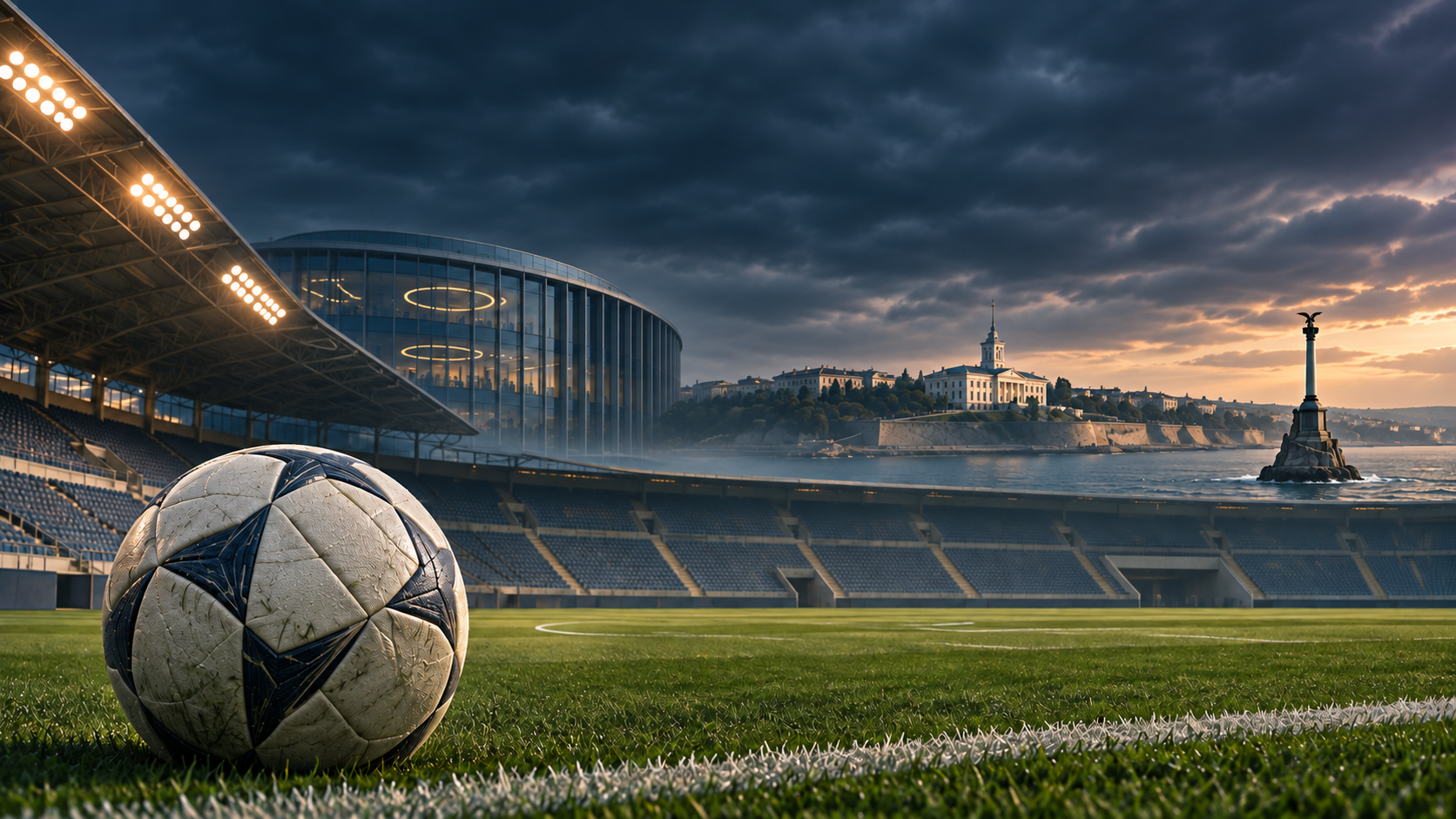
Uefa and Fifa are facing a critical test over whether they are prepared to penalise Russia for incorporating football teams from unlawfully occupied Ukrainian regions after Crimean club FC Sevastopol earned promotion to the country’s professional third tier.
Sevastopol were crowned winners of group one in Football National League (FNL) 2B, effectively Russia’s fourth division, last month and are understood to have requested a licence for the next level. If approval is given and the club enters FNL 2A, the move would appear to breach Uefa regulations preventing Crimean teams from participating in competitions overseen by the Russian Football Union (RFU). The organisation would then face significant pressure to strengthen measures against Russia, whose clubs and national sides remain excluded from international competitions.
Sevastopol chief executive Valery Chaly told local reporters last month that the club intended to file the required paperwork because competition rules entitled it to advance. Although the RFU remains affiliated with Uefa and Fifa, demands for its removal could intensify if Sevastopol is allowed to move up. No final decision on the club’s admission is believed to have been reached.
Football authorities encountered a comparable dispute in 2023 when Sevastopol and fellow Crimean side Rubin Yalta entered FNL 2B, despite clubs from the occupied peninsula having been barred from Russian competitions since the 2014 annexation.
The Ukrainian Association of Football (UAF) urged Uefa and Fifa to consider expelling Russia, arguing that the decision represented a serious breach of their statutes and of Uefa’s 2014 ruling prohibiting Crimean clubs from RFU-administered tournaments. Uefa said it would examine the matter, but no meaningful intervention followed. The RFU maintained that FNL 2B was an amateur competition outside its direct control. However, several teams competing at that level informally acknowledged that they operated professionally. That distinction cannot be applied to FNL 2A, which openly functions as a professional league.
The absence of action was followed by a further escalation in April 2024, when a replica of Ukrainian club Zorya Luhansk was admitted to FNL 2B. Zorya’s home city in the Donbas is under illegal Russian occupation. Another imitation team using the identity of Shakhtar Donetsk joined this year, despite the original club having been displaced from its home since 2014. Five of the 15 sides that completed the latest FNL 2B group one campaign either played in occupied regions or claimed to represent them, with Simferopol-based Kyzyltash Bakhchisaray completing the group.
If the RFU blocks Sevastopol’s promotion, either voluntarily or following international pressure, an even more contentious situation could emerge. The imitation Shakhtar side placed second in group one after defeating Sevastopol 2-0 on the final day of the season last Saturday, putting it next in line for promotion. Unlike Sevastopol, it stages home fixtures inside internationally recognised Russian territory, in Taganrog, although its registered address is in Donetsk.
In October 2025, the UAF requested that Uefa investigate and clarify the legal status of the imitation clubs. As with the review of Crimean teams competing in Russian football, no findings have yet been released. The Ukrainian body described the development as a coordinated political effort to legitimise the occupation and remove the identity of Ukrainian football.
Last month, Russia took part in a Fifa-organised competition for the first time since the full-scale invasion of Ukraine began in February 2022, placing 19th at the newly introduced under-15 World Cup. During the war, Russian under-15 and under-16 teams have also continued appearing in smaller Uefa development events, mainly against invited opposition at venues in Russia.
Uefa, Fifa, the RFU, the FNL, Sevastopol and the imitation Shakhtar Donetsk team did not provide responses when approached for comment.
What do you feel about this post?

Like

Love

Happy

Haha

Sad