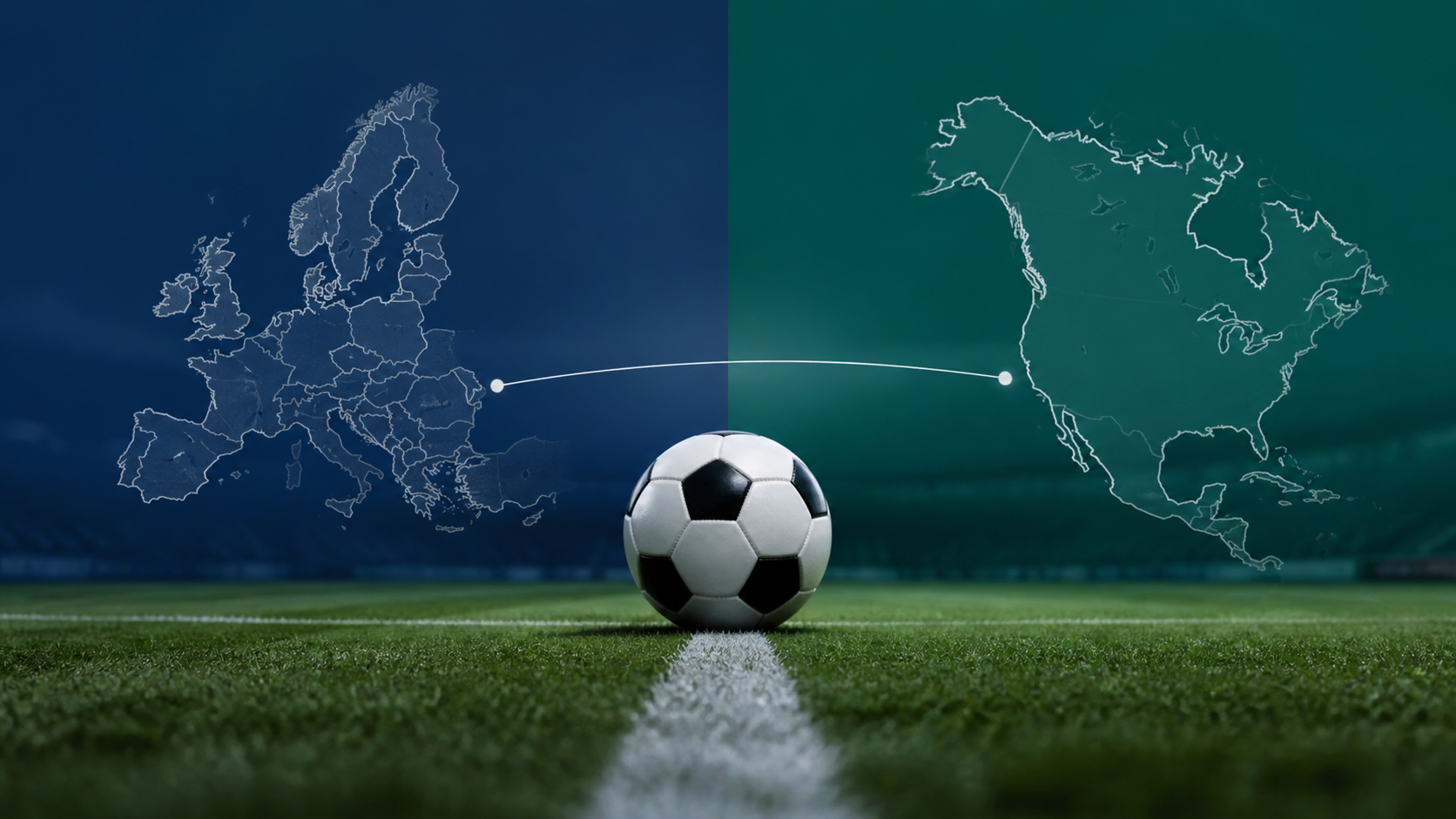
Uefa and Concacaf have opened discussions about creating a joint Nations League competition involving all 96 countries across Europe, North America, Central America and the Caribbean, presenting another challenge to Fifa.
After joining forces to seek Gianni Infantino’s departure amid controversy over plans concerning the World Cup, the two confederations are now exploring their own tournament, potentially held every two years. It could begin as soon as 2028, following the next European Championship.
While negotiations remain at an early stage, the proposed competition is expected to follow the multi-division structure already used in the existing European and Concacaf Nations Leagues. A knockout stage would follow the league phase, ending with a four-team finals event to decide the champion.
League A would bring together leading European sides such as Spain, France, England and Germany with Concacaf’s highest-ranked teams, including Mexico, the United States and Canada.
Uefa and Concacaf introduced their Nations League tournaments in 2018 and already schedule matches during the same international periods, meaning much of the framework needed for a combined event is already available.
According to the preliminary proposal, league matches would take place during the established international breaks in September, October and November. Knockout fixtures would then be staged in March, with the finals held in June.
Because the games would be scheduled within previously approved international windows, it remains uncertain whether formal authorization from Fifa would be required. That issue may become less significant while the global governing organization faces internal uncertainty and Infantino encounters a potential leadership challenge.
Detailed talks began only recently, so organizers have not yet decided how many teams would compete in each division. However, all 96 Uefa and Concacaf members would participate, with a substantial share of the revenue distributed collectively to provide smaller nations with additional income.
Regular competitive fixtures involving major European teams in the United States, Canada and other parts of North America could generate considerable commercial interest. Mexico may also benefit, as its football federation, the FMF, has reportedly become dissatisfied with the financial constraints of competing solely within Concacaf.
The FMF has held preliminary discussions about leaving Concacaf and joining South America’s governing confederation, Conmebol, although such a move would require Fifa’s approval. The opportunity to stage profitable matches against European opponents could persuade the federation to reconsider.
Rather than increasing the number of international matches, the suggested format would replace existing fixtures. Games would also be organized in regional groups to limit the amount of travel required.
The Asian Football Confederation has reportedly shown interest in becoming part of a worldwide Nations League in the future. The format under consideration could be adjusted to include Asian teams, although this remains a longer-term possibility because the region does not currently operate its own Nations League.
Uefa and Concacaf have cooperated for several years and signed a memorandum at Fifa’s April congress in Vancouver to strengthen their partnership. Their relationship has grown closer since the World Cup proposal became public last month.
Both organizations have indicated that Infantino can no longer remain in his position because of his involvement in the Fifa Forward Enterprise proposal. They are also coordinating efforts to identify another candidate who could challenge him in the presidential election next March.
Uefa did not provide an official response, although a person familiar with the proposal confirmed that discussions are taking place.
Concacaf also avoided commenting specifically on the plan but emphasized its long-established support for international cooperation, including its practice of inviting guest countries to participate in the Concacaf Gold Cup.
Concacaf’s close historical ties with Conmebol have enabled several South American countries to compete in the Gold Cup. Teams from South Africa, South Korea, Saudi Arabia and Qatar have also appeared in the tournament.
What do you feel about this post?

Like

Love

Happy

Haha

Sad