The first sign that a billionaire may be forced to answer for their actions is usually an emphatic denial.
Next comes disbelief that such an ordinary problem could possibly affect someone of immense wealth, influence and social standing.
The third step is a restrained expression of regret that stops short of accepting responsibility, typically lamenting “the distraction and distress this matter has caused” after representatives have already delivered an uncompromising denial.
What comes in the fourth phase? That may soon become clear.
Over the past month, we have cautiously entered an unusual period in which the billionaire class may occasionally face some consequences, even if those consequences remain confined to professional sport. It is a curious development at a time when the wealthiest people appear to enjoy not only favorable rules on taxation and regulation, but also privileged treatment from the legal system.
Leaving aside the wider debate over whether billionaires should exist, or whether their existence represents a serious failure of fiscal policy, this remains an extraordinary shift.
On 2 September, the NBA published the outcome of an investigation. It concluded that the Los Angeles Clippers and owner Steve Ballmer had arranged for star forward Kawhi Leonard to receive $28m outside the official accounts through a supposed sponsorship position that required no work, allowing the team to evade the league’s salary cap. The Clippers lost five first-round draft picks and received a $30m fine, while Ballmer, ranked as the world’s ninth-richest person, was barred from participating in team affairs for one year. At first, the Clippers responded with a statement forcefully rejecting the conclusions and describing the inquiry as biased and designed to support a narrative decided in advance rather than the available evidence.
The organization subsequently accepted the penalty.
The evidence against them was compelling, following a year-long inquiry by journalist Pablo Torre and his podcast, Pablo Torre Finds Out, which earned a Pulitzer Prize for the reporting. Its conclusions were presented across several episodes and initially met with considerable doubt, including from Dallas Mavericks minority owner Mark Cuban, another billionaire and a peer of Ballmer. “I’m on Team Ballmer,” Cuban wrote earlier in a public show of support. “Steve isn’t that dumb.”
It is also worth remembering that Ballmer was permitted to purchase the Clippers only after former owner Donald Sterling was effectively forced out of the league because of racist remarks, another uncommon example of an owner being held accountable by fellow members of that exclusive group.
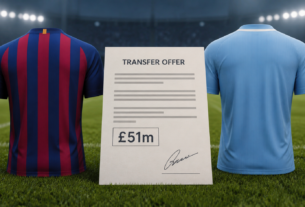
A comparable judgment arrived last week when Manchester City was found guilty of more than 100 violations of the Premier League’s financial rules between 2009 and 2018, as well as obstructing the investigation that followed from 2019 to 2023. The club has not reached the conciliatory phase, continuing to declare its innocence and maintaining the confrontational position it has adopted throughout the process.
Even so, nearly every credible outcome suggests that, after the expected years of appeals and legal disputes, the club’s Abu Dhabi owners will leave the case with lasting reputational damage. The achievements of a football operation transformed by billions in investment from an unremarkable side into a dominant global force will now carry a permanent stain. If the project was intended to enhance the oil-rich state’s international image through soft power, it has produced the opposite result. Regardless of what follows, the UAE-owned club risks being remembered for systematic rule-breaking on an enormous scale and for undermining both the world’s most watched sporting league and a major British cultural institution for close to a decade.
It is important to stop and consider how unusual this is. Modern society has created an almost obstacle-free route for the rich and the exceptionally rich, making instances in which members of that class pay any meaningful price for their conduct remarkably uncommon.
Consider the case of New England Patriots owner Robert Kraft, who was accused of paying for sex at a Florida massage business before prosecutors abandoned the charge. There is also New York Knicks owner James Dolan, whose notoriously contentious conduct has attracted repeated criticism. A former employee has filed a discrimination lawsuit that includes allegations that Dolan unlawfully monitored the team’s own supporters, conduct that Torre had also investigated. It remains doubtful that Dolan will experience significant consequences from those claims.
Countless comparable examples can be found beyond the sporting world, including among powerful political figures and the people close to them.
History may ultimately treat the Clippers and Manchester City cases as rare exceptions. For the moment, however, that rarity is precisely what makes them significant. Wealthy and influential people are being confronted with the results of their own excessive and dishonest choices, something that has become strikingly unfamiliar in the present era.
-
Leander Schaerlaeckens wrote The Long Game: US Men’s Soccer and Its Savage, Four-Decade Journey to the Top, or Thereabouts, which is available now. He also teaches at Marist University.
What do you feel about this post?

Like

Love

Happy

Haha

Sad