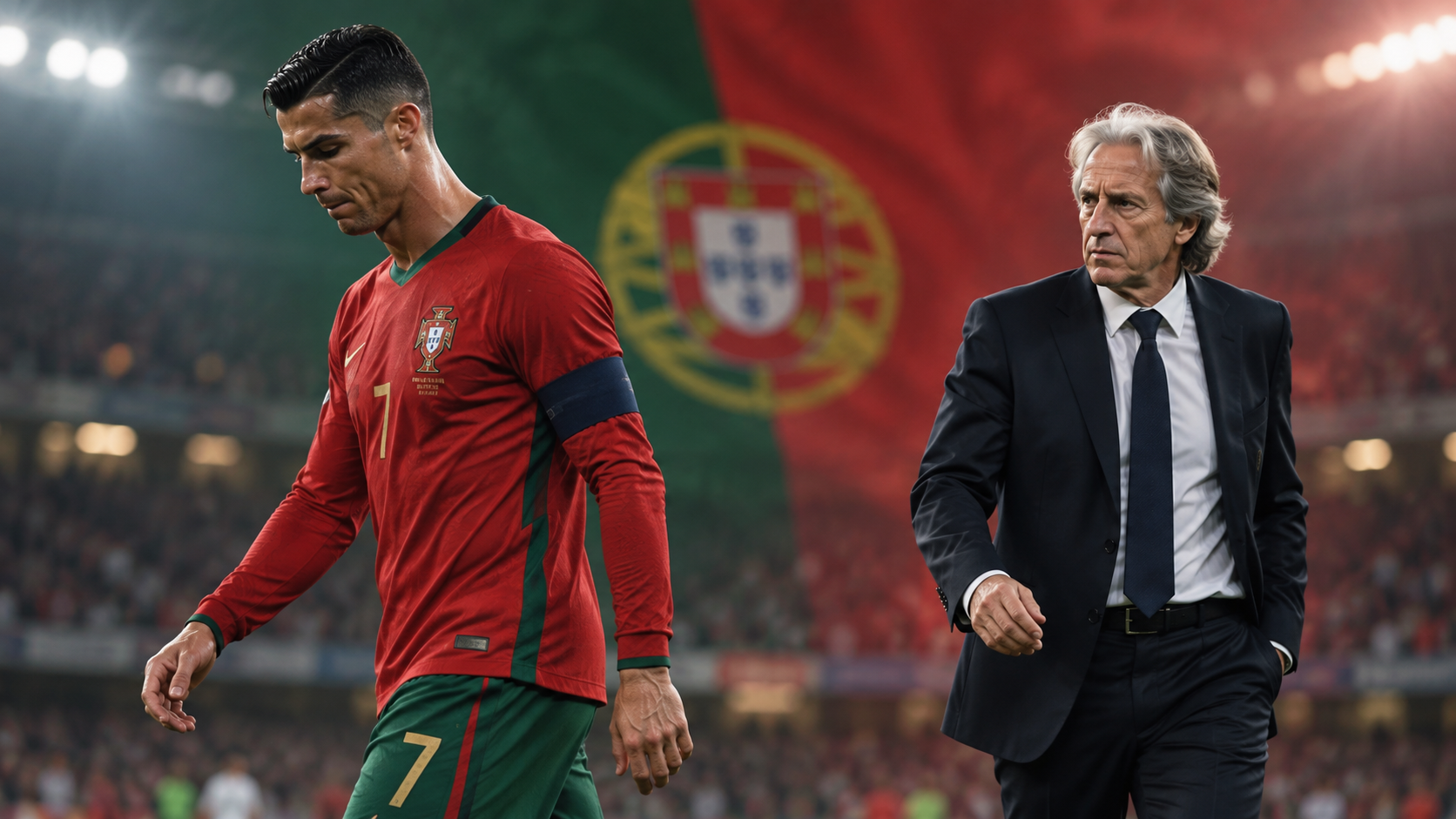
The controversy involving Cristiano Ronaldo and Portugal’s national side has quickly become the country’s leading sports story. It dominated Wednesday night’s television coverage and appeared on the front pages of almost every major newspaper. Some believe Ronaldo was justified in leaving the squad after warming up for half an hour against Norway without entering the match, viewing the decision as a deliberate challenge from Jorge Jesus. Others consider the forward’s actions unacceptable and feel a breakdown was inevitable once he began working with such a determined and authoritative coach.
Ronaldo has said he will soon explain his version of events, while Jesus is expected to address the issue on Thursday night following the Nations League fixture in Denmark. Tension between two such influential figures had been developing for some time. At his first national-team press conference in July, Jesus was asked how he intended to manage his relationship with Ronaldo. Having previously coached him at Al-Nassr, Jesus gave an unequivocal response.
Jesus declared that Ronaldo would never create difficulties for either him or the national team, adding that he knew how to handle the player’s personality. However, the understanding between them soon began to unravel.
Public opinion in Portugal has predictably divided into opposing sides. The argument resembles the earlier discussion about Ronaldo’s guaranteed place in the starting lineup at the summer World Cup. Roberto Martínez kept his captain on the field for the entire match in four of Portugal’s five games, despite the absence of a clear tactical or physical justification. Ronaldo was substituted against Croatia in the round of 32, but only in the 81st minute.
Ronaldo’s loyal supporters continue to defend him strongly on social media. A significant portion of the wider public, however, believes he has abandoned the national team. O Jogo, one of Portugal’s most prominent sports publications, expressed that sentiment prominently on its front page.
Most Portuguese newspapers and commentators have concluded that Ronaldo acted in his own interests. Nevertheless, several opposing voices, especially among media organizations in which he owns shares, have directed their criticism at Jesus. They accuse the coach of showing little appreciation and of unjustifiably failing to honor his earlier commitment.
The dispute appears to have started with an informal agreement between Jesus and Ronaldo. According to the coach, the 41-year-old was not expected to start against Norway on Sunday, having played 67 minutes against Wales three days earlier in Jesus’s first game in charge. The plan was for Ronaldo to enter later as a substitute. Although Portugal secured a 2-1 victory, Jesus changed his approach for tactical reasons and left Ronaldo on the bench throughout the match. Reports suggest the forward regarded the decision as deeply humiliating.
The first visible indication of their deteriorating relationship came immediately after the final whistle. Ronaldo walked away from the field rather than joining his teammates as they acknowledged Portugal’s supporters in Oslo. His anger toward Jesus reportedly intensified after listening to the coach’s comments at Wednesday’s press conference.
When questioned about leaving Ronaldo among the substitutes, Jesus emphasized that all tactical decisions belonged to him. His remarks made it clear that no player would be allowed to direct the team or influence his strategy. The statement appeared intended for both Ronaldo and the Portuguese football federation (FPF), reinforcing that the coach held final authority.
The 72-year-old explained that, regardless of any earlier promise, he was responsible for selecting the team. He had informed Ronaldo that he would begin on the bench and could be introduced for the final 30 minutes if required. As the match developed differently from what he had anticipated, Jesus decided not to use him. He insisted that Ronaldo, any other footballer or even a club president would never force him to alter his coaching principles.
Jesus also indicated that Gonçalo Ramos would be chosen ahead of Ronaldo for Monday’s match.
Ronaldo then suddenly departed the team hotel, took a flight and published a message on social media stating that he would soon disclose what had really happened.
Some observers believe Ronaldo’s public communication has become less effective since his separation from agent Jorge Mendes nearly four years ago. That split followed Ronaldo’s interview with Piers Morgan, which contributed to his exit from Manchester United. Reports indicate that their friendship and family ties remain strong, but Ronaldo is now represented by a group he selected himself. Critics have questioned whether too many people around him simply agree with his decisions, leaving too few advisers prepared to warn him when his actions could damage his reputation.
Once more, discussion about Portugal’s national team has been overshadowed by a dispute involving Ronaldo. He could receive an FPF suspension lasting between one and six months, along with a financial penalty, if he is found to have violated the organization’s disciplinary regulations.
Until Ronaldo and Jesus provide their full accounts, speculation will continue to spread rapidly. Some reports claim the forward may never represent Portugal again. After scoring 146 goals in 234 appearances across 23 years, the question now is whether this controversy will mark the end of his international career.
What do you feel about this post?

Like

Love

Happy

Haha

Sad