Although Chandler had supported Sunderland throughout his life, he acknowledged that Kevin Keegan’s Newcastle inspired his approach, with exciting football considered even more important than results.
“We often joked about whether we should leave two or three defenders at the back. On one occasion, while trying to rescue a match, we finished with only two,” he says.
“Premier League matches can sometimes lack excitement. Supporters come to be entertained, and that was what we pledged to deliver.”
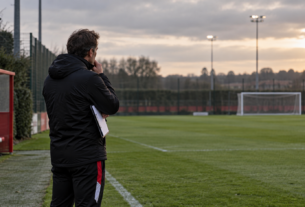
Chandler was already celebrated at Whitley Bay when chairman Paul McIlduff selected him as manager. He had previously scored the decisive goal against Tiptree United in the 2002 FA Vase final at Villa Park.
The 35-year-old initially needed time to adjust because he had never managed before, but he eventually assembled a gifted squad admired throughout non-league football.
“Our football was attractive. We had speed out wide, outstanding midfield players and clinical forwards,” says McIlduff, Whitley Bay’s chairman since 2001.
“Whenever we recruited someone, we considered whether his personality would suit the dressing room. Nobody saw himself as more important than the others, and everyone competed for the team.”
One player who became increasingly important was nicknamed the ‘Whitley Bay Maradona’.
Paul Robinson developed in Newcastle United’s academy before representing several non-league teams across north-east England, including Whitley Bay between 2007 and 2013.
As was the case for several members of the squad and staff, Robinson worked under Chandler both at software company Sage and at Hillheads Park.
“He managed me in the office as well as in football, so I saw more than enough of him,” Robinson jokes. “The benefit was that getting time away for matches became easier.”
That arrangement also gave Robinson an understanding supervisor whenever his attention wandered from work to football.
“I frequently found myself daydreaming about scoring goals and winning matches, wondering what our opponents would be like and hoping they would be poor enough to give us a comfortable afternoon,” he says.
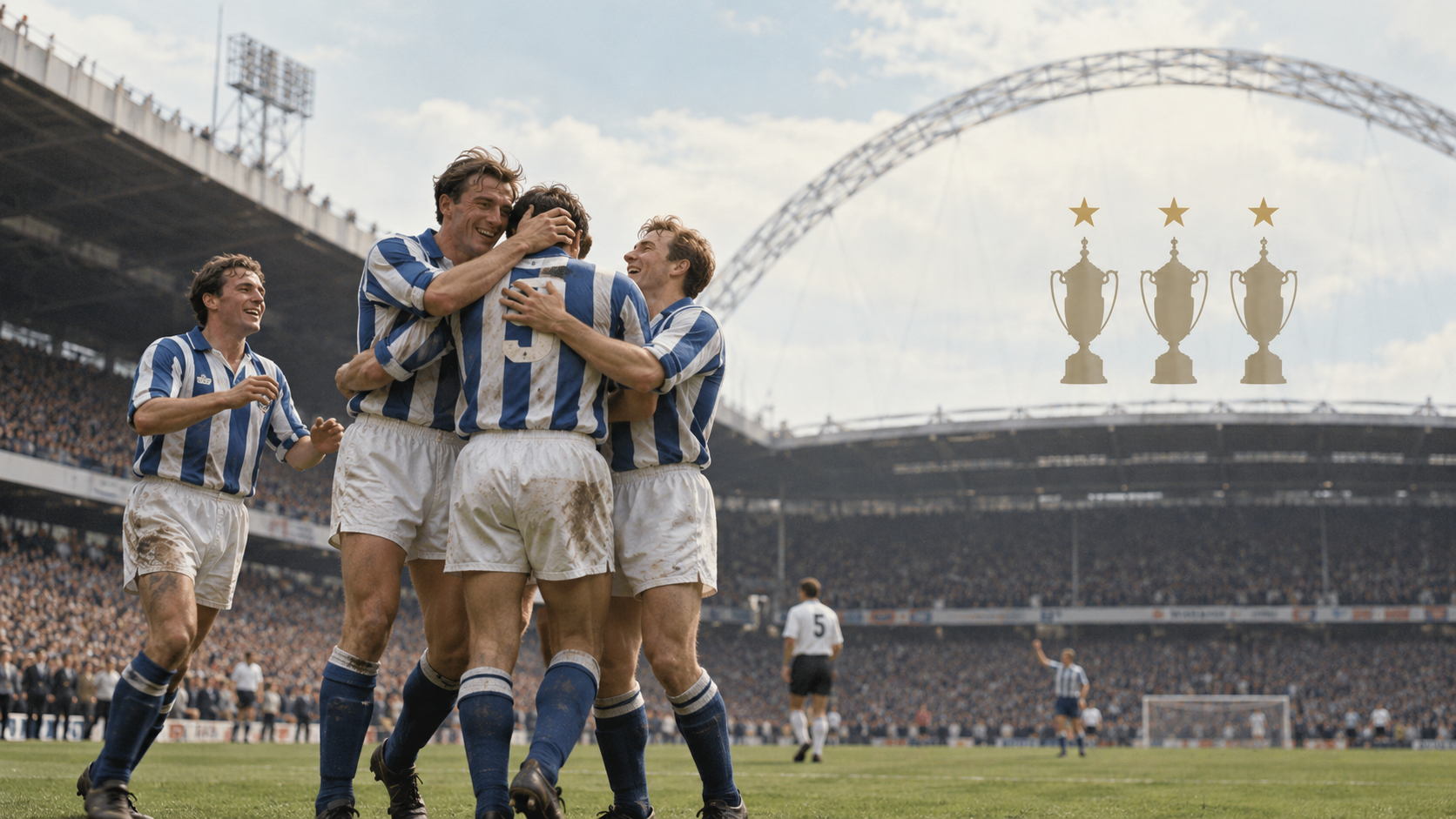
Robinson’s finest Whitley Bay memory may have come in the second leg of the 2010 FA Vase semi-final. His diving header in the final minute, scored amid heavy rain, completed a 6-5 aggregate triumph over Barwell and prompted supporters to flood onto the pitch.
“Everyone attends the finals, where you can take in the occasion and enjoy yourself,” says Robinson, now the academy head at South Shields.
“However, the earlier rounds often felt like the more significant matches. Crowds of 2,000 or 3,000 would watch us at home, making you feel like a professional. Those occasions brought back memories of the FA Cup in the 1990s, something you would never expect to experience in non-league football.”
During the 1989-90 campaign, Chandler featured in a 2-0 second-round victory over Preston as Whitley Bay advanced to the FA Cup third round for the first and only time. The club also reached the second round in the next season.
Those successful campaigns established the Bay as formidable opponents for non-league teams throughout England and prepared them for major fixtures in a way few amateur clubs could match.
“Biggleswade arrived for a quarter-final in 2009 wearing suits and ties,” Robinson recalls. “We could tell they viewed it as their special occasion and their cup final. We defeated them 5-2.”
“Towards the end of that period, opponents arrived already intimidated by us. Psychologically, the contest often felt settled before it started.”
What do you feel about this post?

Like

Love

Happy

Haha

Sad