
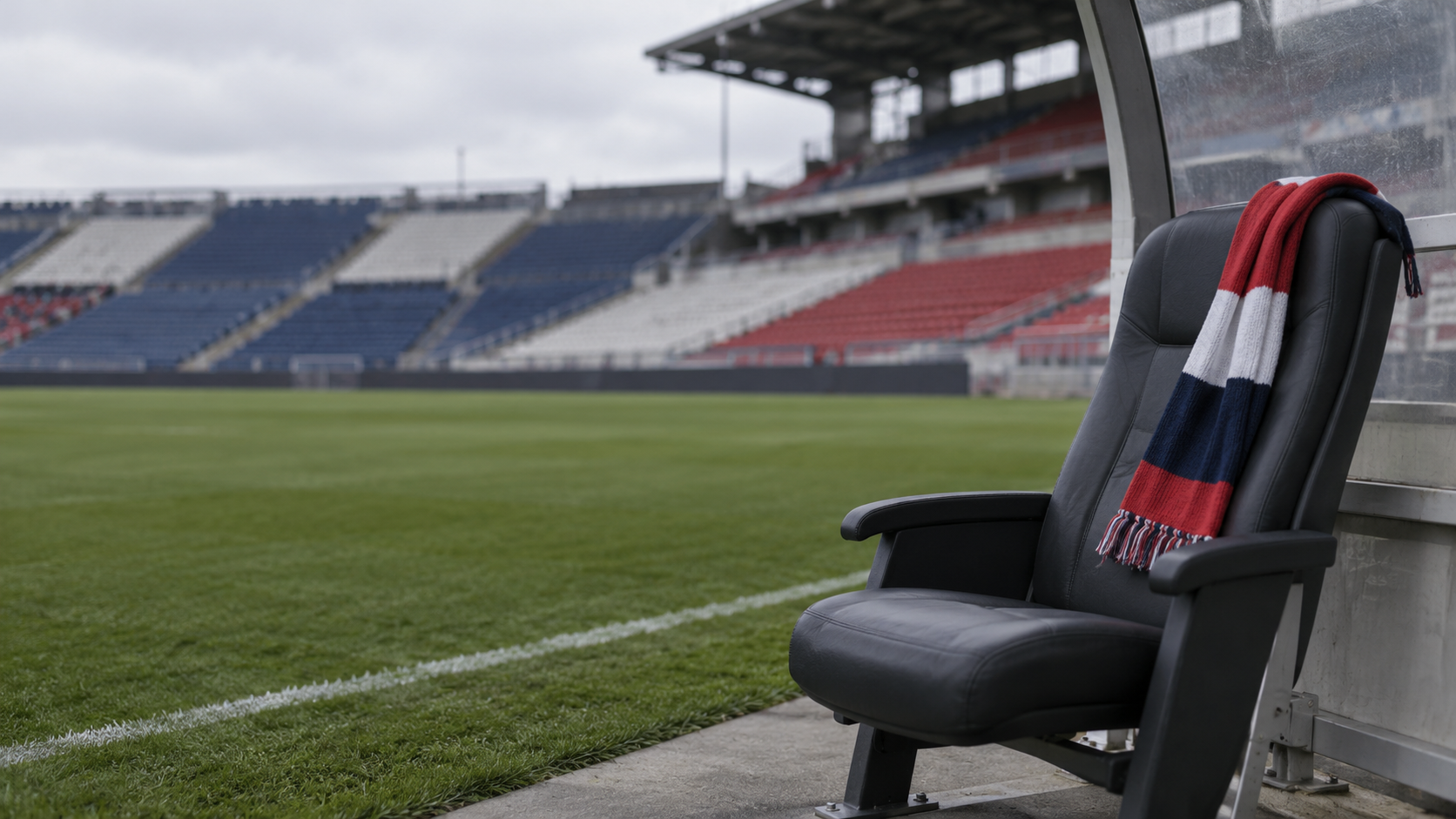
Even before the 2026 World Cup began, the United States Soccer Federation appeared confident that it could eventually find a successor to Mauricio Pochettino.
“We regularly assess succession plans for every important position within the federation,” chief executive JT Batson said in April. “We aim to be prepared for any departure, whether it involves the finance director, the head coach or another senior role.”
The federation may now have to prove that it is truly prepared. Pochettino’s departure appears increasingly likely after Manchester United reportedly reached an agreement for him to replace Michael Carrick, who was dismissed on Thursday.
The appointment of Pochettino was widely praised because the federation had attracted such a highly regarded coach. Only a small number of managers in the men’s game possess a comparable reputation, built through strong results, successful team-building and a distinctive personal presence. During his two years in charge, several established players credited him with reshaping the environment around the squad after Gregg Berhalter’s six-year spell.
Pochettino’s half-cycle tenure has significantly raised expectations regarding the ideal profile of the next national-team coach. Although pursuing another elite manager would be costly, the federation cannot ignore the new standard as it prepares for the 2030 World Cup cycle.
Which candidate is best equipped to maintain the progress made under Pochettino?
Pep Guardiola
Guardiola is likely to be the first choice for many supporters. He has featured on ambitious shortlists for years, particularly after spending time in New York City between leaving Bayern Munich and beginning his long spell with Manchester City. There has also been persistent speculation that he might consider managing the United States at a World Cup on home soil if he left City beforehand. That timing did not materialize, but he is currently available and would be widely viewed as an upgrade on Pochettino.
However, the concerns that made a full four-year Pochettino tenure seem unlikely apply even more strongly to Guardiola, who rejected an approach from Italy during the summer. Although Concacaf has developed over the past decade, it remains less prestigious than the confederations in Europe, South America, Africa and Asia. It is uncertain whether three and a half years dominated by friendly matches, a relatively comfortable qualification campaign and regular meetings with Mexico and Canada would satisfy his competitive ambitions through 2030.
Guardiola, like fellow high-profile candidate Antonio Conte, built his reputation through relentless day-to-day work. Both coaches are known for their intense commitment and constant involvement. Despite the importance of the Gold Cup and Nations League, the position may not provide the level of competition they seek. Concacaf’s lower international standing could also discourage other experienced candidates, including Rudi Garcia, Sebastián Beccacece and Diego Alonso.
American coaches overseas
Historically, the national team has often addressed questions about commitment by appointing coaches from within the domestic game. Bruce Arena had recently established the first MLS dynasty when he accepted the job in 1998. Bob Bradley was among the league’s most successful managers when he took charge in 2006. After the country failed to qualify for the 2018 World Cup, Gregg Berhalter arrived as a respected domestic candidate following the end of his tenure in Columbus.
The American who arguably has the strongest qualifications may already have removed himself from consideration. Canada manager Jesse Marsch is frequently asked about the United States team, American politics and the personal meaning of defeating Canada’s southern neighbor. His responses regularly generate widespread attention.
“I want to be completely clear: I will never manage the United States national team,” Marsch, Canada’s head coach, said in July. “There may once have been an opportunity, but I have moved on and no longer think about it.”
If Marsch has competition for the title of leading active American men’s coach, it is probably Pellegrino Matarazzo. Born in New Jersey, he graduated from Columbia University before beginning his playing and coaching careers in Germany. Following productive spells with Stuttgart and Hoffenheim, he took charge of Real Sociedad. Last spring, he became the first American manager to win a trophy in one of Europe’s five leading leagues by claiming the Copa del Rey. Sociedad would probably make a strong effort to retain him if the federation approached.
Candidates from the domestic game
Between Berhalter’s two spells in charge, BJ Callaghan guided the United States to Gold Cup success with attractive football and strong control of matches. He accepted his first senior club-management position in 2024 and has since transformed Nashville SC into a record-setting side capable of competing for a rare domestic double.
Nashville handed Callaghan a new contract in February that runs through the 2028-29 MLS season. His possession-focused approach remains popular at international level, but the 45-year-old may prefer to continue developing his current project before considering another move.
Beyond Callaghan, most realistic candidates come from MLS, and few possess records likely to sustain the players’ excitement after Pochettino’s departure. Steve Cherundolo, a former United States defender who now leads the U-20 and U-23 teams, won the MLS Cup. However, his time with Los Angeles FC was also marked by cautious tactics and difficulty controlling the most important matches.
Expanding the search to successful MLS coaches of other nationalities produces few obvious solutions. Wilfried Nancy has a strong claim to being the league’s leading coach of the decade, but his detailed tactical system could be difficult to implement during the limited and interrupted schedule of international football. A similar concern applies to Vancouver Whitecaps manager Jesper Sørensen.
The unconventional candidates
Thierry Henry could be an interesting alternative. Although his club tenures with Monaco and Montreal were unsuccessful, he impressed while guiding France’s U-23 team to an Olympic silver medal on home soil. The less frequent schedule of international management may suit him, and he has previously spoken positively about MLS and the United States national team. Antonio Conte has no established relationship with the federation, but he could emerge as an option if private financial support is available to fund another elite appointment, as it was for Pochettino.
Whichever direction the federation chooses, there is no obvious route forward.
What do you feel about this post?

Like

Love

Happy

Haha

Sad