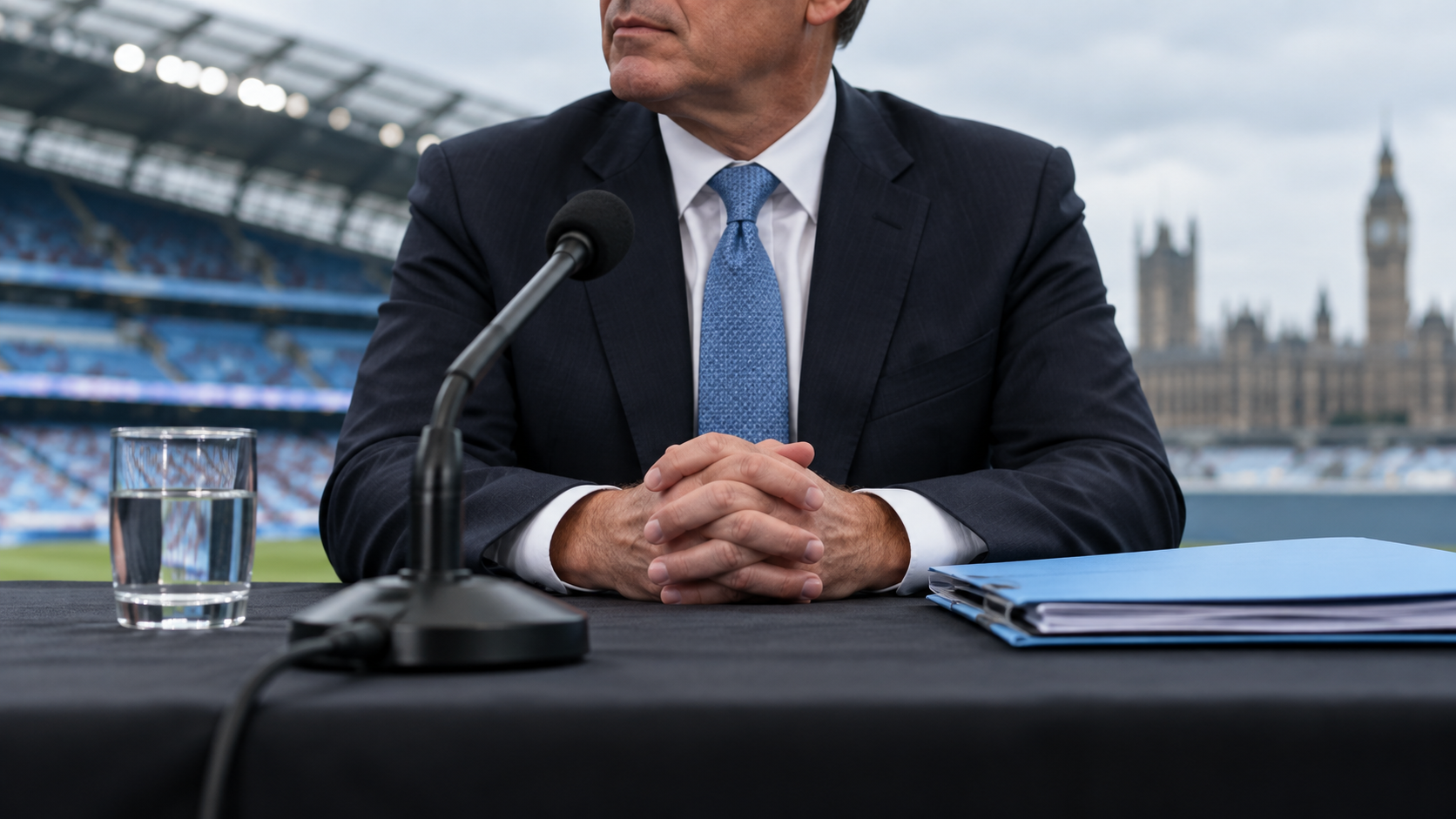
David Kogan, chair of the Independent Football Regulator (IFR), has pledged to step down if politicians attempt to influence the response to any finding that Manchester City violated Premier League financial regulations during a nine-year period. He stressed that both he and the organisation operate with complete independence.
If the ruling of an independent commission is confirmed after the appeal process, Kogan could potentially remove City’s owner, Abu Dhabi United Group (ADUG). Questions had emerged over whether the owner’s connections to Abu Dhabi’s leadership might prompt the UK government to intervene, creating an early challenge for the regulator’s new authority.
Kogan dismissed those concerns, stating that neither he nor the regulator would accept political involvement in their work. He said any attempt to interfere would lead to his resignation and added that no political pressure had been applied over this case or any other matter.
He made the remarks on Tuesday during the publication of the long-awaited State of the Game report, which details the financial difficulties affecting England’s football pyramid. With a new club licensing system due to be introduced later this season, the Manchester City proceedings remain a significant issue. Kogan explained that the regulator can assess owners, directors and senior executives to determine whether they remain suitable to manage football clubs.
He added that such assessments depend on obtaining extensive evidence and conducting thorough investigations. Decisions would then be reached after considering the relevant legal guidance.
An owner who fails a suitability assessment covering integrity, honesty and financial stability could ultimately be required to sell the club. Kogan said the regulator continually monitors clubs and handles these types of concerns more often than many people may assume. If a regulatory decision leads to legal proceedings, the associated costs could be charged to clubs through a funding levy.
One of the report’s central findings is the rapid growth in revenue among the Premier League’s wealthiest teams. The top-earning club in the division now generates 605 times more revenue than the lowest-earning National League side. Costs have also risen throughout the pyramid, with 94% of the 116 regulated clubs expected to record a financial loss in 2025-26. The report also found that 11 Football League clubs spent more than they earned even after player salaries were excluded.
Kogan said football’s finances are also being shaped by issues beyond the regulator’s authority, including a larger club calendar, rules governing player agents and higher interest rates. However, he argued that an agreement to redistribute money between the Premier League and the EFL could deliver immediate improvements.
Although Kogan acknowledged the Premier League’s view that parachute payments are necessary because relegated clubs suffer enormous revenue losses, he said those payments have created an increasingly unbalanced system. He suggested that reducing parachute payments while increasing funding for all clubs could help address that distortion. Distributing the additional money across the pyramid, he said, would ease financial pressure throughout the 116 regulated clubs.
The Premier League responded positively to the report, saying it acknowledged the strength of English football, including its globally popular top division, highly competitive second tier and exceptionally deep league structure.
The league said its latest financial proposal to the EFL, reportedly worth £320m per season, satisfies the goals identified by the IFR. It also reiterated its intention to reach a fair and substantial long-term agreement that takes account of the needs of clubs across the competition.
The EFL said the findings supported its established position that English football produces enough income to maintain both a successful Premier League and a healthy wider pyramid. It added that it would continue working constructively with the top flight and the regulator to reach a financial agreement benefiting the entire game.
Lisa Nandy, the secretary of state for digital, culture, media and sport, said the report’s figures had exposed the seriousness of football’s financial problems. She called on the sport’s governing bodies to consider the evidence in the interests of football, its supporters and the communities that depend on their local clubs.
What do you feel about this post?

Like

Love

Happy

Haha

Sad