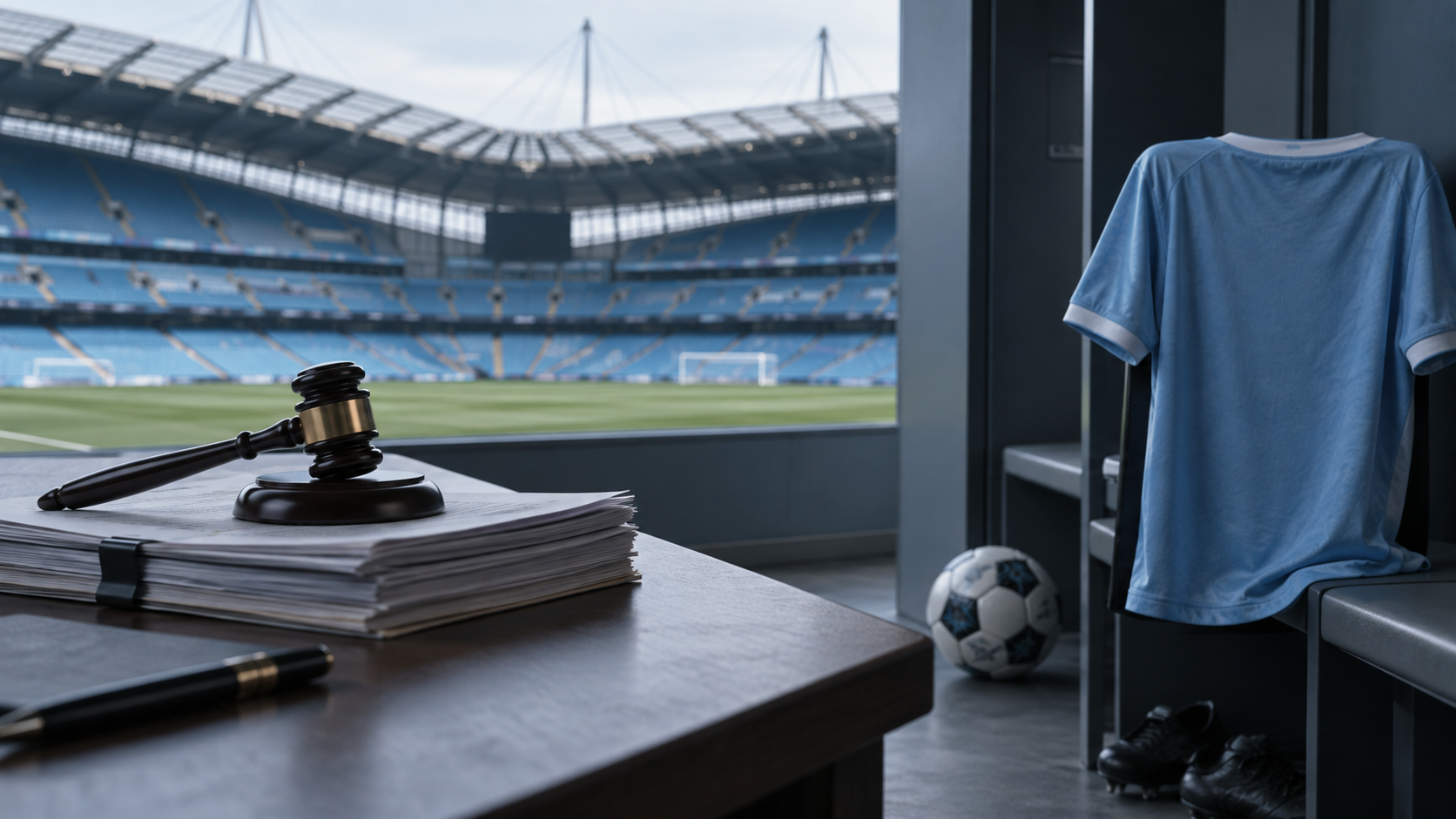
English football has never witnessed anything comparable to Manchester City’s vast disciplinary case, a controversy that reflects the pressures and contradictions of the modern game. A historic club was acquired by members of Abu Dhabi’s ruling family in 2008, financed on an extraordinary scale and transformed into a dominant force, while the same league awarding its titles pursued allegations of extensive financial misconduct.
Sources confirmed on Friday that the case had concluded with the club reportedly found responsible for nearly all of the more than 100 alleged violations. During the period since the inquiry began in December 2018, Pep Guardiola’s heavily assembled squads claimed five Premier League championships and won the Champions League.
The allegations were unprecedented in both number and scope. They included claims that City failed to submit accurate financial records across nine seasons, from 2009-10 through 2017-18; omitted complete information about payments in Roberto Mancini’s managerial contracts between 2009-10 and 2012-13; and did not fully disclose payments contained in player contracts from 2010-11 to 2015-16. The club was also accused of violating Uefa financial fair play rules between 2013-14 and 2017-18, as well as Premier League profitability and sustainability regulations from 2015-16 to 2017-18. Further charges alleged that City failed to assist the league’s investigation from 2018-19 through 2022-23, including its obligation to provide documents and information with complete honesty.
The independent commission’s reported decision emerged almost two years after the charges were heard in late 2024. Those proceedings followed an extensive investigation during which the Premier League and its legal representatives repeatedly sought documents while facing continuing objections from the club.
The period covered by the allegations, from 2009-10 to 2022-23, spans almost the entire era of success under Sheikh Mansour bin Zayed Al Nahyan, a member of Abu Dhabi’s ruling family and the United Arab Emirates’ vice-president and deputy prime minister. City’s rise began with the 2011 FA Cup, which ended a 35-year wait for a major trophy. A year later, Mancini’s side secured the Premier League title through Sergio Agüero’s famous goal in the 94th minute.
Public scrutiny of City’s internal operations intensified in November 2018 when the German publication Der Spiegel released club documents obtained through a breach of City’s email systems. Among the most damaging material were emails and financial records appearing to indicate that Sheikh Mansour’s ownership group had supplied much of the money attributed to a multimillion-pound sponsorship agreement with the Abu Dhabi airline Etihad, whose name is also attached to the stadium.
The documents appeared to suggest that City, while spending heavily to compete at the highest level, had found ways around financial fair play rules. Introduced by Uefa in 2011 and followed by similar Premier League measures in 2013, these regulations are intended to restrict excessive losses, particularly those caused by rising player salaries. Clubs are expected to spend income generated through broadcasting, commercial agreements, supporters and legitimate sponsorships rather than using sponsors to channel additional owner funding.
City’s board has been led since shortly after the takeover by Khaldoon Al Mubarak, an influential Abu Dhabi political and business figure and a longstanding adviser to Mansour’s brother, Sheikh Mohamed bin Zayed Al Nahyan, the UAE president and national ruler. Many in football initially underestimated the expertise, ambition and financial power behind City. Before the takeover, the club had endured several notable failures and had played in the third level of English football as recently as 1998.
For closer observers, however, the scale of City’s transformation was apparent from the beginning. The new owners initially accepted major losses while recruiting leading players, most notably Carlos Tevez from Manchester United in 2009. Mansour said that sustained investment would eventually deliver sporting success and financial stability, committing £395m within 18 months. The spending was sometimes viewed as excessive, while the formal language used when Mark Hughes was dismissed for missing agreed targets attracted ridicule. Much of that scepticism disappeared after Agüero’s decisive goal secured the 2012 league championship.
Investment extended far beyond player recruitment. City enlarged the stadium, created an extensive academy and training campus, and developed an international network of clubs. Barcelona was identified early as the preferred sporting model, and City built a similar structure that ultimately helped attract Guardiola, who had enjoyed major success in Catalonia, to Manchester in 2016. Al Mubarak also recognised that a successful and appealing Premier League team could promote Abu Dhabi internationally. The Abu Dhabi Tourism Authority was among the original sponsors, advertising the country around the pitch. At the same time, the owners invested in community facilities and acknowledged the club’s history and importance to its supporters.
By the 2017-18 season, most of the intended structure was established. Guardiola had delivered his first league title, Mansour’s disclosed personal investment had reached £1.3bn, and City had become profitable. The Der Spiegel disclosures then presented a serious threat to the project, alleging financial manipulation and revealing an uncompromising internal culture that contrasted with the club’s public image.
One published email showed City’s internal lawyer, Simon Cliff, describing Mubarak’s opposition to a financial punishment arising from an earlier Uefa inquiry into the club’s substantial losses in 2012 and 2013. According to Cliff, Mubarak preferred spending 30 million on 50 leading lawyers and pursuing legal action against Uefa for a decade rather than accepting the sanction.
City consistently rejected accusations of misconduct, while senior officials responded to the Der Spiegel reports with anger and firm denials.
In a statement, the club said it would not discuss material presented without context and allegedly obtained through theft or hacking. It also described the effort to harm City’s reputation as deliberate and coordinated.
Despite those denials, Uefa’s internal financial fair play enforcement body opened an investigation into possible deception and financial violations. The Premier League announced its own inquiry in March 2019, although it initially received limited attention while City’s highly public dispute with Uefa continued.
In February 2020, Uefa’s adjudicatory chamber ruled that City had misrepresented sponsorship income connected to Etihad and the UAE telecommunications company Etisalat. It excluded the club from the Champions League for two seasons. City appealed to the court of arbitration for Sport, which overturned both the central findings and the ban in July 2020. However, the court determined that City had not cooperated with Uefa’s investigation and issued a €10m fine.
City subsequently secured Guardiola’s third Premier League title as the project moved towards its most dominant period, while little was publicly reported about the domestic inquiry. That changed in July 2021, when a British court judgment disclosed that the Premier League investigation had continued and that City’s legal team had repeatedly attempted to prevent it from advancing.
The published ruling showed that the Premier League opened its investigation in December 2018 after Der Spiegel released confidential information taken from the club’s email servers.
Some observers had criticised Uefa for not seeking documents beyond those already published by Der Spiegel. The court decision revealed that the Premier League had demanded additional records and maintained that it was entitled to receive them. City declined to provide requested documents and information, prompting the league to file a disciplinary complaint in August 2019. A commission was established to consider the matter, but City argued that both the disciplinary framework and the commission lacked sufficient independence and impartiality. The league proposed an alternative appointment procedure, which the club also opposed.
The Premier League then began arbitration proceedings to compel City to release the material, and a panel of three senior lawyers was selected to hear the case. City challenged that process as well, claiming the league lacked authority to initiate arbitration and questioning the panel’s impartiality. The tribunal dismissed those objections and ordered the club on 2 November 2020 to hand over the relevant documents and information. City sought to have the tribunal’s decision overturned in the high court, but Mrs Justice Moulder ruled against the club in March 2021.
Moulder also determined that her ruling should be made public. Its publication revealed that a club rebuilt around high standards in every department had spent two and a half years using legal measures to resist supplying information to its own domestic competition.
Little more became publicly known until February 2023, when the Premier League formally announced an extraordinary collection of charges against City. The allegations described repeated and extensive breaches of financial regulations across almost the entire first decade of Mansour’s ownership.
The principal allegations concerned City’s supposed failure to provide accurate financial information in complete good faith and to present a truthful picture of its financial position, particularly its revenue and sponsorship income. These charges covered every season from 2009-10 through 2017-18.
Considering the earlier court ruling about City’s resistance, the allegations that the club failed to cooperate during all five seasons of the investigation were among the least unexpected elements of the case.
Three months after the charges were announced, City claimed another Premier League title. In June 2023, Sheikh Mansour and Sheikh Mohamed attended the Champions League final in Istanbul, where the long-term project achieved its greatest objective. City won the domestic championship again in 2023-24, becoming the first team to secure four consecutive Premier League titles and giving Guardiola his sixth. The league continued to recognise City as champions even while preparing its allegations for a formal hearing.
Sources now indicate that the six-year case has produced a verdict. Throughout that period, the rebuilt club achieved some of football’s greatest successes while facing exceptional claims involving dishonesty, misleading information and a lack of good faith. Because the outcome emerged through unofficial reports, without confirmation from City or the Premier League and without the panel’s complete decision, the matter is not yet finished. City stated that the proceedings remain active, that important stages are still outstanding and that strict confidentiality continues to apply.
The central questions remain unresolved: whether City could lose any of its titles and how severe the eventual penalties might be. The club is also reportedly able to appeal the findings. Whatever the final result, the case has already presented an extraordinary and unprecedented view of modern English football, its institutions and the forces shaping the sport.
What do you feel about this post?

Like

Love

Happy

Haha

Sad