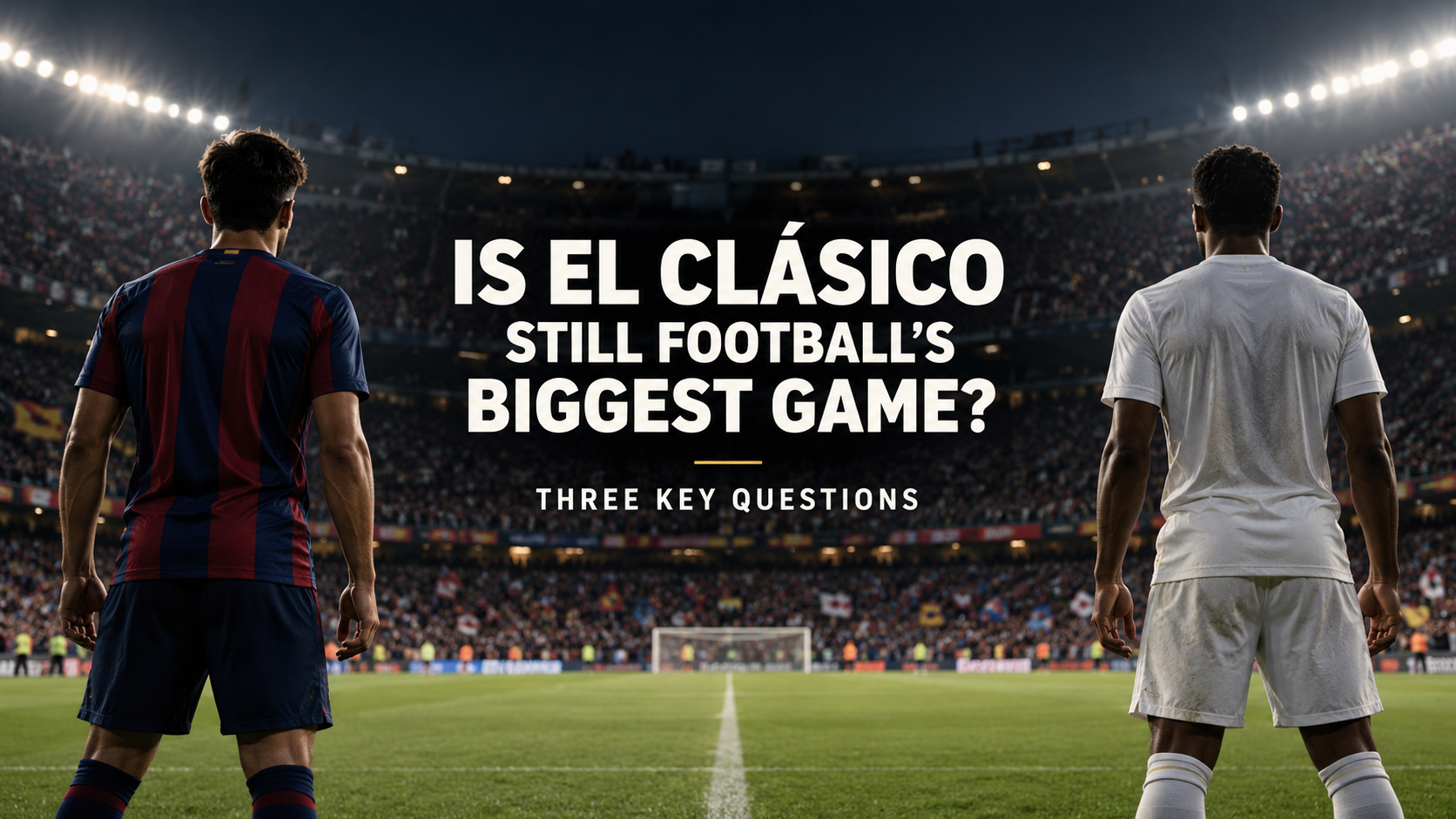
For nearly ten years, El Clásico stood for far more than the biggest match in soccer. It shaped the sport’s central storyline. During the height of Lionel Messi and Cristiano Ronaldo’s rivalry, the battle extended beyond meetings between their historic clubs, influencing the annual Ballon d’Or race and dominating conversations throughout the game.
As the Messi-Ronaldo era came to an end, the clásico also lost some of its wider importance. That does not mean games between Barcelona and Real Madrid have stopped mattering; their rivalry remains deeply significant. Yet in 2026, its place in the global game is harder to define. Can it still be considered soccer’s biggest match?
Hundreds of millions of people around the globe are expected to watch Sunday’s contest at Camp Nou. Every clásico is meaningful, but this one carries particularly high stakes. Victory for Barça would put them nine points ahead of Real Madrid at the top of La Liga, while a win for Madrid could transform the direction of their season.
Lamine Yamal may currently be the finest player in the world, and he could have a Ballon d’Or award to confirm that status by Monday. Kylian Mbappé also belongs in that conversation. The Clásico still features elite talent, but the way the match is perceived has shifted. Only a few years ago, it felt as though the entire world paused to watch. Today, the level of global excitement appears less intense.
Has the Premier League’s influence played a role?
Unless Manchester City’s alleged financial violations cause lasting damage to its image, the Premier League remains the most powerful competition in soccer. No other domestic league has a larger worldwide following. Its presence is so extensive that even people with little interest in the sport are likely to know about it.
The title showdown between Manchester City and Arsenal in April became the most-watched Premier League game in US television history. Its audience was almost twice as large as the record viewership achieved by a clásico in the country in October 2025. Such figures suggest that the English league has become European soccer’s most attractive product.
The way the competition is presented may help explain its success. La Liga has moved between several broadcast partners, whereas the Premier League established long-term relationships with Sky Sports in Britain and NBC in the United States, ensuring consistent coverage and promotion. English league games also use more cameras, giving broadcasts a brighter and more polished appearance. Viewers additionally benefit from knowing exactly where they can regularly watch the matches.
La Liga has made efforts to expand its international reach, including opening a New York office and considering staging an official match in Miami. Previous clásico fixtures have also been timed to attract prime-time audiences in Asia. Even so, the Premier League benefits from operating primarily in English, which offers a considerable advantage in today’s global media landscape.
Do Barcelona and Real Madrid remain the strongest teams?
When the clásico was at its most influential, the match seemed to display the very highest standard the sport could offer. That is no longer guaranteed. Barcelona may be the most entertaining side in Europe, but the unpredictable nature of their approach under Hansi Flick creates weaknesses, especially through their aggressive defensive line. Those issues have kept them from mounting a convincing Champions League challenge.
A decade has passed since Barça last lifted the Champions League trophy. Real Madrid have achieved European success more recently, claiming their 14th continental title in 2024, but the current side is far removed from the teams that ruled Europe under Carlo Ancelotti and Zinedine Zidane.
Real Madrid appear to have fallen behind the tactical development of the modern game, and José Mourinho’s summer appointment failed to reverse that trend. If anything, his disappointing return to the Santiago Bernabéu has made the club’s lack of progress even clearer. Xabi Alonso attempted to introduce fresh ideas, but was forced out for doing so.
Paris Saint-Germain now provide the leading example at the highest level of the sport. They are doing it under the guidance of a former Barcelona player and coach, with another former Barça attacker operating in the false-nine position once made famous by Messi.
Can Mbappé and Yamal become the next Messi and Ronaldo?
Lamine Yamal has registered 20 combined goals and assists across only 12 appearances for Barcelona this season. Mbappé has produced 15 over the same number of matches for Real Madrid. Both symbolize a new era for their clubs and could become the defining individual figures in the clásico for years, much as Messi and Ronaldo once were.
Sunday’s game could deliver the first unforgettable confrontation between the pair. Vinícius Júnior will miss the match through suspension, while Raphinha has only recently resumed playing after a minor muscular problem. Their circumstances will place even greater attention on Mbappé and Lamine Yamal.
Messi remains the leading scorer in clásico history with 26 goals. Ronaldo scored 18, leaving him level with Alfredo Di Stéfano in second place. As the emerging faces of Spain’s two biggest clubs, Mbappé and Lamine Yamal are still far from matching those records. However, each new encounter will strengthen their rivalry and add another chapter to their shared story.
Significance is created through history, common experiences and a gradual agreement that an event truly matters. Mbappé and Lamine Yamal are already widely regarded as two of the world’s leading players, but their careers have not yet become inseparably connected through rivalry. If that bond develops, the clásico could once again establish itself as the most important match in soccer.
What do you feel about this post?

Like

Love

Happy

Haha

Sad