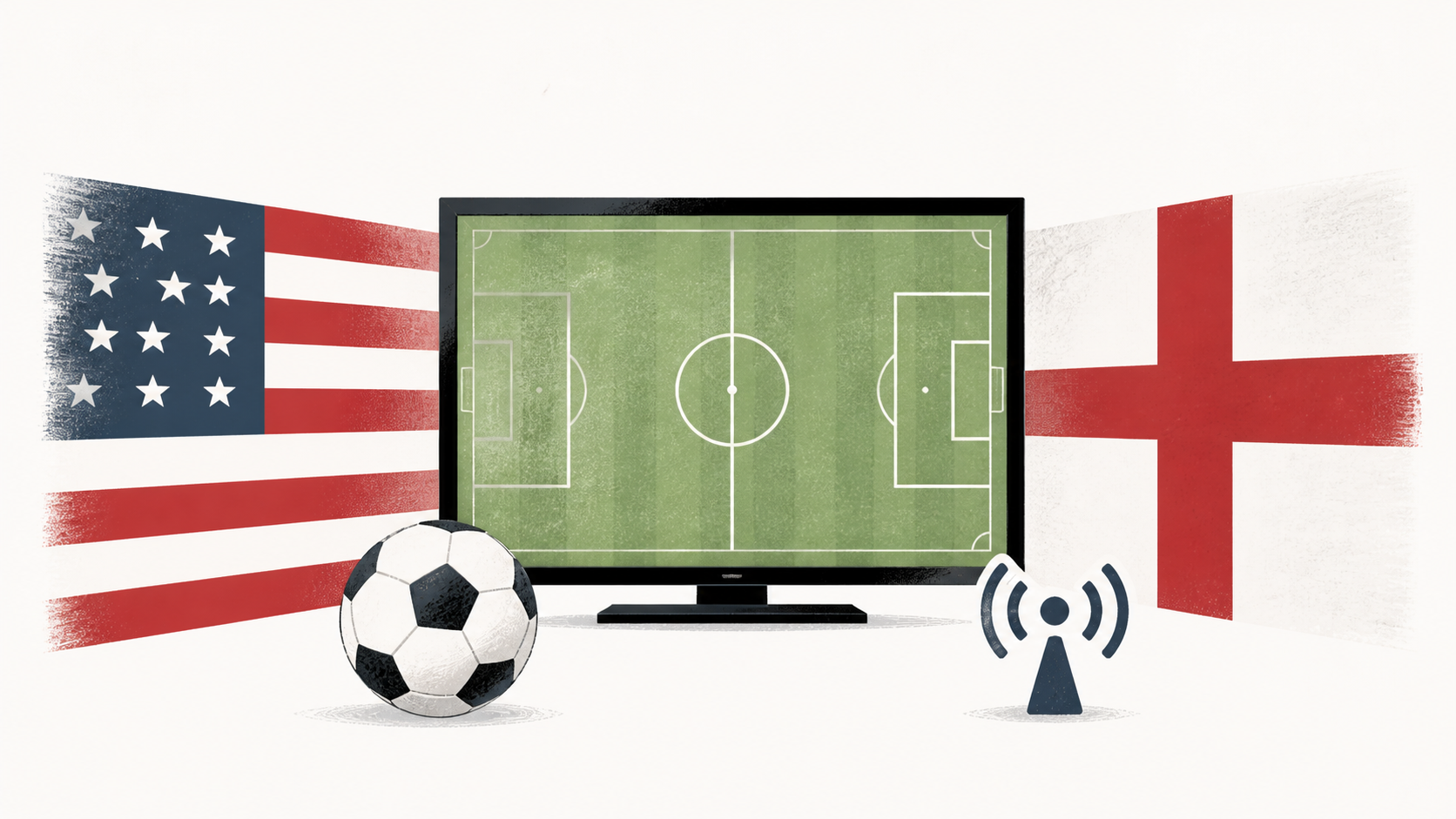
There they were once more, their familiar expressions, voices and studio setting confirming the arrival of another Premier League campaign. On Friday afternoon, followed by Saturday and Sunday morning, Rebecca Lowe welcomed viewers across the United States to NBC’s 14th season of broadcasting the world’s most watched sports league.
As usual, she was joined by her regular panel of analysts, most of them fellow British expatriates. Tim Howard provided the American presence, although his 13 seasons as a Premier League goalkeeper had immersed him deeply enough in English football culture to fit naturally into the group.
The match commentators were British as well. They spoke of “football,” “pitches” and “away matches,” while clubs were naturally described as “they.” Even the commercials carried a distinctly English tone. Barclays and other established sponsors embraced the image of the dedicated American supporter pursuing an unusual passion, despite the league being shown on one of the country’s most accessible television networks.
Watching the presentation reminded me of seeing British coverage of the previous season’s final day with English friends living abroad, aided by a VPN. Curiously, that domestic broadcast did not appear or sound as deliberately English as NBC’s version. Aside from its broad range of regional accents, the British production felt less culturally stylized than the American one. NBC had somehow created something more conventionally English than England itself.
Other networks have followed different paths. Fox strongly emphasizes its American identity during World Cup coverage, while broadcasts of Major League Soccer tend to occupy more neutral cultural territory.
If baseball primarily sells nostalgia and professional American football markets consumption and patriotism, NBC presents the Premier League through an affection for English culture. Its coverage includes aerial views of compact stadiums surrounded by brick terraced houses, respectful attention to club songs and customs, and poppies worn by presenters each November in remembrance of Britain’s war dead, even though that tradition carries a different meaning for American audiences.
The implied message seems simple: watch a match and you may begin to look, sound and feel a little more English, both to yourself and to the people around you.
From NBC’s perspective, this is a logical and defensible commercial strategy, and it has delivered impressive results. At a time when television audiences are generally declining, the network’s Premier League viewership continues to rise and reached record levels last season.
To some extent, this international image has always helped soccer grow in the United States. When upper-middle-class Americans embraced, or historically speaking rediscovered, the game in the late 1990s and early 2000s, following it suggested an awareness of a sporting world beyond the NFL, NBA and baseball. It showed that a fan understood what captivated much of the globe. Extra authenticity came from drinking a Carling in a downtown American pub at 7.30 on a Saturday morning.
The more pressing issue now is when the United States will establish a soccer culture confident in its own language and distinctive habits. The enormously profitable 2026 World Cup reinforced the fact that the country has had a genuine soccer audience for many years. The game is no longer struggling to prove that it belongs. Its more difficult challenge is to strengthen that position and pursue steady, incremental growth.
Even so, American soccer still carries a persistent feeling of not quite fitting in. Its clubs and players continue fighting for recognition beyond the country’s borders, while a noticeable sense of insecurity remains embedded in the domestic game. Presenting its most popular matches almost exclusively through an English voice can restrict the development of a more authentic local identity. A homegrown culture has finally begun to emerge among supporters of MLS and NWSL teams, many of which hurried to label themselves “football clubs,” but it may struggle to flourish while NBC’s coverage remains so closely modeled on another country’s traditions.
This argument is not intended to criticize NBC’s Premier League team, the quality of its work or the professional decisions of those involved. One of the United States’ greatest strengths is its ability to welcome customs from around the world and incorporate them into a varied national culture. Lowe also revealed in 2022 that she had become a naturalized American citizen.
Ultimately, however, soccer in the United States must learn to express itself on its own terms instead of continually imitating countries with longer-established traditions. Part of that process involves accepting that Americans use different words and communicate about the sport in their own way. Embracing that identity could help the game expand even further.
What do you feel about this post?

Like

Love

Happy

Haha

Sad