
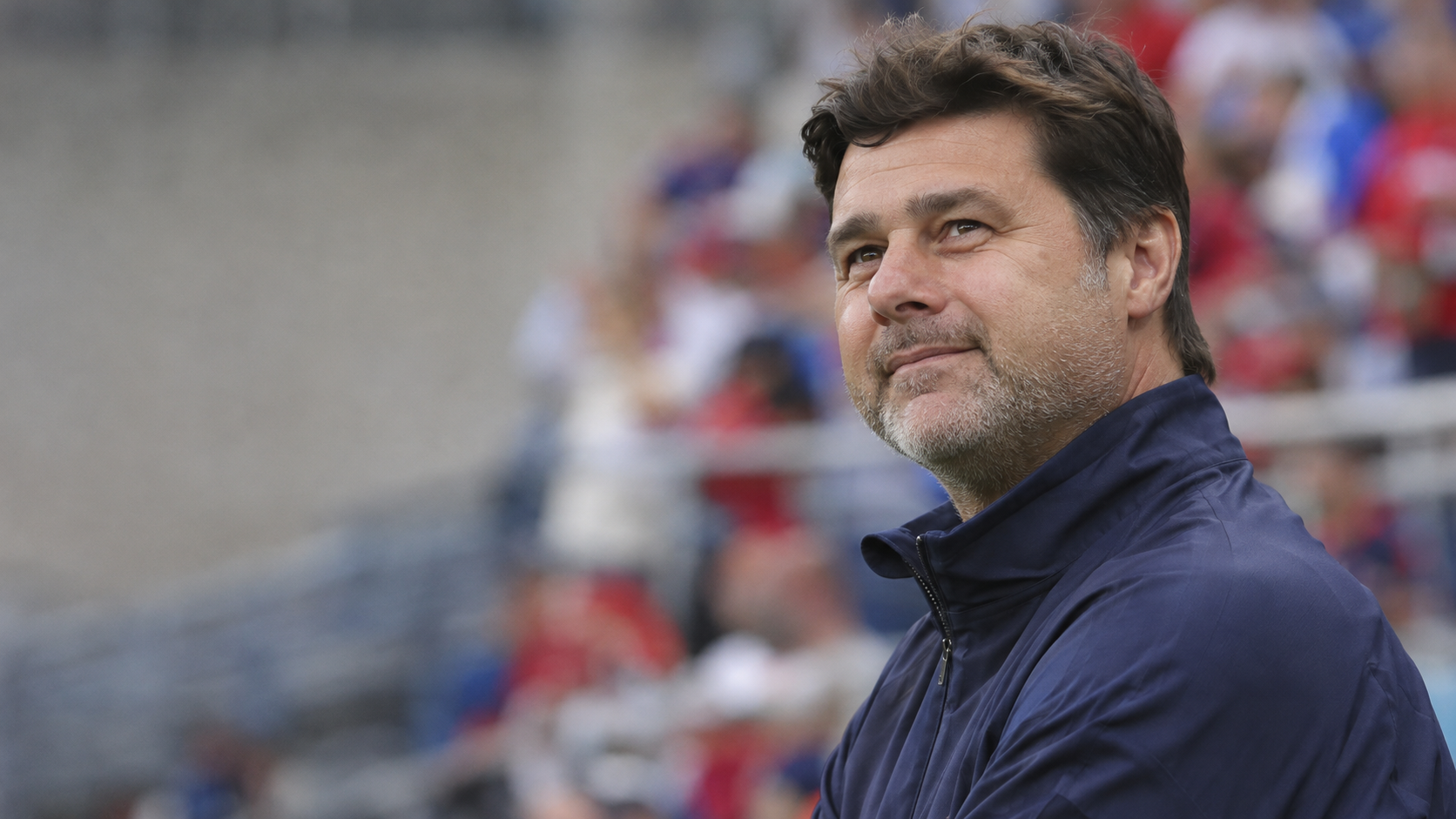
In a venue near the top of a glass-covered Manhattan skyscraper, a highlights montage rolled alongside thunderous music. On what federation president Cindy Parlow Cone described as a landmark occasion for US Soccer, she introduced Mauricio Pochettino as the most prominent head coach ever appointed to lead the United States men’s national team.
Pochettino then spent 45 minutes addressing reporters and sponsors in his familiar mixture of Spanish and English. He followed that appearance with several television interviews before joining Gary Neville to record a podcast, a conversation that would later seem unexpectedly timely.
Two years, two months and one week later, Pochettino oversaw a comfortable 2-0 victory against Haiti in Cincinnati on Tuesday, completing an 8-0 aggregate triumph in the Concacaf Nations League quarter-finals. Afterward, he embraced numerous people, reflecting the briefly celebrated spirit known as Pochismo. He also joined federation employees for a group photograph, while emotions ran high inside the dressing room.
Despite winning the opening leg 6-0 on Saturday, Pochettino selected the same starting lineup for the return match, prompting some surprise. He may have wanted to finish with another commanding performance, improve his final record with the United States or simply ensure that even such a substantial advantage was never placed at risk.
It may be a long time before Pochettino experiences two such one-sided wins in succession again. Following the match, he boarded a private aircraft and prepared to assume control of Manchester United upon arriving in England the next morning. He was leaving a position in which he had accumulated enormous goodwill for one where every result would be intensely examined as evidence of whether he was suitable for the role.
Given the excitement surrounding his appointment, his annual salary of $6m – roughly twice the amount earned by the federation’s previous highest-paid coach, Jürgen Klinsmann – and his repeated emphasis on confidence, identity and determination, the central question is what Pochettino left for the next manager. His influence was undeniable. He revived a talented but dispirited group that had been drifting toward a World Cup on home soil with little momentum or visible excitement. The Argentinian inspired the much-discussed golden generation through most of an impressive tournament, producing performances more assured and authoritative than the team had previously delivered at that level. That progress ended when Belgium eliminated them in the last 16.
His tenure was unquestionably significant. Pochettino attracted considerable interest to the national side, although it remains uncertain whether a less celebrated coach might also have benefited from the attention generated by a World Cup hosted partly on home soil.
Pochettino was not the first United States coach to pursue a more adventurous, technical and attractive playing style. Klinsmann had attempted it, as had Gregg Berhalter. Klinsmann lacked the necessary personnel, while Berhalter’s squad had not yet developed sufficiently. Pochettino finally had players capable of carrying out those ideas, and he added tactical refinement through intelligent attacking combinations that repeatedly created valuable openings.
He was also not the first national-team coach to emphasize culture or offer opportunities to emerging players. Through his squad choices and public communication, however, he restored genuine competition for places after it had gradually disappeared during several successive, sometimes overly comfortable regimes. He also significantly expanded the available player pool. Another coach might have recognized the gifted teenagers beginning to emerge, but Pochettino merits praise for trusting them with important minutes and meaningful responsibilities.
Although Pochettino departs with the USMNT in stronger condition than when he arrived, his tenure did not completely reshape the program. The Americans advanced no further at the World Cup than they had in the past. His record – wins in 62% of his games, an average of 2.08 goals scored and 1.29 conceded per match – broadly resembles those of the permanent coaches who preceded him. He also failed to capture either the Concacaf Gold Cup or the Nations League when given the opportunity.
He did not guide the United States to their first World Cup appearance in 40 years, as Bob Gansler did in 1990. He did not establish their credibility at the tournament, as Bora Milutinovic accomplished in 1994, deliver a major breakthrough like Bruce Arena in 2002 or rebuild the setup from its modern low point as Berhalter did during his first spell. Perhaps the limited scope for dramatic progress was itself evidence that the program had matured. Ultimately, a coach can only respond to the obstacles placed before him.
Regardless, most people are likely to remember Pochettino warmly. He frequently smiled, joked and tried to offer thoughtful answers. Although he could occasionally be combative, he mainly restored energy and happiness to an atmosphere that had become weary and gloomy.
By most accounts, Pochettino enjoyed his experience in the United States while traveling from his homes in London and Barcelona. He developed an interest in NFL games and attended the Cincinnati Bengals’ home win against the Pittsburgh Steelers on Sunday. He also reportedly became fond of country music. Speaking for his staff during his final press conference, Pochettino said they could only express their gratitude and would always treasure the positive memories.
The USMNT players also largely appreciated their period under such a renowned coach, and the group created several memorable moments together. Even so, his stay may have been too brief to alter the team’s long-term direction in a fundamental way.
What do you feel about this post?

Like

Love

Happy

Haha

Sad