System-based football can be traced back to 1963, on Wembley’s famous pitch, when Gino Pivatelli committed a calculated foul.
During the European Cup final, the industrious Milan forward—assigned to limit Benfica’s Mário Coluna—brought down the gifted playmaker. The challenge stopped a dangerous attack and fractured a bone in Coluna’s foot. With no substitutes available, he continued in obvious discomfort and at greatly reduced effectiveness. Milan secured a 2-1 victory, becoming the first champions to place tactical structure above individual brilliance. It marked the arrival of modern football.
Naturally, there are different levels of emphasis. Zinedine Zidane’s Real Madrid depended much more heavily on individual quality than Thomas Tuchel’s Chelsea or Pep Guardiola’s Manchester City. Even so, since the first triumph of catenaccio, football has primarily been shaped by collective organisation.
That is why individual prizes have always seemed slightly out of place in the sport. Even within successful teams, there is often a conflict between personal ambition and collective responsibility. Such tension can be useful, as creative energy frequently emerges from friction. In underperforming sides, however, excessive dependence on one player—whether caused by his ego or by the limitations of those around him—often becomes a serious problem.
When the Ballon d’Or was introduced in 1956, this contradiction was not as obvious. The original decision may have generated less visible controversy than Monday’s result is likely to provoke, but that was probably because supporters had no social platforms on which to express their anger.
The Hungarian vote being divided among Ferenc Puskás, József Bozsik and Sándor Kocsis immediately exposed a difficulty that successful teams continue to encounter. The prize was also presented only a month after Soviet forces had crushed the uprising and entered Budapest, while two of those three players were preparing to defect. Under those circumstances, the organisers may have felt relieved that none of the Hungarian candidates won.
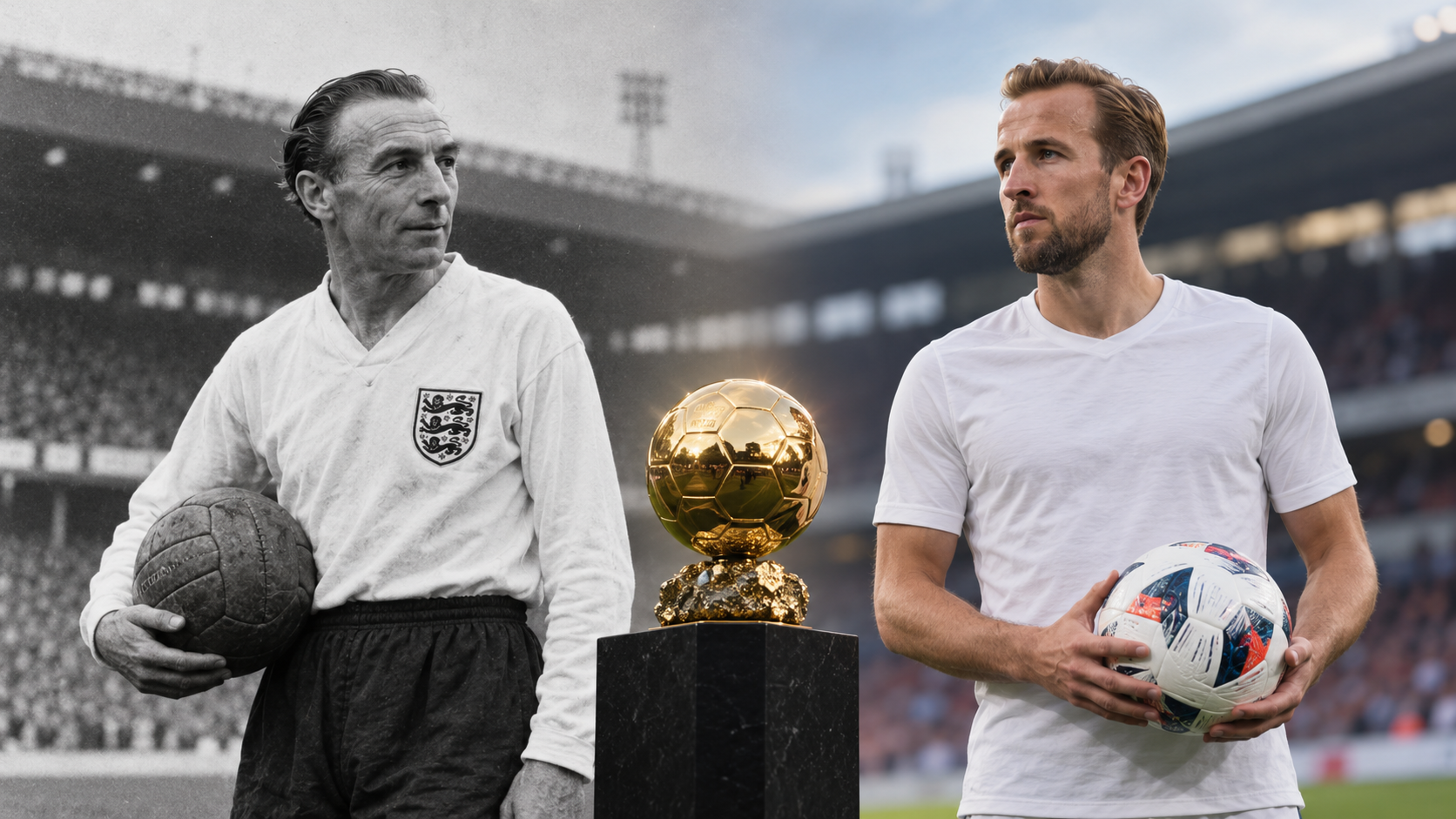
From a modern viewpoint, the selection of Stanley Matthews appears unusual. Blackpool had finished second in the First Division in 1956, but they ended the campaign 11 points behind Manchester United and were eliminated from the FA Cup in the third round. Duncan Edwards and Tommy Taylor both had credible claims. So did Bert Trautmann, named football writers’ player of the year after continuing with a broken neck as Manchester City won the cup final.
There were also compelling candidates outside England. Alfredo Di Stéfano had driven Real Madrid to victory in the first European Cup, while Athletic Bilbao had just claimed La Liga. Pivatelli finished as Serie A’s leading scorer, Giuliano Sarti won the Scudetto with Fiorentina, and Nikita Simonyan’s goals carried Spartak Moscow to the Soviet championship. Matthews was already 38, suggesting that the first Ballon d’Or functioned partly as recognition of an entire career.
Perhaps there is nothing wrong with that. Longevity may deserve to be part of the calculation. After all, what exactly is the award supposed to measure? It clearly cannot be determined solely by the number of trophies collected during a particular year. If that were the standard, Fabián Ruiz would be among Monday’s leading contenders after winning the World Cup, the Champions League and Ligue 1 this season.
Although the midfielder is unquestionably an excellent player, he would not be considered the season’s outstanding performer for either Paris Saint-Germain or Spain. Moreover, handing out one prize simply because someone has already accumulated several others would be an unnecessary extra honour. Individual awards might instead offer a chance to celebrate players who consistently excel and entertain despite rarely collecting medals.
The Ballon d’Or’s official criteria are built around three central elements: individual displays, collective success, and sporting conduct combined with fair play. Its ideal recipient is therefore expected to unite ability, sportsmanship and excellence in competition.
Collective success may be the simplest factor to identify. Under Luis Enrique, PSG have moved away from a culture dominated by individual egos and won consecutive Champions League titles. The harder task is deciding which member of their outstanding attacking trio mattered most. Ousmane Dembélé came out on top last year, while Khvicha Kvaratskhelia arguably made the greatest impact this time. Yet in a World Cup year, can someone whose national side failed to qualify truly be regarded as the world’s best player? Neither Dembélé nor Desiré Doué, the trio’s other member, produced a particularly memorable tournament.
Considering the standard of Ligue 1 and PSG’s freedom to rotate players domestically so they remain fresh for European matches, Arsenal may have delivered the finest campaign by a European club last season. They captured the Premier League title and advanced to the Champions League final. Their success, however, was rooted in teamwork. Only Gabriel, William Saliba and Declan Rice appear on the 30-player shortlist, and none of them enjoyed an exceptional World Cup.
Spain present a similar dilemma. They are also a side with relatively few obvious superstars, especially when Lamine Yamal is struggling with an injury, as he was during the opening months of the year. Their World Cup success ultimately came from the combined strength of the midfield. Rodri best represents that philosophy, although his playing time for Manchester City was limited during the second half of last season.
Real Madrid have just completed one of only five trophyless campaigns they have experienced this century, weakening the cases for Kylian Mbappé, Jude Bellingham and Vinícius. Lionel Messi produced several memorable World Cup moments, but competing in MLS may count against him. That could open the door for Harry Kane, who enjoyed another excellent year despite exiting the World Cup in the semi-finals and the Champions League in the quarter-finals.
Bundesliga goals may not carry quite the same prestige they did in Karl-Heinz Rummenigge’s era, but Kane’s return of 61 goals in 51 club appearances last season remains extraordinary. He also scored six times at the World Cup and almost single-handedly secured victory over the Democratic Republic of the Congo.
With no single candidate clearly standing above the rest, the voters may follow the example set in 1956 and place greater value on sustained quality and career-long consistency.
What do you feel about this post?

Like

Love

Happy

Haha

Sad